As an Amazon Associate, we earn from qualifying purchases. Some links on this site are affiliate links at no extra cost to you. Our recommendations are based on thorough research and editorial judgment.


Why Timing Matters in Pet Training

Timing determines which action the pet links to a reward, so trainers must mark behavior within one to 1.3 seconds. Clickers provide a distinct sound instantly, and treats should follow immediately to cement the association. If feedback is delayed beyond about one second, the pet often links the reward to a later action, creating confusion and slower learning. Consistent single markers across contexts build reliable responses, and practice reveals adjustments and deeper techniques over time.
Key Takeaways
- Immediate feedback (within one second) links the exact behavior to its reward, strengthening correct responses.
- Deliver markers and treats within about 1.3 seconds to avoid ambiguity about what earned reinforcement.
- A consistent, distinct marker (like a clicker) creates a clear signal that an action was correct.
- Delayed or inconsistent timing causes misassociation, confusion, and slower learning.
- Practicing in distraction-free sessions, recording, and partner feedback refines timing and generalizes training.
Why Timing Is the Foundation of Effective Training
You may be interested



Because timing determines which action a dog links to a consequence, feedback must occur quickly, within one to two seconds. Experienced trainers highlight the Importance Of Timing, demonstrating that a treat delivered within one second reinforces the target behavior reliably, consistently. If reinforcement arrives after two seconds, dogs often fail to associate the reward with the intended action, and confusion follows quickly. Consistent click-treat pairing ensures stronger associations between the clicker sound and the reward. Consistent practice, precise timing on every repetition, and brief sessions of three to five trials per minute, improve learning speed noticeably. What should a handler change when timing falters, reward placement, or cue clarity can be adjusted to restore contingency quickly again. Poor timing risks reinforcing unwanted actions, or breaking communication entirely; consequently, handlers must practice fast marking and immediate rewards regularly.
The 1.3-Second Window: How Fast Is Fast Enough?
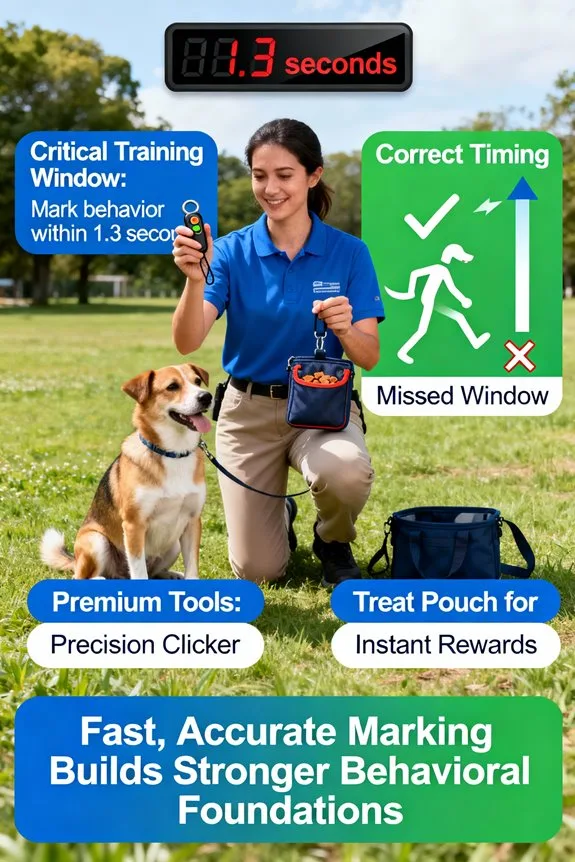
One clear guideline in contemporary dog training states that feedback should be delivered within 1.3 seconds after a desired behavior, to guarantee accurate association. This 1.3-second window is cited as ideal, because delays beyond it often cause uncertainty about which action earned reinforcement. Trainers should mark correct responses immediately, then follow with a reward, to strengthen the link between action and outcome. How precise must Timing be to shape reliable good behavior in varied settings, distractions, or distances? In practical terms, clicks, verbal marks, or instant touch serve as immediate feedback, allowing consistent reinforcement across environments. When Timing is consistent, learning accelerates, mistakes decrease, and retention improves, demonstrating why rapid feedback is central to effective Dog Training practice. Consistent practice refines timing and results. Using a training method that incorporates positive reinforcement, such as clicker training, can further enhance the learning experience for pets.
Markers, Clickers, and Verbal Cues for Precise Timing
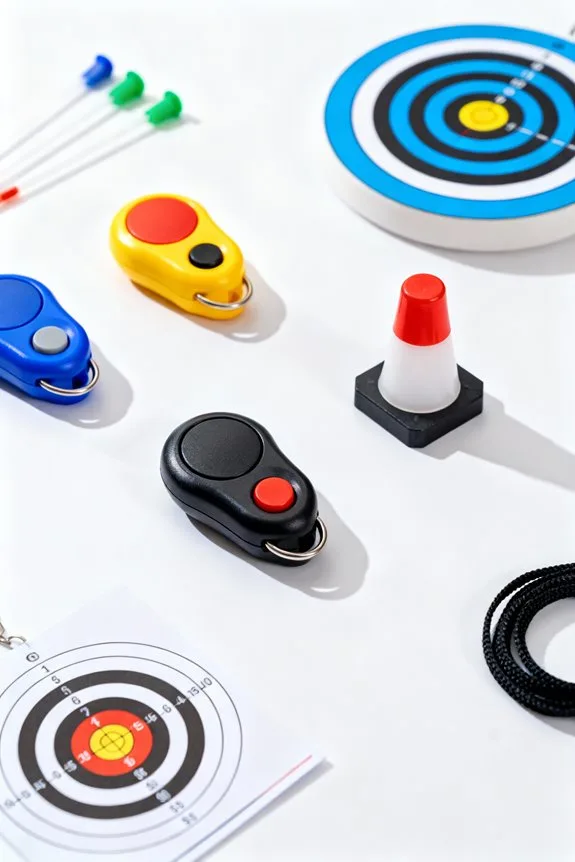
Having established the 1.3-second guideline for feedback, handlers must select and deploy markers that preserve that immediacy and clarity. Clickers produce a distinct sound, they allow marking within one second, sharpening associations for dogs. When should verbal cues occur, before or as the action unfolds, to reduce ambiguity and strengthen links? Handlers should use a single marker per behavior consistently, over weeks and varied settings, to build durable memory. Practice with clickers and verbal cues in parks, indoors, and noisy environments, to refine timing and generalize training. How will a handler know success, when a prompt reliably elicits a response to your dog’s movement or decision, without extra signals? Consistent, timely marking accelerates learning, so record progress, adjust timing, and sustain patient repetition daily. For effective training, it is crucial to prioritize positive reinforcement methods, ensuring a stress-free and enjoyable learning environment for both the handler and the dog.
Common Timing Mistakes That Confuse Dogs
Several common timing errors cause confusion for dogs, such as delayed rewards beyond one second, inconsistent cues, and late corrections. When a handler waits two to five seconds to reward a dog sits, the dog may link the treat to a sniff or movement instead of the trained action. What happens when the cue follows the behavior, not precedes it? The command loses clarity, and responses decline. Marking the correct instant with a click, or immediate praise within one second, strengthens learning. If corrections occur ten seconds after an unwanted act, the dog cannot associate consequence and will repeat it. Inconsistent timing, for example varying response times between trials, undermines trust and slows progress. Using puppy training bells can help reinforce timing by providing immediate signals for dogs to associate their actions with rewards. Consistent, immediate timing improves response to your dogs and training.
Practical Exercises to Improve Your Timing Skills
A few structured exercises build precise timing skills, using a clicker, partner feedback, recordings, and distraction-free practice sessions to start. Trainers should use a clicker or a distinct marker word immediately when the animal performs the desired behavior, this clarifies timing in dog training and speeds learning. Begin in a quiet room, five-minute sessions, rewarding within one to two seconds, then add mild distractions. Have a partner count aloud, provide feedback on hits or misses, and alternate solo recording to review pauses and delays. Practice free-shaping, wait for a spontaneous behavior, mark the precise moment and reward, repeat twenty to thirty times per session. Analyze recordings to adjust timing, improve consistency, and verify the dog understands links between action and outcome for reliable progress. For effective training results, it’s important to consider non-shock modes such as vibration and beep, which can provide humane alternatives during training sessions.
Strengthening the Human–Dog Bond With Consistent Timing
Timely reinforcement, delivered within one to two seconds of a correct response, signals attentiveness and establishes predictable outcomes for the dog. Consistent timing demonstrates reliability, which builds trust when an owner rewards a sit, down, or recall promptly. How quickly should feedback occur during a working dog exercise, within two seconds to mark the correct behavior and within five seconds to follow with a reward? Immediate feedback reduces confusion, so commands are clearer, and dogs learn expected outcomes faster. For example, during crate training, mark and treat within two seconds for calm behavior, repeat three to five times per session. Consistent timing increases confidence, diminishes unwanted chewing like dog chews, and fosters a cooperative partnership over weeks and months. Results appear reliably within several weeks. For nighttime training sessions, consider using leashes with reflective features that enhance visibility and safety during low-light conditions.
Frequently Asked Questions
Why Is Timing Important in Dog Training?
Timing is important because it links action and consequence, enabling dogs to learn quickly. Neutral observers note that effective timing techniques, clear behavioral cues, and consistent reward systems accelerate learning, reduce confusion, and strengthen responses.
What Is the 3 3 3 Rule for Dog Training?
The 3-3-3 rule states dogs experience three phases: three days to adjust, three weeks to feel comfortable, and three months to settle. It guides training consistency and timing for effective behavior reinforcement and owner expectations.
What Is the 10 10 10 Rule for Puppy Training?
The 10 10 10 rule prescribes ten-minute sessions with ten repetitions, then a ten-minute break to prevent fatigue; this puppy training techniques framework promotes effective reinforcement and supports gradual understanding behaviors and confident skill-building progress.
What Is the 7 Second Rule for Dogs?
Timing is everything. The 7-second rule requires a handler to deliver reward or correction within seven seconds so dog learning links action to consequence, maximizing behavior reinforcement and promoting training consistency for clearer, faster learning.
Conclusion
The trainer must deliver reinforcement within the 1.3-second window, using a clicker, verbal marker, or timely treat, to clearly signal actions like sit or recall. How can learners distinguish between accidental timing and intentional marking without consistent practice and simple drills, for example, one-minute repetition sets? When handlers practice short, varied scenarios—three quick sits, two recalls, and a down-stay—timing improves, and communication clarifies, strengthening training outcomes. Practice, practice, practice, and precision follow predictable, purposeful repetition.