As an Amazon Associate, we earn from qualifying purchases. Some links on this site are affiliate links at no extra cost to you. Our recommendations are based on thorough research and editorial judgment.

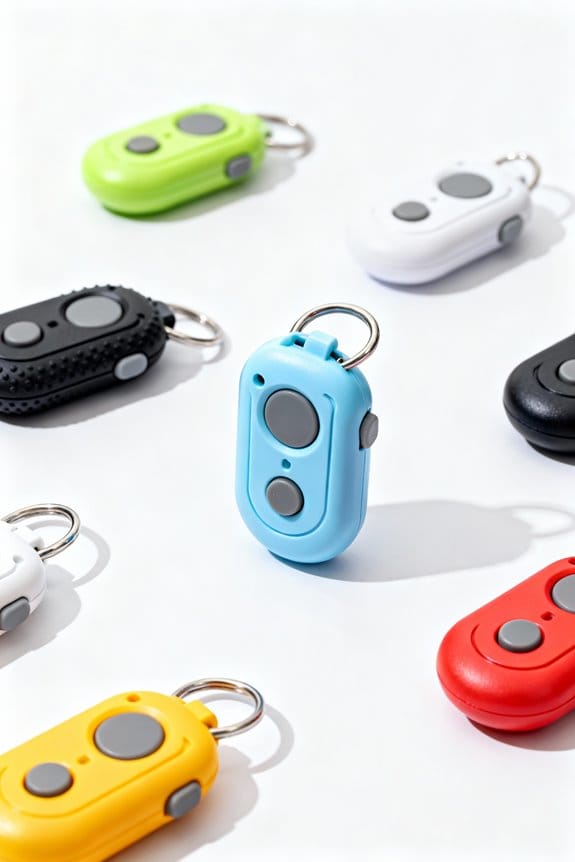
Using Clickers for Small Pets Like Rabbits and Birds

Clicker training uses a distinct sound to mark desired actions, paired immediately with a tiny treat to form association. Sessions run five to ten minutes, use small treats like pellets or chopped vegetables, and repeat cues three times. How should shaping be applied for rabbits and birds, break behaviors into small steps, reward approximations, keep timing precise. Later sections provide stepwise plans, example exercises, and practical handling tips to expand skills and build lasting trust.
Key Takeaways
- Clicker training marks desired actions with a consistent sound paired with treats, enabling precise, positive reinforcement for rabbits and birds.
- Benefits include mental stimulation, reduced boredom behaviors, improved communication, and stronger trust between owner and pet.
- Choose a clear, consistent marker—plastic clicker, silent squeeze, or verbal cue—tailored to your pet’s noise sensitivity.
- Load the clicker by clicking then immediately offering tiny treats repeatedly until the pet anticipates the reward.
- Use shaping, capturing, short sessions, and consistent timing; reload with repeated click-treat pairings if progress stalls.
What Is Clicker Training and How It Works
You may be interested


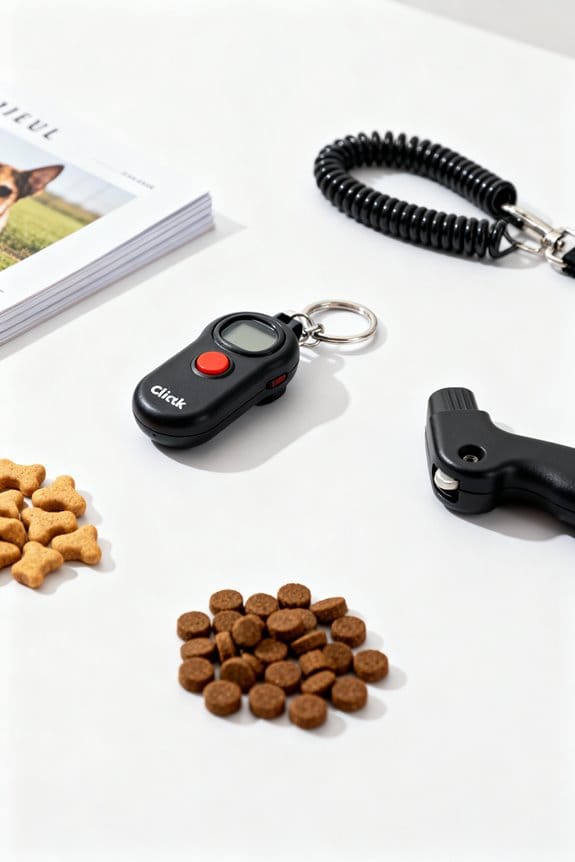
Begin by introducing a small handheld clicker, which produces a consistent sound used to mark desired actions precisely, and immediately follow with a treat. Clicker training pairs that distinctive sound with a reward, creating a clear connection the animal recognizes quickly. How does this improve communication, and why is timing critical for learning? The click must coincide with the exact moment the desired behavior occurs, enabling precise reinforcement and faster shaping of complex behaviors. Trainers start by “loading the clicker” using ten to twenty short clicks with treats, then progress to rewarding approximations during sessions of five to ten minutes. This method, rooted in positive reinforcement and systematic repetition, fits many small pets and supports reliable animal training outcomes. Owners must remain patient constantly. Additionally, consistency in timing the clicker with commands is crucial to prevent confusion and ensure effective learning.
Benefits of Clicker Training for Rabbits and Birds
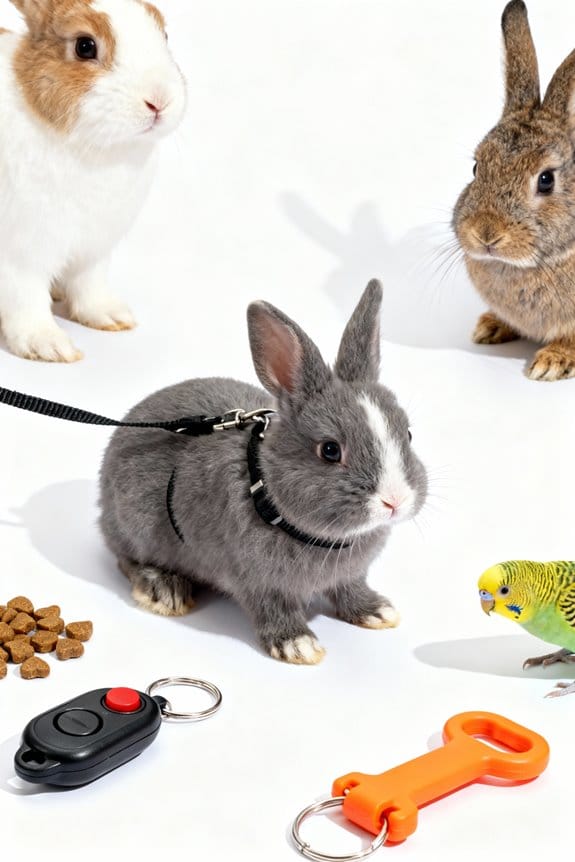
A structured clicker program for rabbits and birds provides consistent mental stimulation, promotes natural behaviors, and increases responsiveness during short training blocks. Clicker training uses positive reinforcement to mark desired actions, enabling owners to shape behaviors in clear, measurable steps. Regular short sessions, five to ten minutes daily, reduce boredom-related chewing or feather plucking by providing mental stimulation and focus. Consistent training builds trust, improves communication, and fosters cooperation, which eases handling during vet visits or grooming appointments. It can teach desirable habits like target touching, calm boarding, or returning to a perch, each taught via small, repeatable steps. Overall, clicker training creates an interactive environment, increases welfare through engagement, and provides measurable progress that owners can track for measurable daily or weekly improvements. Choosing a multi-pet versatility clicker training kit ensures that the tools and sounds are compatible with training various animals, enhancing the efficiency of training sessions.
Choosing and Preparing a Suitable Clicker or Marker

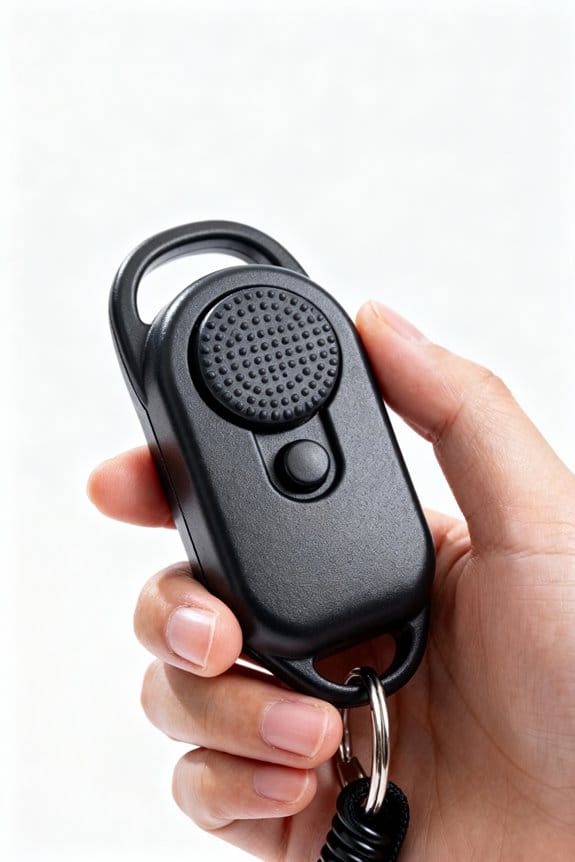
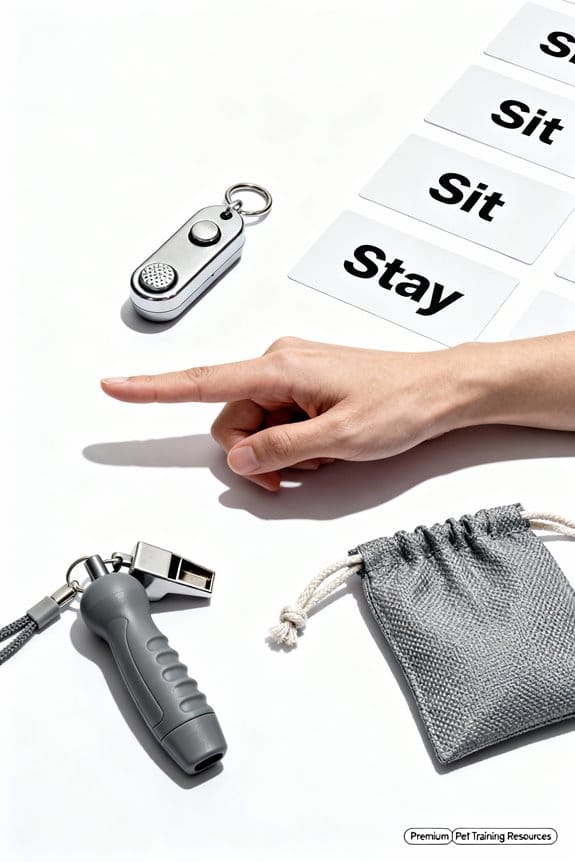
Several clicker options exist for small pets, including plastic hand-clickers, silent squeeze models, and verbal or whistle markers suitable for sensitive animals. A chosen device should produce a clear sound that remains consistent across uses, so the animal can distinguish the marker signal during training sessions. The tool must be easy to hold and activate, allowing quick marking without disrupting a rabbit or a bird, which reduces missed opportunities for reinforcing behavior. For noise-sensitive animals, consider a soft verbal marker or a small whistle, which provides a subtler marker signal. Keep training sessions brief, two to five minutes at a time, with small treats to maintain focus and avoid overfeeding. Evaluate durability, ergonomics, and sound level before regular use for consistent, efficient clicker training. Reflective materials enhance safety during nighttime outings, similar to how clickers can enhance training efficiency by providing clear signals.
Recommended Products

🐇 Unique Rabbit & Carrot Design - Features a cute rabbit eating a carrot with playful "DON'T TOUCH" and "BEWARE OF ADDICTION" text. This rabbit fidget slider isn't just a fidget tool, but a stylish accessory that sparks joy and conversation, perfect for adding a touch of personality to your workspace.

【Dog Buttons For Communication】 Dog talking button set record commands such as 'FOOD', 'EAT', 'DRINK', 'PLAY', 'YES', 'NO', ETC. Let your pet communicate with you; with a little patience, you can get inside your pet's head. Dog talk button set is suitable for all kinds of small dogs, medium dogs, large dogs and more.

ALL-INCLUSIVE CAT TRAINING KIT: Crafted to simplify your cat training journey, our kit brings together a Quiet Clicker, Target Stick Clicker, Treats Pouch, and a comprehensive Cat Clicker Training Start Guide — everything you need to harness your feline's full potential.
Loading the Clicker: Creating the Sound-Reward Association
Many trainers use a simple routine, clicking the device then offering a tiny treat immediately, to teach the sound predicts food. In clicker training this loading step creates a clear sound-reward association, so the pet links the click to treats within minutes or several short sessions. Perform loading in a distraction-free environment, with small tasty portions, repeated five to twenty clicks per session, each followed instantly by a treat. How many repetitions are enough? Continue until the rabbit or bird shows anticipation at the click, then begin to mark specific behaviors. Keep engaging sessions short, two to five minutes, multiple times daily, to avoid satiety and boredom. Consistency and timing produce a reliable marker that speeds later training progress, and improves communication overall rapidly. Incorporating mental stimulation through tools like snuffle mats can further enhance training by providing varied enrichment activities that engage and challenge your pet.
Step-By-Step Training Plan for Rabbits
Begin training by loading the clicker to create the sound-reward association, clicking then offering a tiny treat five to twenty times per session. The trainer should select one simple desired behavior, such as hopping onto a low platform, and wait patiently for an instance to mark with the click. After the rabbit reliably offers the behavior, the trainer adds a verbal cue, clicking and delivering a treat immediately to maintain positive reinforcement. Use shaping techniques, common in clicker training, rewarding closer approximations until the full action is achieved. Keep training sessions brief, around five to ten minutes, and repeat them several times daily to build consistency, which prevents fatigue and maintains motivation. A consistent timing strategy is crucial to ensure reinforcement success and accelerate the learning curve. How should setbacks be handled, and what adjustments follow from inconsistent responding?
Adapting Clicker Methods for Birds
One practical step is loading the clicker, clicking then offering a tiny treat about ten times per short session to establish association. Clicker training helps birds link a precise sound with positive reinforcement, making brief training sessions highly productive, and consistent timing each day. Trainers should begin with natural behaviors the bird performs already, clicking and offering a trade reward immediately after the action. Introduce verbal or gestural cues gradually, pairing each click and treat with the chosen command, so communication becomes clear. Use small, nutritious treats that are easy to consume quickly, offering five to twelve incentives per brief session to maintain motivation. Consistent timing, patience, and respect for species differences allow animals of all sizes to learn behavior naturally, with reliable results. Clicker training uses clear markers to facilitate communication between the owner and the pet, speeding up the learning process and providing immediate feedback.
Shaping, Capturing, and Breaking Behaviors Into Steps
Although shaping, capturing, and stepwise breakdown share the same goal of teaching behaviors, each technique serves a distinct training purpose and should be chosen deliberately. Shaping rewards successive approximations, using four to six steps to teach a rabbit to jump through a hoop, each click marks progress toward the action. Capturing involves clicking spontaneous actions, such as a bird flapping or a rabbit rearing, for reinforcement of naturally occurring behavior, encouraging repetition. Breaking behaviors into manageable steps provides clarity, for instance teaching a spin by rewarding slight head turns, then quarter turns, then full rotations. Consistency in timing matters, clicks must coincide with the exact moment of desired action to create clear reinforcement. Clicker training keeps sessions short and productive, improving gradual measurable progress. Positive reinforcement techniques, like clicker training, offer clear communication and immediate feedback, enhancing small pet training efficiency.
Common Problems and How to Troubleshoot Training Issues
After shaping, capturing, and breaking behaviors into steps, trainers will encounter predictable problems that require strategies and adjustments. Inconsistent clicking or delayed rewards confuse animals, so clicker training requires immediate reinforcement within half a second, and clear links between sound and treat. What if a rabbit ignores the clicker? Trainers should reload it by pairing fifty short clicks with treats before advancing to new behaviors. If repeated undesired actions occur, reassess training issues like clicking accuracy, reward timing, and which movement is being reinforced. Watch body language closely for frozen posture, flattened ears, or flying avoidance, as signs of anxiety and stress that call for slower pacing. Use gradual desensitization and shorter sessions, reducing complexity to restore participation and maintain positive reinforcement consistently applied.
Recommended Products

ALL-INCLUSIVE CAT TRAINING KIT: Crafted to simplify your pet training journey. It includes Quiet Clicker, Target Stick Clicker, Treats Pouch, and a comprehensive beginner's guide. Everything you need to train your pet to their full potential.

40+ CARDS: Over 40 cards featuring a variety of cat training clicker exercises, including easy cat tricks like 'sit' and 'come when called', fun tricks like 'high five' or 'spin', and complex commands like 'jumping onto your shoulder'.

Pet Training Supplies: the package comes with 30 pieces pet training clicker, including 14 different colors; The quantity is enough for you to use and replace in daily life, and you can also share them with your mates
Using Clicker Sessions to Build Trust and Provide Enrichment
When introduced in short, consistent sessions, clicker training creates predictable, positive interactions that build trust between owners and small pets like rabbits and parrots. Brief daily sessions of five to ten minutes improve mental stimulation, reduce boredom, and establish a reliable routine for the animal. Trainers use positive reinforcement, so each click marks the exact behavior to reward, increasing learning speed and confidence. Clear communication arises from consistent timing, predictable cues, and a structured environment that signals when training, play, or rest will follow. Owners can vary scenarios, use short obstacle courses, foraging puzzles, or social games, to create interactive experiences that sustain curiosity. Measured progress, such as four successful repetitions before increasing difficulty, documents improvement and maintains motivation for both animal and caregiver.
Frequently Asked Questions
What Are the Negatives of Clicker Training?
Negative aspects include training limitations, stress responses and distraction issues; trainers observe inconsistent results due to individual differences, potential reliance on cues, and inadvertent reinforcement — prompting consideration of alternative methods alongside clicker use for some.
Do Clickers Work for Rabbits?
Yes: 80% of rabbits show measurable improvement; clicker benefits include clear timing and shaping training techniques, aligning with rabbit behavior and positive reinforcement, addressing common misconceptions about clicker effectiveness while promoting bond strengthening consistently overall.
What Animals Can Be Clicker Trained?
Many animals can be clicker trained: dogs, cats, rabbits, birds, rodents, horses and fish; clicker training benefits include shaping small pet behaviors through training techniques using positive reinforcement, enhancing animal communication, interactive play, behavioral modifications.
Do Pet Training Clickers Work?
Like a lighthouse in fog, it works: clicker training effectiveness stems from reward based learning and animal behavior reinforcement; pet training techniques rely on clicker sound association, positive reinforcement methods, and concise training session tips.
Conclusion
Clicker training provides consistent, rapid communication for rabbits and birds, enabling precise behavior shaping through brief, regular sessions. How can a handler reassure a skittish rabbit or an anxious parrot, while teaching target, recall, or stationing? Because small pets respond best to short, frequent reinforcement, trainers should use two-to-five minute trials, three to five times each day. Practice makes perfect, so progress slowly, reward reliably, record outcomes numerically, and adjust methods when results plateau carefully.