As an Amazon Associate, we earn from qualifying purchases. Some links on this site are affiliate links at no extra cost to you. Our recommendations are based on thorough research and editorial judgment.

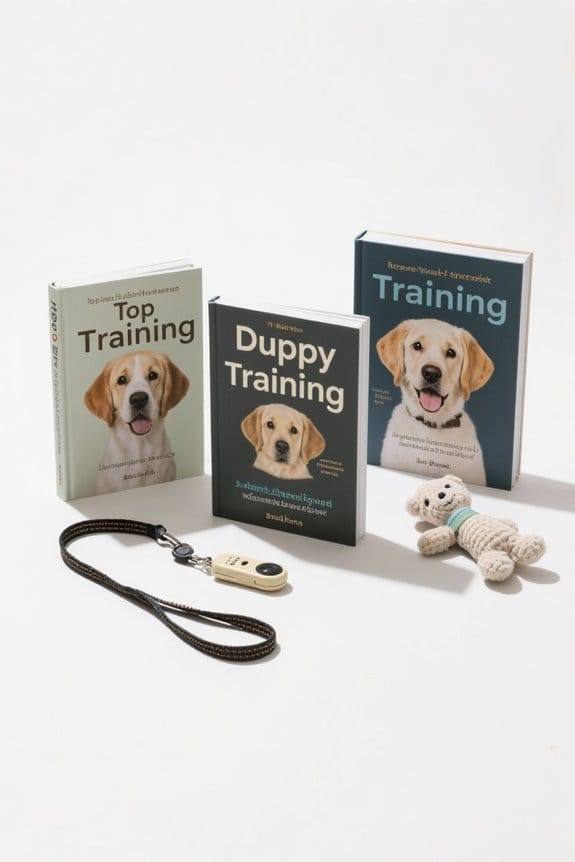
3 Best Puppy Training Books to Raise a Well-Behaved Dog (Expert Picks)

Choose three field-tested, positive-reinforcement guides: The Puppy Primer, Dog Training for Kids, and The Art of Raising a Puppy (Revised Edition). They give step-by-step lesson plans, socialization timelines from eight weeks, and short daily drills — sit, recall, loose-leash walking, impulse control — with measurable goals like five two-minute sessions daily and checklists for common problems. Want breed-specific tips, crate routines, and troubleshooting scenarios? Keep going and you’ll find detailed plans and timelines.
Key Takeaways
- Choose books that prioritize positive reinforcement, short sessions, and clear step-by-step exercises for commands like sit, down, and recall.
- Prefer titles offering age-appropriate socialization timelines, crate training, and troubleshooting for common puppy behaviors.
- Look for authors with hands-on experience, certifications, updated editions, and citations of current behavior research.
- Select books with structured lesson plans, visuals, measurable goals, and frequent short practice sessions (3–5 times daily).
- Include at least one family-friendly guide that teaches children supervised responsibilities and bonding games for long-term consistency.
The Puppy Primer

You may be interested



If you’re a new dog owner or a trainer teaching entry-level classes, The Puppy Primer is one of the best choices because it pairs clear, step-by-step exercises with a positive reinforcement framework that’s easy to apply at home or in group settings. You’ll find expanded content, nearly double the original, with specific drills for sit, down, come, and leash walking, plus games like Fetch and Find the Toy that reinforce learning. Want measurable progress? Track sessions of five minutes, three times daily, for basic cues. Trainers use it widely, it supports realistic expectations, and it standardizes puppy class outcomes nationwide.
Best For: New dog owners and entry-level trainers seeking a clear, positive-reinforcement-based puppy training guide with practical drills and games.
Pros:
- Clear, step-by-step exercises for core cues (sit, down, come, leash walking) that are easy to apply at home or in class.
- Emphasizes positive reinforcement and realistic expectations, making training effective and enjoyable.
- Expanded content and practical games (Fetch, Find the Toy) support measurable progress with short, frequent sessions.
Cons:
- Focused on entry-level skills; advanced or specialized training topics are limited.
- Requires consistent short sessions (e.g., five minutes, three times daily), which may challenge very busy owners.
- Standardized class outcomes may feel less customizable for unique training philosophies or highly specific behavioral issues.
Dog Training for Kids: Fun and Easy Ways to Care for Your Furry Friend


Parents looking for an age-appropriate, step-by-step guide will find Best Puppy Training Books especially useful for children aged 8–14, because it breaks complex tasks into simple, supervised steps and includes clear checklists and timing suggestions. You’ll learn responsibilities like feeding, exercise, and vet prep, so kids know daily tasks and safety measures. Teach Sit, Stay, Heel, and Drop It using short, consistent sessions of three to five minutes, and stop barking or potty accidents with reward-based timing. Add fun tricks—High Five, Roll Over—and games like frisbee or tunnels, to build bonding, focus, and reliable behavior.
Best For: Parents and caregivers of children aged 8–14 who want a clear, age-appropriate, step-by-step guide to teach kids responsible dog care and basic training.
Pros:
- Breaks complex tasks into simple, supervised steps with checklists and timing suggestions, making it easy for kids to follow.
- Emphasizes short, reward-based sessions (3–5 minutes) for teaching essential commands like Sit, Stay, Heel, and Drop It.
- Includes fun tricks and games (High Five, Roll Over, frisbee, tunnels) to build bonding, focus, and reliable behavior.
Cons:
- Designed for supervised child use, so parents still need to invest time and oversight rather than full independent training by kids.
- May not cover advanced behavior problems or specialized training needs beyond basics and common issues.
- Short session format may require frequent repetition and patience to achieve consistent results.
The Art of Raising a Puppy (Revised Edition)
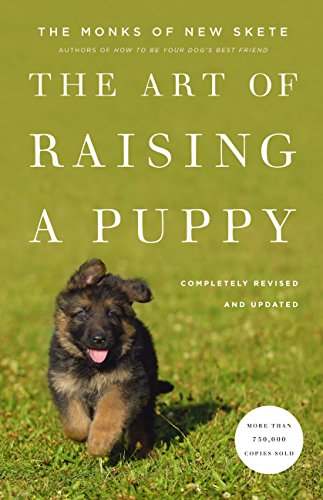
For anyone preparing to raise a well-adjusted puppy, The Art of Raising a Puppy (Revised Edition) is the practical manual you’ll return to again and again, especially when you want guidance grounded in decades of hands-on breeding and training experience. You’ll learn from the Monks of New Skete, long-time German shepherd breeders who trained dogs across breeds, and you’ll apply their steps for socialization, crate training, and play schedules. Want concrete routines? Try 15–20 minute daily sessions, three to five short walks, and supervised play, which reduce fear and destructive chewing. The edit adds photos, health updates, and shelter-adoption guidance.
Best For: Readers seeking a practical, experience-based guide to raising and socializing puppies, especially those interested in structured routines, crate training, and adopting from shelters.
Pros:
- Practical, hands-on advice from experienced breeders and trainers with decades of real-world experience.
- Updated revised edition includes new photographs, current canine health information, and expanded sections on play, crating, and urban dog-raising.
- Strong emphasis on socialization and adoption/rescue transitions, with concrete routines (e.g., short training sessions, walks, supervised play).
Cons:
- Advice stems from the Monks’ specific training philosophy and German shepherd background, which may not align with all modern positive-reinforcement approaches.
- Some recommendations (schedules or techniques) may feel prescriptive and require adaptation for individual breeds or puppy temperaments.
- While updated, it may not cover the very latest scientific studies in behavior or training methods in exhaustive detail.
Factors to Consider When Choosing a Puppy Training Book

You’ll want to match a book’s training philosophy to your goals, for example choosing science‑based, force‑free methods if you prioritize long‑term reliability and welfare. Will the material suit your puppy’s age and skill level, include positive reinforcement focus with clear rewards, and offer practical exercises such as 10‑step housetraining plans or short, repeatable sit‑stay routines? Consider the author’s expertise level and credentials, because certified trainers or veterinarians often provide evidence‑based guidance, which leads to safer, faster progress and fewer setbacks.
Training Philosophy Alignment
When choosing a puppy training book, start by checking whether it advocates positive reinforcement, since this approach is proven to increase learning speed and reduce stress for both dog and owner; books that recommend reward-based methods typically include step-by-step treats-and-praise plans, timing guidelines (for example, reward within one second of the desired behavior), and measurable progress goals like three successful sits in five consecutive sessions. Next, confirm the book matches your expectations and patience level, because realistic timelines prevent frustration and abandonment. Does it cover socialization, house training, and stopping unwanted behavior with clear exercises and games? Choose guides that offer practical drills, multiple scenarios, and checkpoints, since consistent methods, aligned with your philosophy, strengthen communication and speed reliable results.
Age‑Appropriate Content
Choose a book that matches your puppy’s age and developmental stage, because a 6‑8 week old pup needs different lessons than a 4‑6 month old adolescent; younger puppies require short, simple sessions that focus on socialization, gentle handling, and basic cues like “sit,” “stay,” and name recognition, while older puppies can handle longer training blocks, leash manners, and graduated impulse control exercises. Pick guides that specify age ranges, for example 8–12 weeks, 3–4 months, or 6+ months, so you know when to introduce new skills. Does the book offer child‑friendly chapters if kids will train the puppy? Are activities listed with time limits, repetition counts, and progression steps? Choose clear language, concrete examples, and age‑matched games that build skills safely.
Positive Reinforcement Focus
Positive reinforcement training rewards the behaviors you want, so your puppy learns faster, enjoys sessions more, and stays less fearful under stress. Look for books that explain why rewards work, cite research showing better long-term outcomes, and contrast reinforcement with punishment-based methods. Do they set realistic expectations, noting commands vary by context and need consistent practice, for example, five short sessions daily? Does the author include play-based teaching tools, like two-minute fetch drills to reinforce recall, and games that build focus? Check for clear strategies to stop unwanted behavior through reward replacement, step-by-step progressions, and troubleshooting sections with case scenarios. Will the tone guide you to form a positive bond, reduce fear, and produce lasting results through evidence-based, repeatable methods?
Practical Exercises Included
After you’ve understood why rewarding good behavior works, look for books that give you hands-on exercises you can use day to day, because concrete practice is where learning sticks. Choose guides that list basic commands like “Sit,” “Down,” and “Come,” with step-by-step cues, repetition counts, and timing tips, so you can practice short sessions three to five times daily. Pick resources that include interactive games such as Fetch and simple obstacle courses, which reinforce cues and strengthen your bond. Make certain the book covers common problems with drills for “No Jumping Up” and “Walking Side by Side,” including leash-handling routines. Advanced chapters should teach “Take It/Drop It” and “Puppy Pause,” progressing difficulty and integrating positive reinforcement throughout.
Author Expertise Level
When evaluating a puppy training book, look closely at the author’s expertise level, because years of hands-on experience and formal training make a measurable difference in advice quality and safety; for example, a professional trainer who’s worked with hundreds of litters, or a breeder who’s raised multiple breeds, can point out breed-specific tendencies and realistic timelines, such as when a Labrador typically masters “Stay” versus when a terrier might need different motivation. You should check credentials, like certifications in animal behavior or degrees in psychology, because they signal science-based methods, and ask whether the author documents case counts, trial results, or observational data. Does the book cite recent research, include updated editions, or report sample sizes, and do examples span several age groups and real-world settings?
Breed and Size Guidance
Breed and size matter, so pick a training book that matches your puppy’s physical traits and inherited drives, because techniques that work for a 70-pound Labrador won’t translate directly to a 10-pound Chihuahua. Choose books that discuss breed temperaments, offer examples for high-energy dogs like Border Collies, and provide quieter approaches for breeds such as Bulldogs. Need leash techniques for a strong 60–80 pound dog, or gentler handling for a 5–10 pound toy breed? Look for specific chapters on space needs, strength management, and size-adapted exercises. Consider books that explain breed background, list socialization milestones by breed, and compare training intensity levels, so you apply the right methods, prevent injury, and channel energy productively.
Ease of Instruction
Because clear instruction determines how quickly you and your puppy succeed, choose books that use simple, direct language, plenty of visuals, and step-by-step progressions you can follow at home. Look for texts that explain commands in plain terms, offer numbered steps for each exercise, and show 8–12 photographs or diagrams per chapter to illustrate movement, positioning, and timing. Do you prefer structured plans or flexible drills? Opt for books with 4–6 weekly lesson plans, measurable goals, and checkpoints to track progress. Prioritize titles that include practical games to reinforce skills, and that recommend positive reinforcement schedules, such as 3–5 treats during initial sessions, then gradual fading. Clear instruction reduces confusion, speeds learning, and helps you apply techniques consistently.
Supplemental Resources Available
If a book includes supplemental resources, you’ll learn faster and practice more effectively, so prioritize titles that bundle concrete tools like video demonstrations, printable worksheets, and progress trackers. Look for step-by-step videos that show 5–10 repetitions of each cue, downloadable worksheets you can use daily for 2–4 weeks, and printable checklists to mark milestones like house training, leash walking, and recall. Does the book link to activity guides with games that reinforce learning while strengthening your bond? Choose titles with online communities or forums, where you can ask questions and compare results over time, and select books that recommend 3–6 related readings for deeper study. These extras turn theory into repeatable practice, and speed measurable progress.
Frequently Asked Questions
How Do I Choose the Right Crate Size for My Puppy?
Measure your puppy from chest to rump and from nose to tail, then add four to six inches for growth, and choose a crate matching the larger dimension. Will the dog stand, turn, and lie stretched comfortably? If not, size up. For small breeds pick a 18–24 inch crate, medium 30–36 inch, large 42–48 inch; use dividers for growing pups, so you don’t replace crates frequently.
When Should I Start Socializing My Puppy With Other Dogs?
Start socializing your puppy as soon as vaccination timing allows, typically between 8 and 16 weeks, when critical social learning occurs. You’ll expose them to calm, vaccinated adult dogs, small friendly litters, and varied environments, gradually increasing duration from five to thirty minutes. Why act early? Early, positive contacts reduce fear and aggression later. If vaccinations lag, use controlled indoor meetings and sound desensitization until full outdoor socialization is safe.
Can I Train an Older Rescue Like a Young Puppy?
About 80% of adult dog behavior improves with consistent training, so yes, you can train an older rescue like a young puppy. Start with basic obedience, short sessions, and high-value treats, then add socialization, leash skills, and crate work. Use clear cues, predictable routines, and gradual exposure to triggers, because consistency builds trust and rewires habits. Expect slower progress than with puppies, track milestones, and adjust techniques to the dog’s history.
What Vaccinations Are Needed Before Group Classes?
You’ll need core vaccinations before group classes, usually DHPP (distemper, hepatitis, parvovirus, parainfluenza) and rabies, plus bordetella for many facilities. Puppies typically get DHPP series at 6–8, 10–12, and 14–16 weeks, rabies at 12–16 weeks, and bordetella as early as 8 weeks. Have written proof, ask the trainer about titer acceptance, and delay classes if boosters aren’t complete to reduce infection risk.
How Do I Prevent Resource Guarding at Home?
Prevent resource guarding by trading high-value items for better ones, and by teaching leave-it and drop it with short, frequent sessions. Use three to five daily exchanges, offer treats before taking toys, and reward calm behavior with a treat every time. Manage access to coveted items, practice shared feeding twice daily, and gradually reduce hand-feeding. If guarding persists, consult a certified trainer, because early, consistent intervention prevents escalation.