As an Amazon Associate, we earn from qualifying purchases. Some links on this site are affiliate links at no extra cost to you. Our recommendations are based on thorough research and editorial judgment.

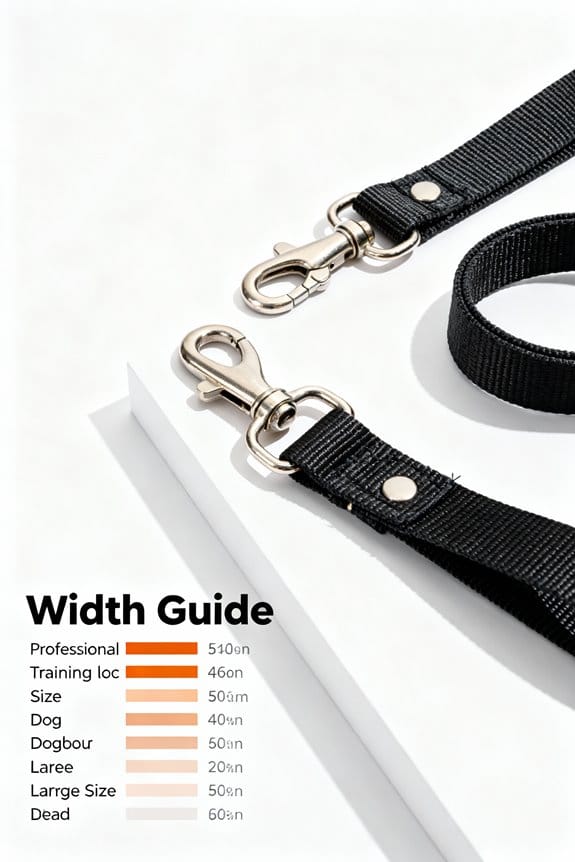
Training Leash Width Guide for Different Dog Sizes

A training leash’s width affects control, comfort, and durability, match size to dog weight and activity. For dogs under 20 pounds, choose 3/8 inch; for 20–50 pounds, use 1/2 inch; for over 50 pounds, select 3/4–1 inch, with one inch preferred for powerful pullers. Leather or Biothane perform well at 1/2–1 inch, while nylon and rope offer 3/8–1 inch options. Want examples for hiking, tracking, or recall? Continue for specific guidance and fitting tips soon.
Key Takeaways
- Small dogs (≤20 lb): use 3/8-inch leashes for control and low hand strain.
- Medium dogs (20–50 lb): 1/2-inch leashes balance durability and handling for everyday walks and training.
- Large dogs (>50 lb) or powerful pullers: choose 3/4–1-inch (or wider) leashes for strength and safety.
- Match hardware strength to leash width; heavy-duty clips for ≥2.5 cm (≈1 inch) leashes and high-force dogs.
- Inspect and maintain material: clean nylon, wipe Biothane, condition leather, and replace frayed or corroded parts promptly.
Why Leash Width Matters
You may be interested


Leash width directly affects control, comfort, and durability, so selecting the correct size is a practical safety decision. It influences grip pressure on the hand, causes different amounts of hand strain during long walks, and alters training dynamics when leash length changes. How much does width matter during recall training or loose-leash walking? Narrower straps can feel lightweight and improve handling for short, precise movements, while wider designs distribute force, increase durability, and enhance control over a dog during sudden pulls. Common manufacturing widths range from 3/8 inch to 1/2 inch, with metric equivalents near 2.0 and 2.5 centimeters, indicating relative weight and robustness. Trainers should consider these mechanical effects, testing comfort and responsiveness before committing to a long-term choice for safer daily walks. It’s important to note that reflective materials on leashes are a key safety feature, enhancing visibility during low-light conditions for both you and your pet.
Matching Leash Width to Dog Size
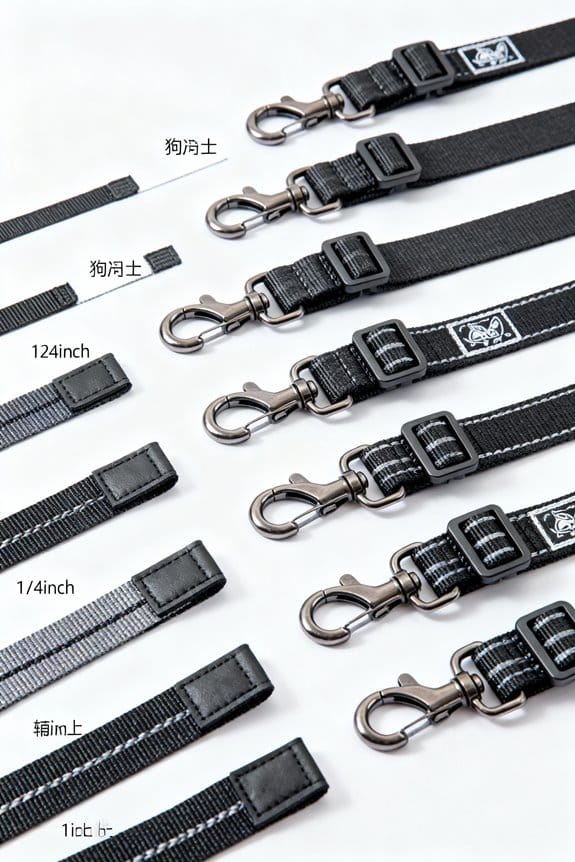
When choosing a width, handlers should match strap thickness to a dog’s weight and behavior to guarantee safety and control. For small dogs up to 20 pounds, a 3/8 inch dog leash provides comfort and sufficient control for routine walks. For medium dogs between 20 and 50 pounds, a 1/2 inch leash balances durability and manageability for owners. For large breeds over 50 pounds, a minimum 3/4 inch leash resists strain and improves grip during stronger pulls. What about powerful pullers, or reactive dogs that lunge unexpectedly, choose the best option of around one inch for added strength and handling? Matching width to behavior prevents breakage, improves guidance, and reduces handler fatigue during longer sessions. Professionals recommend testing different widths during supervised training sessions. Using leashes with reflective stitching can also enhance safety during evening or low-light walks.
How to Measure Your Dog for the Right Width
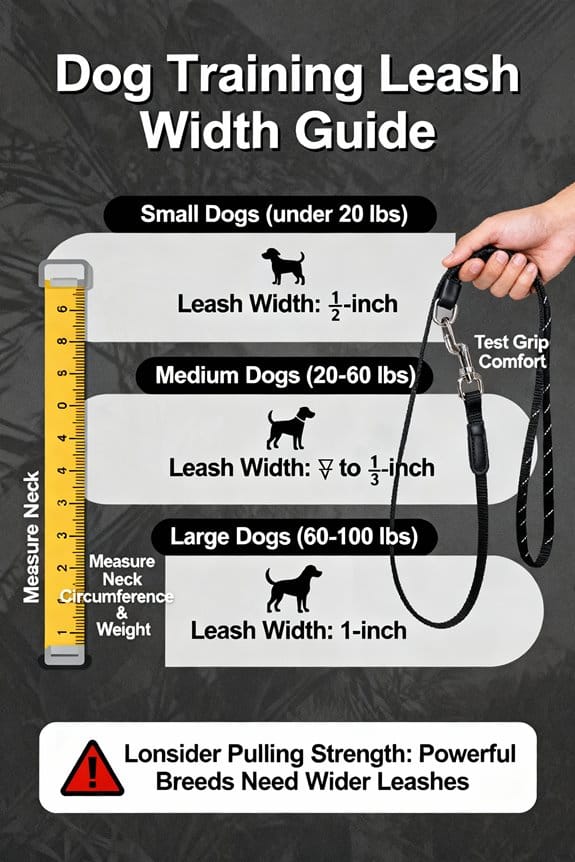
A simple tape measure, placed snugly around the neck or chest where a collar or harness sits, gives the most reliable starting point for choosing width, and handlers should record that girth to match hardware size precisely. Measure the neck and chest at their widest points, note centimeters or inches, compare those numbers to leash specs. Dogs over 50 pounds often suit 1/2 inch leash width, small breeds with chest under 38 inches prefer under 3/8 inch for comfort. For strong pullers, select about 3/4 inch or greater to reduce breakage, and chewers benefit from wider, more robust widths. Always test the fit with the dogs collar or harness, guarantee comfortable handling, and confirm control during a short walk. Record measurements for future reference. Positive reinforcement training is crucial when acclimating your dog to a new leash as it enhances comfort and cooperation.
Material and Width: Leather, Biothane, Nylon, and Rope
Material-choice matters: leather, Biothane, nylon, and rope each pair with specific widths to suit a dog’s size, activity, and pulling tendency. Leather leashes typically span 0.5 to 1 inch, they offer durability and grip, so larger breeds and strong pullers benefit. Biothane also ranges 0.5 to 1 inch, it provides waterproof resilience for adventurous dogs, and suits varied sizes. What about smaller dogs that require lighter gear? Nylon leashes range from 0.25 to 1 inch, they are versatile for small to medium dogs, with wider styles for added strength when needed. Rope leashes commonly measure 0.5 to 1 inch, they combine durability and comfort to help control energetic dogs. Selecting proper width matches safety with comfort, and reduces leash failure risk and training outcomes. For dogs needing additional control, front-clip no-pull harnesses can be paired with a suitable leash to redirect pulling behavior effectively.
Width Recommendations by Breed and Weight
Several leash widths correspond to specific breed sizes and weights, ensuring comfort for small dogs and control for larger ones. Small leashes, typically 2 cm wide, suit Chihuahuas and Yorkshire Terriers, offering comfort and easy daily handling. Regular leashes, about 2.5 cm wide, fit Labradors and German Shepherds, improving grip and control during walks. Wider leashes distribute pressure across the handler’s hand more evenly, increasing durability and stability for bigger dogs. When pairing leashes with harnesses, select a small leash for XXS-XS, and a regular leash for S-XL. Is a shorter leash preferable for focused training, or does standard length better suit general walks and outings? Match width to breed weight, choose narrower options for small dog comfort, while larger breeds use wider leashes. Consider using no-pull front-attachment harnesses to reduce pulling behavior, offering better control for both training and casual walks.
Recommended Products

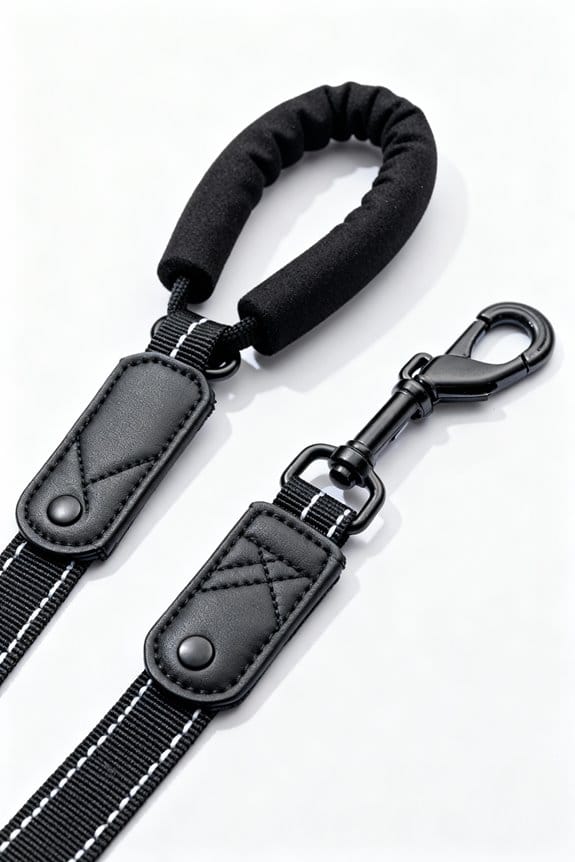
The perfect combination: While the dog harness with its ergonomically optimal fit ensures a pleasant wearing comfort, the padded hand loop of the leash provides a secure and comfortable grip.

LONG range and Long Battery LIFE. The My Pet Command high quality training Kit can be used remotely, using the comfortable handheld remote to assist in everyday training. With a range of up to 1.25 Miles (6600Ft /2km) in open terrain, allows you to train your dog to heel, stay, or return making it as simple as pressing a button with Long Battery Life

Package Include: there are 120 pieces dog training leashes in 12 main colors, 10 pieces per color, which are designed for securing pets' safety while getting in and out of cages and moving around the salon, clinic or daycare, ideal for local animal shelter
Adjusting Width for Temperament and Pulling Strength
Following breed- and weight-based recommendations, handlers should evaluate each dog’s temperament and pulling strength before finalizing leash width choices. Small dogs, such as XXS-XS, typically perform well with a 2 cm leash, providing control without undue bulk. Medium dogs, S-M, often suit about 2.5 cm, balancing grip and strength for moderate pullers. Energetic or reactive animals require thicker lines, 0.98 inches or more, to resist breaking and improve handling. How should a handler respond to a strong puller during walks? Increase width, combine training, and reassess behavior, keeping your dog secure while building skills. Larger, powerful breeds may need wider straps to prevent slipping from the hand, and narrower choices risk failure. Regular reassessment guarantees appropriate choice, reducing injury and leash-related accidents, daily tests. Proper neck measurement with a flexible tape measure is essential for collar fit and safety, ensuring comfort and functionality while training.
Leash Width for Specific Activities (Hiking, Tracking, Scent Work)
Although leash choice often follows breed and weight, activity-specific widths greatly affect durability, handling, and handler comfort on outings. For hiking with medium to large dogs, a 1/2 inch leash provides durability and control on rugged terrain, reducing abrasion and hand fatigue. Tracking uses narrower lines, typically 3/8 inch for medium dogs, allowing lighter feel and easier ground contact, while larger breeds use 1/2 inch for strength. Scent work may employ 3/8 to 1/2 inch, but strong pullers benefit from wider, near 1 inch, which prevents wear and improves grip. Opting for adjustable designs with multiple sizing options in collars can ensure a comfortable fit for dogs during various activities. When is a long line preferable over a short lead, and how does width change handling? Choose width by activity, matching flexibility, strength, and handler comfort for each scenario, and revising choices with experience.
Hardware Compatibility and Strength Requirements
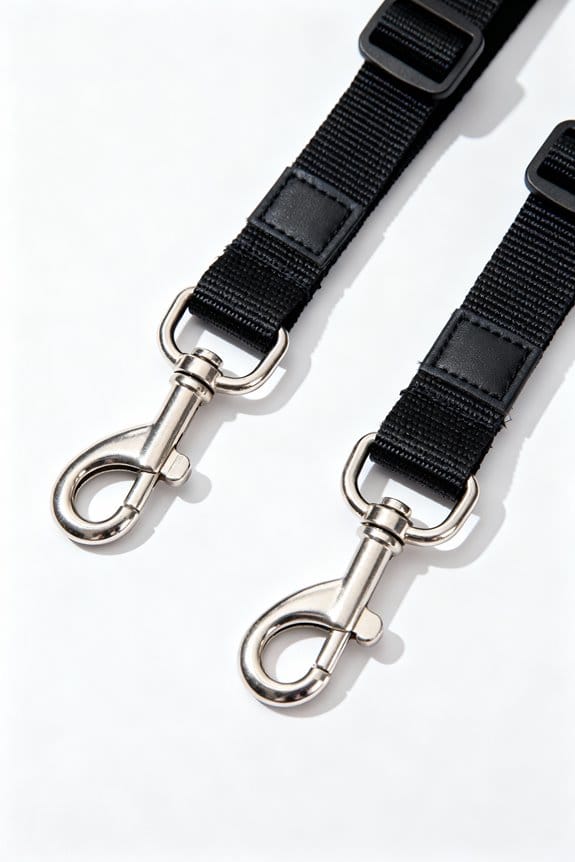
One critical consideration when selecting a training leash is matching the width to hardware strength, because improper pairing can cause failure under load. The principle of hardware compatibility means the leash width must fit clip size and tensile capacity, so use compatible components rated together. For a 2 cm leash, what hardware is appropriate, small lighter clips rated near 200–300 lbs can suffice for most small breeds. Wider 2.5 cm or greater leashes demand heavy-duty clips, especially during hiking or high-intensity training, choose tactical clips with higher load ratings. Always consult manufacturer strength requirements and specifications, match them to a dog’s weight and expected pull forces for reliable performance. Regular inspection follows, check for wear, and replace any hardware showing deformation or corrosion immediately. When selecting a dog leash, consider reflective stitching or high-visibility accents to improve safety during low-light walks.
Safety Considerations and Common Sizing Mistakes
Considering leash width early in equipment selection, handlers reduce risks by aligning strength, grip, and control with the dog’s behavior. Safety considerations include matching width to strength, since narrow straps can fail with large pulls and cause sudden loss of control. What happens when size is chosen only by breed, ignoring individual force and training history? Common sizing mistakes arise from that assumption, producing ineffective control and handler strain. For example, small dogs often use about 0.79 inches, while larger breeds need 0.98 inches or more for secure handling. Also, match leash width to harness size, using small widths for XXS-XS harnesses and regular widths for S-XL. Correct width reduces discomfort and lowers injury risk for dog and handler. Review choices periodically, adjust accordingly. When choosing a leash, consider high-density rubber for its abrasion resistance and durability, ensuring it can handle your dog’s strength effectively.
Training Techniques That Benefit From Proper Width
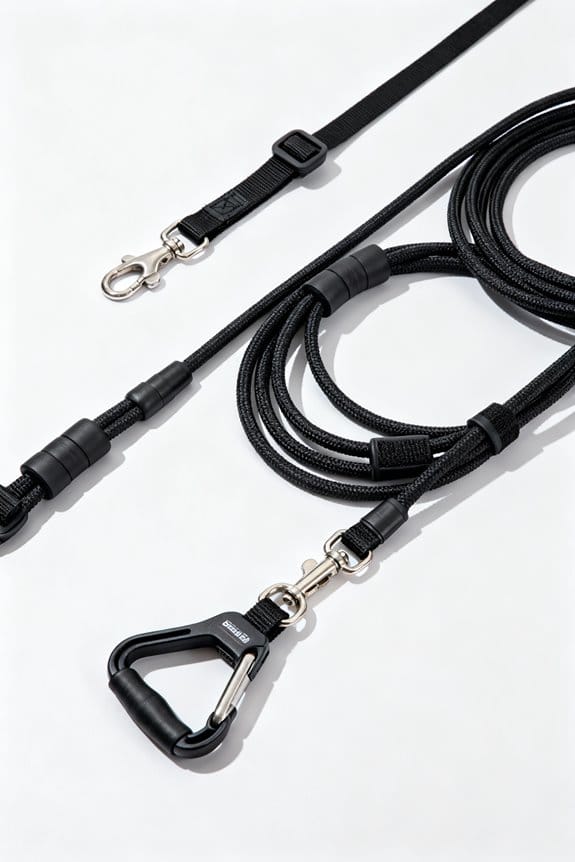
When selecting leash width for training, handlers should match strap size to the dog’s weight, strength, and activity level to maximize effectiveness. Appropriate widths, such as 3/8 inch for under fifty pounds, or 1/2 inch for fifty pounds and over, improve grip. What training techniques benefit most from correct widths, recall, loose-leash walking, and targeted behavior correction show clearer results? For powerful breeds, a one-inch or wider strap provides superior control during high-intensity sessions, reducing slip risk and improving signaling. Proper leash width lowers handler frustration, which increases consistency in cues, and consequently improves the dog’s responsiveness to commands over time. Handlers should select widths based on specific scenarios, testing 3/8, 1/2, and one-inch options during practice, to keep your dog focused and secure. A durable leash made from rock climbing rope offers enhanced strength and longevity, making it an excellent choice for handling strong pullers during training.
Care, Cleaning, and Longevity by Width and Material
Although care requirements vary by material and width, handlers can extend leash lifespan substantially through routine cleaning, conditioning, and proper storage. Nylon leashes can be machine washed or hand-soaked weekly after muddy walks, but may show fray within six to eighteen months under heavy use. Biothane requires only wiping after exposure to dirt or salt, it resists water and lasts multiple years with minimal maintenance. Leather needs conditioning every two to three months, using oil to retain suppleness and water resistance, otherwise cracking accelerates wear. Does width matter? Yes, narrow straps used with large dogs can fail in months, while wider one to one-and-a-half-inch options distribute load, improving longevity. Proper storage, dry environments, and routine inspection prevent sudden failures. Inspect hardware monthly, replace if corrosion or looseness.
Buying Checklist: Choosing the Right Width for Your Needs
Many handlers should choose leash widths that match both their dog’s size and behavior, to balance control, comfort, and durability. For XXS-XS dogs, select a 2 cm width, which reduces weight and fits petite harnesses, making long lines manageable during recall work. Should medium dogs use slightly wider webbing? A 2.5 cm leash suits size S dogs, offering sturdiness and easy handling for walks and traffic leads. For M-XL breeds, opt for 2.5 cm or wider, to increase strength, prevent breakage, and improve grip for strong pullers. Consider behavior, activity type, and intended use, prioritize control for pullers, lighter widths for calm pets, and durable materials for frequent training. Measure collar hardware, test feel in hand, and verify clip strength before final purchase decision.
Frequently Asked Questions
How Wide Should a Dog Leash Be?
About 2 cm for small dogs and 2.5 cm or wider for larger strong pullers, aligning leash material with training techniques and harness size; wider, durable options improve control, safety, and handler grip in sessions.
What Is the 123 Method for Dogs?
The 123 Method is, in a world where dogs secretly host board meetings, a simple three-step training system: command, acknowledge, reward, using positive reinforcement to teach behaviors and reinforce leash etiquette calmly predictably consistently reliably
What Is the 3 Second Rule for Dogs?
The 3 second rule asks a dog to pause three seconds before reacting to another dog, promoting calm assessment; it reinforces controlled dog behavior, aids leash training, reduces excitability, and supports safer, confident social interactions.
What Size Leash Is Best for Training?
The best leash for training is chosen carefully, and what’s revealed matters: handlers prefer widths matching strength, while considering leash material options and leash length considerations; ultimately, durability, control, and comfort determine the ideal choice.
Conclusion
The handler should match leash width to dog weight and training needs, using 3/8-, 1/2-, and 1-inch common options. Which width suits a 10-pound terrier versus a 70-pound mastiff, when precise leverage and safety changes handling most dramatically? If durability is needed, leather or Biothane at 1/2-inch or wider resists wear, so replacements decrease. Measure the dog from collar to chest, choose accordingly, and handlers should remember, “measure twice, cut once,” to avoid costly mistakes.