As an Amazon Associate, we earn from qualifying purchases. Some links on this site are affiliate links at no extra cost to you. Our recommendations are based on thorough research and editorial judgment.


Double-Clip Leashes for No-Pull Training

Double-clip leashes attach to a harness at front and back, splitting force roughly 50/50 and reducing neck strain during pulls. How does this translate to control? It allows steering, clearer directional cues, and conversion to a single 4ft lead by unclipping the connector. Choose a leash rated for the dog’s weight, with 360-degree swivel clips and reflective stitching for safety. Proper fit and regular inspection prevent failures, and further sections explain fitting, techniques, and maintenance.
Key Takeaways
- Double-clip leashes distribute force across chest and back, reducing neck strain and lowering choking risk during no-pull training.
- Attach one clip to the harness front and one to the back for balanced steering, converting to a single shorter lead if needed.
- The 360-degree swivel clip and reflective stitching prevent tangles and increase visibility for safer low-light walks.
- Choose a leash rated for your dog’s weight, durable chew-resistant nylon, and a 6ft length for optimal control and maneuverability.
- Clean with mild soap, inspect clips and webbing regularly, and replace the leash at first sign of fraying or corrosion.
How Double-Clip Leashes Work for No-Pull Training
You may be interested

When attached correctly, a double-clip leash gives two anchor points, spreading pull across chest and back instead of the neck. The two attachments, commonly placed at chest and dorsal harness rings, distribute force roughly 50/50, reducing neck strain during sudden lunges. How does a handler use this configuration to steer, correct pulling, and maintain control during common, distracted walking scenarios immediately effectively? Redirecting the dog by tightening one clip, while keeping the other slack, permits subtle steering without sharp jerks or equipment stress. Trainers recommend pairing this dog leash with a no-pull harness during 10 to 20 minute training intervals, for consistent reinforcement. Reflective stitching improves visibility, padded handles and swivel clips prevent tangles and reduce hand fatigue, owners observe calmer gait after weeks. Additionally, dual leashes with tangle-free mechanisms allow for stress-free walking of multiple dogs by minimizing entanglement risks and enhancing control.
Key Benefits of Using a Two-Point Design
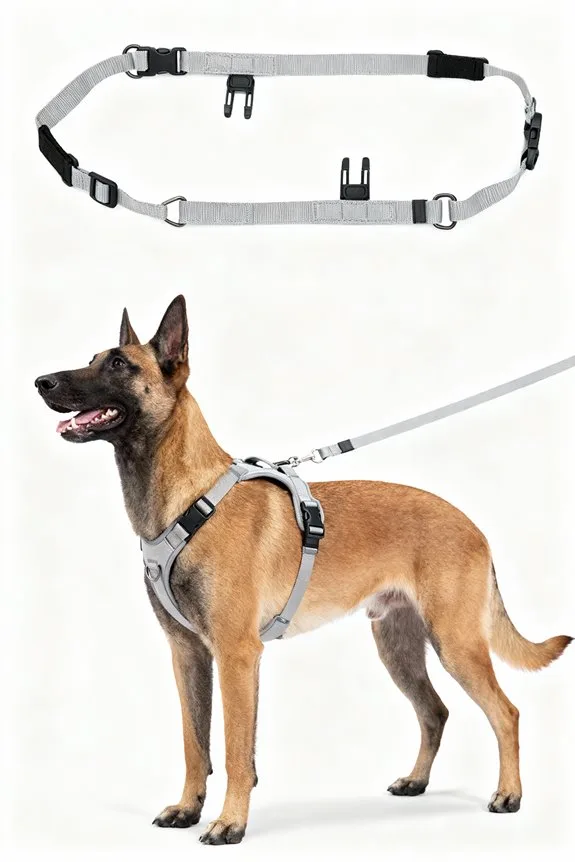
Building on the steering and correction techniques just described, a two-point, double-clip leash offers measurable benefits during walks and training. The two attachment points distribute a dog’s pull evenly across the body and harness, which reduces strain on both dog and handler by roughly half under steady pulling. How does that improve safety and comfort during walks and training sessions? By minimizing choking and neck pressure, double-clip leashes allow handlers to redirect attention calmly, and trainers to reinforce loose-leash walking consistently. Reflective stitching increases visibility at night, improving safety during low-light outings for parties. A 360-degree swivel clip reduces tangling, which shortens walk time and lowers handler frustration. Overall, the two-point design promotes predictable control, smoother corrections, and clearer communication between dog and handler. Many harnesses also feature breathable mesh construction for year-round comfort, making them ideal for various weather conditions.
Choosing the Right Size and Fit for Your Dog
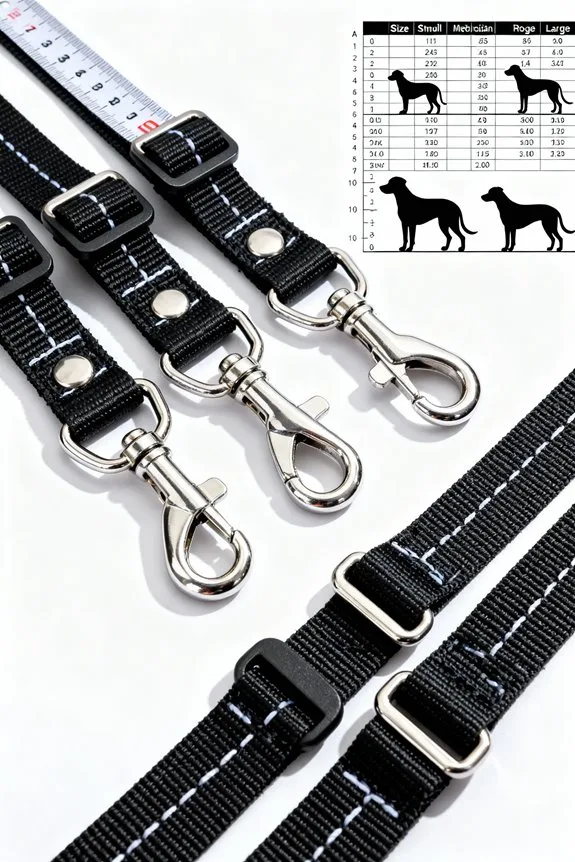
Fit and size determine comfort and control, so choose a double-clip leash rated for the dog’s weight and pulling strength. Measure neck and chest girth, then select dog leashes and harnesses with adjustable fittings and secure clips. What length suits daily walks, 6ft provides maneuverability for medium to large dogs without excessive slack? A 2.5cm webbing width spreads pressure evenly across the harness, reducing choke risks during training and sudden tugs. Match construction to breed energy, high-energy dogs need rugged materials like the Telooco leash to resist wear. Choose a leash rated above the dog’s expected pull force, this guarantees longevity and maintains control during training sessions. Measure accurately, try fittings before walks, and choose combinations that balance comfort, safety, and effective no-pull mechanics. When selecting leash extensions, consider chew-resistant reinforced nylon to prevent damage from aggressive chewers and enhance durability.
Step-by-Step: Attaching and Converting the Leash
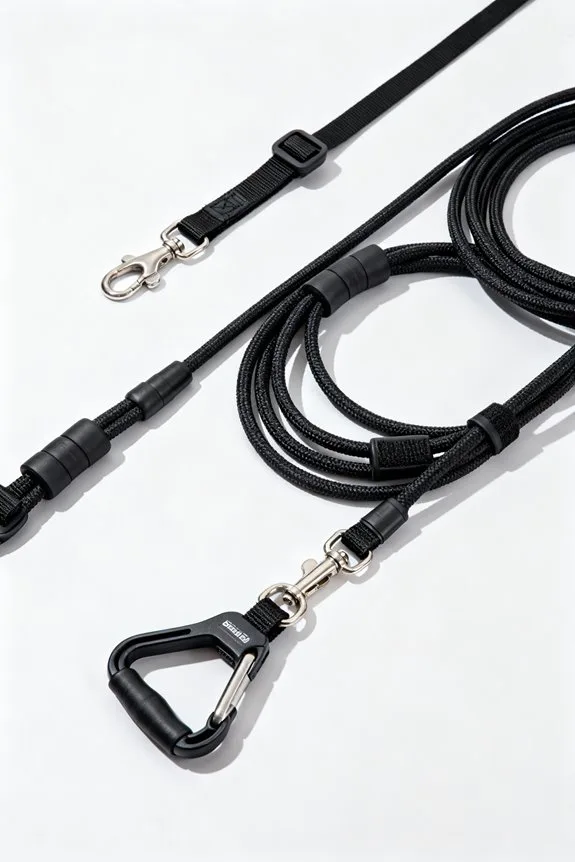
Before attaching the Telooco Two Point Control Dog Leash, the handler should fully unravel the tether, inspect clips, and plan attachment points. The handler secures one clip to the harness front attachment and the other to the back attachment, which provides balanced pressure for stronger pullers and increased guidance. For optimal results, consider using a harness with reflective elements to ensure visibility during nighttime walks. How does one convert to a 4ft single leash? Detach the clip from the harness back and use only the front clip, creating a traditional four-foot lead for relaxed walking. Confirm the leash is completely unraveled to prevent tangling, allowing the 360-degree swivel clip to rotate freely during movement. Adjust leash length according to behavior, and always grip the soft padded handle, as the leash helps reduce hand fatigue on longer sessions during outings safely.
Training Techniques to Combine With a Double-Clip Leash
When used correctly, the double-clip leash offers two points of directional control, allowing handlers to steer and realign dogs efficiently. Trainers should utilize those two points of control for dogs to provide consistent steering, keeping the dog aligned beside handlers, and reducing lateral pull. Should reinforcement be immediate, such as a treat or verbal praise after a successful stride, or a brief clicker sound for precise timing? Short sessions of three to five minutes, repeated several times daily, accelerate habituation to leash feel and decrease pulling behavior over weeks. Increase distractions gradually, moving from quiet streets to busier parks, which reinforces calm walking across environments. Pair leash techniques with clear cues like “heel” or “let’s go”, creating predictable responses and consistency. It is important to combine the use of the double-clip leash with a pet-safe gentle leader halter, which provides effective control and comfort for various dog breeds.
Safety Features to Look for (Reflective Stitching and Swivels)
A leash with reflective stitching and high-quality swivels markedly increases safety during low-light walks, improving visibility and handling for both parties. Reflective stitching enhances nighttime visibility up to fifty meters under streetlight conditions, making dogs and handlers easier to spot. A 360-degree swivel clip prevents tangling during turns and sudden movements, allowing smoother control, and reducing leash-related accidents. When using a double-clip setup, attaching both ends distributes force evenly across chest and harness, which minimizes choking risks. Consider scenarios like dusk city walks, early morning trails, or suburban streets, where reflective stitching and swivels combine to prevent collisions. In addition, leashes with shock-absorbing bungee features can further enhance safety by reducing strain on both the dog and owner during sudden pulls. Do owners inspect swivels for smooth rotation and test reflective stitching visibility, ensuring reliable performance before each outing? Routine checks prolong safe, predictable leash operation daily.
Materials, Durability, and Ergonomic Considerations
After confirming visibility and rotation features, attention shifts to construction materials, long-term wear, and ergonomic design that affect everyday performance. The Two Point Control Dog Leash uses nylon webbing, whose durability, at one inch width, paired with an iron alloy double clip, resists stretching and corrosion during use. Weighing 6.4 ounces, it remains light enough for daily walks, yet strong enough to manage pulling forces, so what trade-offs do owners face? A soft padded handle reduces hand fatigue on extended outings, thereby improving control and compliance during training. The 360-degree swivel clip minimizes tangles, which lowers stress on hardware and prolongs lifespan. Inspecting webbing width, padding placement, and clip quality predicts longevity, and these factors inform purchase decisions for trainers and pet owners. Durable nylon leashes can be cleaned with mild soap and warm water, ensuring they remain in top condition for longer periods.
Care, Cleaning, and Storage Tips
Although used daily, the double-clip leash requires simple, consistent care to maintain strength and function over time. Regularly wipe the leash with a damp cloth after walks, removing dirt and moisture to protect nylon and metal. Avoid harsh chemicals and extreme temperatures, what damage might occur to stitching and coatings if ignored? After wet or muddy outings thoroughly dry the leash, preventing mold, odors, and accelerated material breakdown. Store the leash in a cool, dry place away from direct sunlight, preserving color and reflective stitching lifespan. Inspect clips and webbing periodically, look for frayed threads or corrosion, then replace the leash if any safety concerns appear. Keeping a spare leash on hand, for emergency replacements, reduces walk cancellations and maintains consistent training progress daily. Consider using leashes with reflective stitching for increased visibility during low-light conditions.
Comparing Double-Clip Leashes to Other No-Pull Options
Double-clip leashes, a two-point-control system, distribute force across two attachment points, reducing neck strain and improving steering for medium and large dogs. Compared to single-clip leads, double-clip leashes spread pressure evenly, lower choking risk, and offer clearer directional cues for handlers. How do they stack up against no-pull harnesses that restrict shoulder movement, complicate gait, or lack reflective trim? Reflective stitching on many double-clip leashes enhances nighttime visibility, improving safety during low-light walks. Convertible models, such as those reconfigurable to a single 4ft leash, increase versatility for training phases and crowded environments. Customer feedback averages 5.0 out of 5 stars, suggesting higher satisfaction and effective training outcomes, when users seek balanced control, simplicity, and safety over more complex harness systems. Evidence supports their choice. Use of technology to measure and adapt training practices can further enhance the effectiveness of double-clip leashes by providing valuable insights into the dog’s behavior and response.
Frequently Asked Questions
Are Double-Clip Leashes Permitted by Local Leash Laws?
It depends. Owners should consult local Leash Regulations; some jurisdictions permit double-clip leashes, while others restrict certain hardware, lengths, or attachment methods, and authorities may enforce compliance case by case during public interactions and events.
Can I Attach Two Dogs to One Double-Clip Leash?
Yes, two dogs can be attached to a double-clip leash, though suitability depends on size, behavior, and Training Techniques; handlers should assess safety, maintain control, and adapt methods or use separate leads when necessary appropriately.
Are Double-Clip Leashes Airline- or Travel-Friendly?
Yes, they can be travel-friendly; it depends on design, airline rules, and crate setup. Travel Compatibility varies; lightweight, compact clips and secure attachments make them convenient, but travelers should confirm specific airline policies beforehand first.
Do Manufacturers Offer Warranties or Replacement Parts?
Like a safety net, manufacturers typically provide Warranty Options and replacement parts, offering limited or extended guarantees, repair or part-replacement services, and clear return policies; they document terms online and through retailers for consumer protection.
Are Double-Clip Leashes Safe for Children to Handle?
They can be safe only with strict supervision; Child Safety demands adult handling, proper instruction, appropriate leash length, secure hardware, and avoidance of entanglement risks, because sudden pulls or misuse may cause falls or injury.
Conclusion
A double-clip leash offers immediate control, connecting to collar and harness, which distributes force and reduces leash pressure 50%. How quickly does it help? Practitioners report noticeable improvement in two weeks, and many dogs show calmer walking within 7–14 days. For example, a shelter Lab, initially pulling every walk, reached loose-leash walking after nine supervised sessions, showing practical results. Trainers should pair the leash with positive reinforcement and clear cues, ensuring consistency and preventing regression.