As an Amazon Associate, we earn from qualifying purchases. Some links on this site are affiliate links at no extra cost to you. Our recommendations are based on thorough research and editorial judgment.

Retractable Leashes: Pros and Cons for Training

Retractable leashes offer up to 26 feet of freedom, a spring-loaded spool, and a lock button for control. Who benefits most, a well-trained dog that walks on a loose leash, or an excited puppy that pulls? They can undermine training by encouraging pulling, and inconsistent tension confuses dogs, so loose-leash skills deteriorate. Thin cords can cut hands, sudden lunges cause neck injury, and mechanical failure risks escapes. Continue for practical alternatives and safe training steps.
Key Takeaways
- Gives well-trained dogs more exploration range, boosting confidence while still allowing on-demand control with the lock feature.
- Thin cord and sudden jerks risk cuts, neck or spinal injuries, especially for small dogs or reactive lunges.
- Inconsistent tension and variable leash length can undermine loose-leash training and reinforce pulling behavior.
- Locking mechanism lets you progressively increase challenge during controlled training sessions, but requires disciplined use.
- Safer alternatives include 4–6 foot flat leashes, no-pull harnesses, or 15–30 meter training lines for structured skill building.
What Is a Retractable Leash?
You may be interested



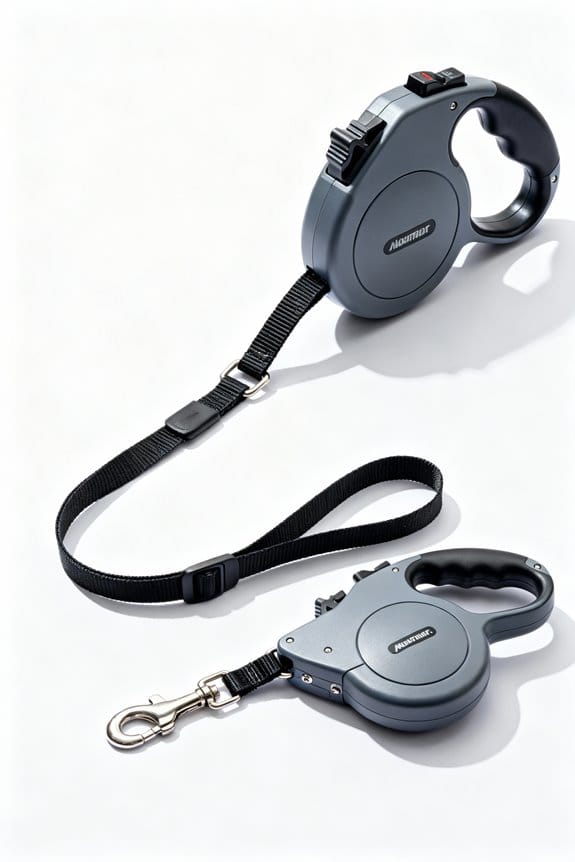
Device known as a retractable leash features a plastic handle housing a spring-loaded spool, which lets the line extend and retract smoothly. The line is typically thin rope or flat tape, and it can extend to varying lengths, often up to twenty-six feet, for safe exploration. A button-operated lock allows the user to fix a length, providing intermittent control when necessary during walks or outings. Because retractable models permit more freedom, they are recommended for well-trained dogs, otherwise they may reinforce pulling behavior. Owners should practice training that includes recall, leash manners, and incremental distance increases, which reduces risk and improves predictable responses. In short, this tool combines extendable access with on-demand control, so handlers can balance exploration with safety for varied scenarios clearly. For dogs experiencing separation anxiety, it’s important to use consistent training techniques to help manage their behavior effectively.
Benefits of Using a Retractable Leash
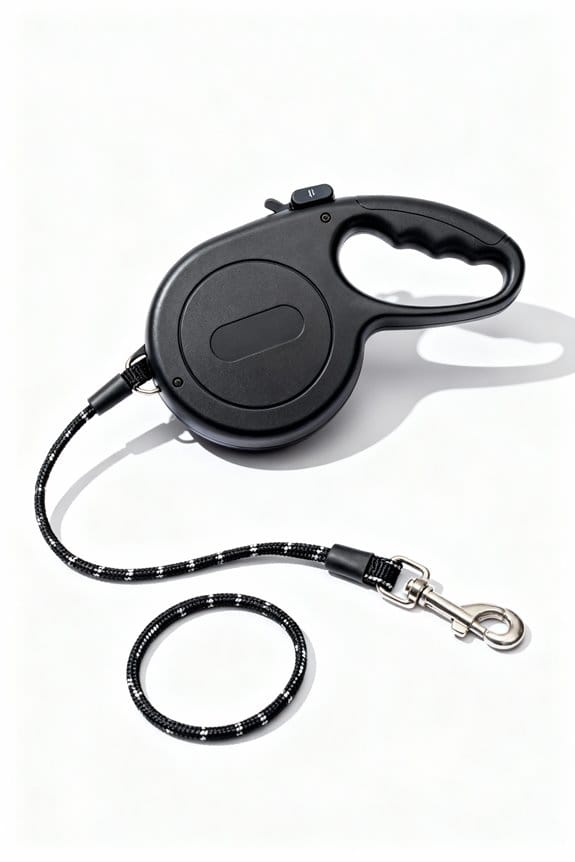
After explaining how a retractable leash functions, the benefits become clearer for handlers who balance freedom and control during outings. Retractable leashes allow well-behaved dogs more range, which can boost confidence through safe autonomy during neighborhood walks and parks. Trainers recommend their measured use in training classes, because adjustable length facilitates stepwise increases in challenge, and reinforces commands like recall and focus. Can handlers lock the leash to a fixed length, when circumstances demand immediate proximity or tight control? The lock the leash feature, used properly, reduces unexpected extension, and aids in low-distraction command training sessions with predictable parameters. For brief bathroom breaks in poor weather, this tool provides controlled freedom to explore, while remaining manageable for responsible owners and instructors and caregivers too. A significant advantage of retractable leashes is their tangle-free design, which prevents the leash from becoming twisted or knotted during use, thereby enhancing the walking experience and ensuring safety.
Training Challenges and Behavior Risks
Retractable leashes often undermine leash training, because their long, variable length and automated retraction encourage forward momentum and inconsistent feedback. Trainers report training challenges when dogs encounter inconsistent tension, a dog pulled three meters forward then released, reinforcing pulling behavior instead of yielding. How can a handler teach loose leash walking when the tool rewards lunges and unpredictability? Puppies are particularly vulnerable, because early habits form weeks, and poor manners can persist into adulthood. Using a retractable leash can confuse cue associations, slowing progress and increasing behavior risks and safety risks, such as repeated pulling or refusal to return. Multiple scenarios illustrate consequences, including sidewalks, off-leash recalls that fail within two meters, and difficulty adapting to standard collars, and reduced handler confidence overall impacts. Additionally, plastic dog crates offer a secure environment for pets during travel, ensuring they remain safe and comfortable throughout the journey.
Safety Hazards and Injury Concerns
Because sudden, high-force jerks can occur when a dog lunges at full extension, handlers and dogs face substantial injury risks. Retractable leashes can produce a sudden jerk, which may cause neck wounds or spinal trauma in dogs, particularly small breeds under ten pounds. Thin cords can cut or burn skin when wrapped, causing cuts to fingers, bruises, even amputations, if retraction occurs unexpectedly. What happens if the handle is dropped near stairs, or a leash tangles around a child, creating a tripping hazard and panic? Mechanical failure and loss of control are safety hazards that can lead to escapes, collisions, and serious injury. Handlers should assess risks, choose alternatives, and follow strict supervision and distance limits to reduce injuries in daily walks and outings. For dogs prone to anxiety, secure locking mechanisms in crates can help minimize the risk of escape and injury during unsupervised times.
Common Malfunctions and Handling Problems
Examine common malfunctions and handling problems, which can leave a dog unexpectedly free, cause cord recoil injuries, or impair control during crossings. Retrievable leashes can jam, unspool, or snap under sudden stress, causing the dog to roam, and creating dangerous scenarios. A poor leash handle design may slip from a distracted person’s grip, the dog bolts, and the handler loses immediate command. Tangled cords are frequent during interactions, they hinder retrieval, increase tripping risks, and elevate the chance of cuts or burns. Mechanical malfunctions develop over months of use, internal springs weaken, pawing wears components, and reliability drops considerably. Retractable leashes often lack reflective stitching, making them less visible during low-light conditions and potentially compromising safety. When maintenance is neglected, how should owners respond, report persistent malfunctions promptly, test brakes, and shift to a regular leash when safety is compromised immediately?
When a Retractable Leash Might Be Appropriate
When handlers are experienced and dogs reliably respond to voice commands, a retractable leash can provide controlled freedom during supervised outings. This option suits well-trained dogs in quiet, open parks or trails, where distractions are low and visibility exceeds 30 meters and picnic areas. For experienced handlers, using a retractable leash enables recall practice at distances of 5 to 15 meters, reinforcing voice control under mild challenge. What about safety when a dog approaches another dog, or wildlife, and reaction time matters? If the handler maintains oversight and limits extension, dogs more freedom is balanced with immediate control, usually reducing unexpected incidents. When handlers are novice, or recall is unreliable beyond five meters, regular leashes remain the safer, more predictable option for training and control. Additionally, no-pull harness benefits can complement the use of a retractable leash by discouraging pulling behavior and providing better control during walks.
Safer Alternatives and Practical Recommendations
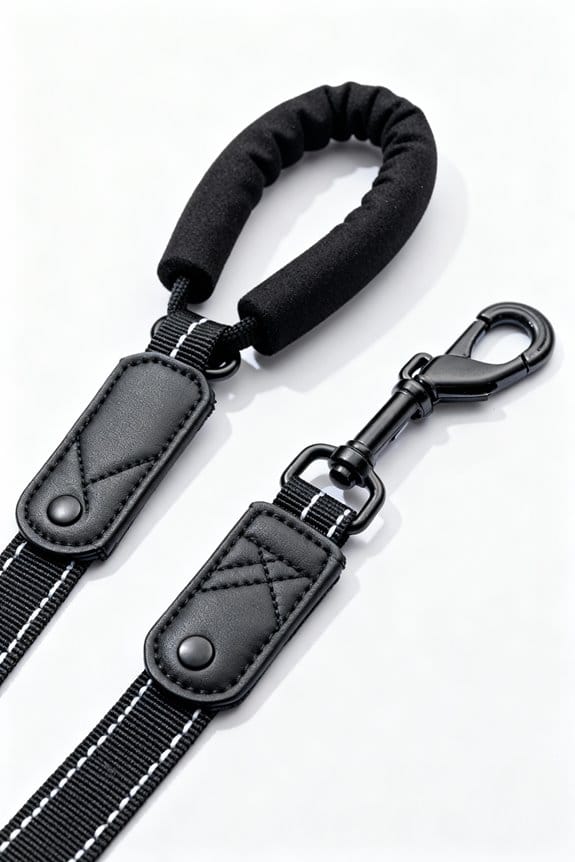
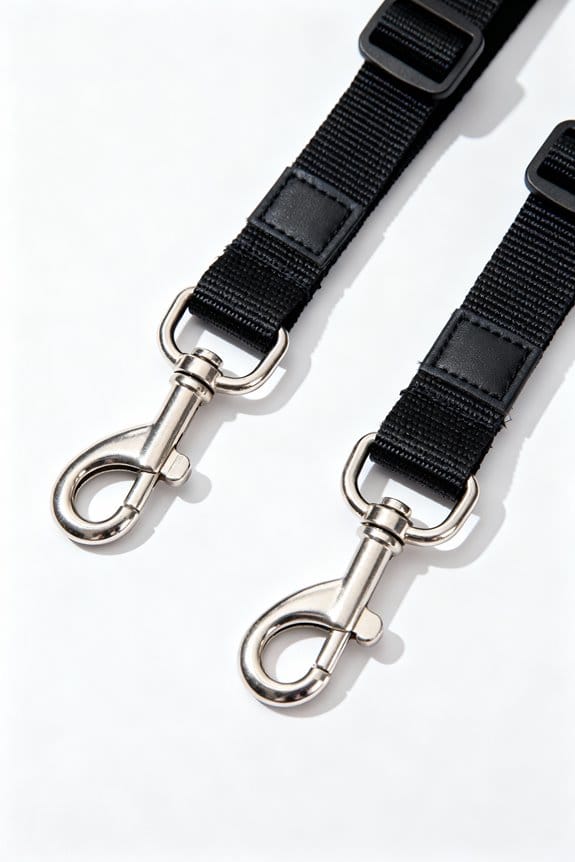
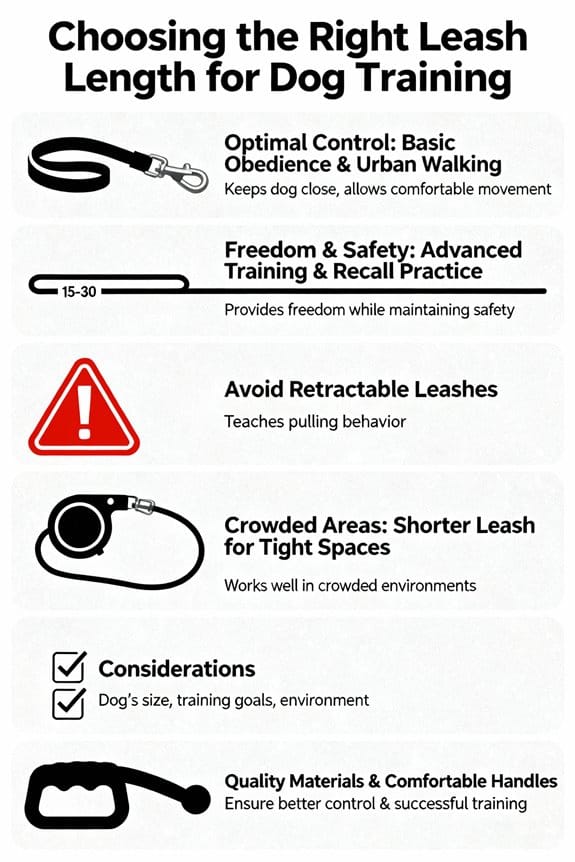
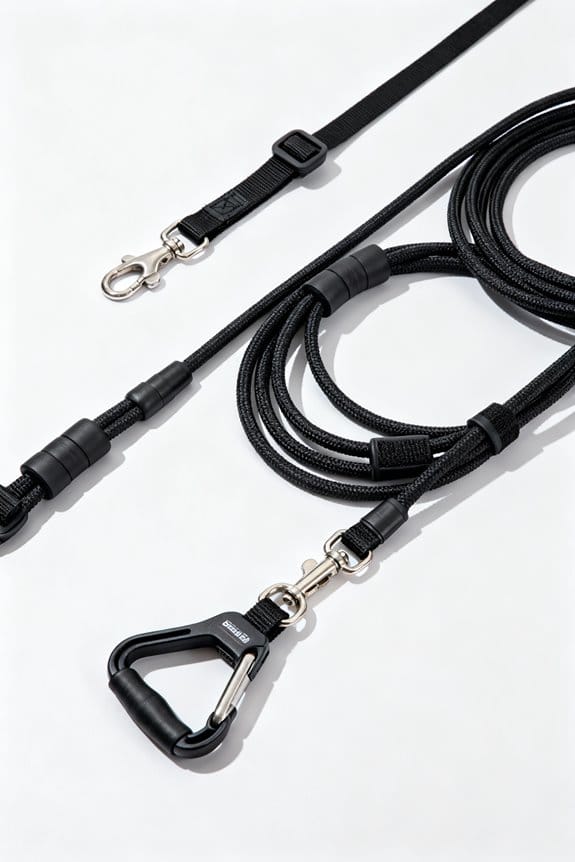
Having considered scenarios where retractable leashes may be suitable, handlers should evaluate safer alternatives that offer predictable control and improved dog training outcomes. A standard 4-foot or 6-foot flat leash provides consistent tension, predictable distance, and superior safety in urban settings with heavy distractions. An effective alternative to a retractable for training, a no-pull harness paired with a flat leash reduces pressure on the neck and discourages pulling behavior. In open areas, a 15-30 meter training line offers freedom while retaining control and teaches recall reliably. Ergonomic design ensures comfort and freedom of movement during walks, enhancing the training experience. Formal classes reinforce loose-leash walking skills, and guidance shortens learning time. Select materials like fabric or neoprene leashes to reduce entanglement risks and abrasion. Consider dangers of retractable when choosing equipment, prioritize safety and structured practice.
Frequently Asked Questions
Are Retractable Leashes Good for Training?
No, they are not ideal for training; although retractable leash benefits include flexible range, training effectiveness is limited due to compromised leash control, altered dog behavior and notable safety concerns that outweigh situational advantages overall.
Why Don’t Vets Recommend Retractable Leashes?
Absurdly, vets don’t recommend retractable leashes because Vet concerns include leash length causing safety issues, reduced training effectiveness and compromised behavior control; they advise alternative options like standard leads and harnesses instead for everyday walks.
Do Dog Trainers Recommend Slip Leads?
Trainers recommend slip leads for some dogs, citing slip lead advantages and training effectiveness, while acknowledging slip lead disadvantages related to dog behavior; trainer perspectives advise caution, supervision, and consideration of alternative options for safety.
Why Do Dog Trainers Not Recommend Harnesses?
Like a sailor trusting an unwieldy knot, trainers avoid harnesses because Harness types encourage pulling, impede Training tools’ corrections, delay proper Dog behavior, and raise Safety concerns, despite acknowledged Harness benefits and available Leash alternatives.
Conclusion
A retractable leash offers mobility and convenience, but it requires disciplined handling and clear boundaries. Is extended range worth reduced control, when traffic, crowds, or other dogs demand immediate restraint? Because sudden lunges pull sharply, handlers face leash burns, broken fingers, and unpredictable pet injuries. For training, short leads build consistent cues, while longer lines support supervised recall exercises effectively. Handlers should match leash type to environment and skill, thereby minimizing risk and improving obedience.