As an Amazon Associate, we earn from qualifying purchases. Some links on this site are affiliate links at no extra cost to you. Our recommendations are based on thorough research and editorial judgment.

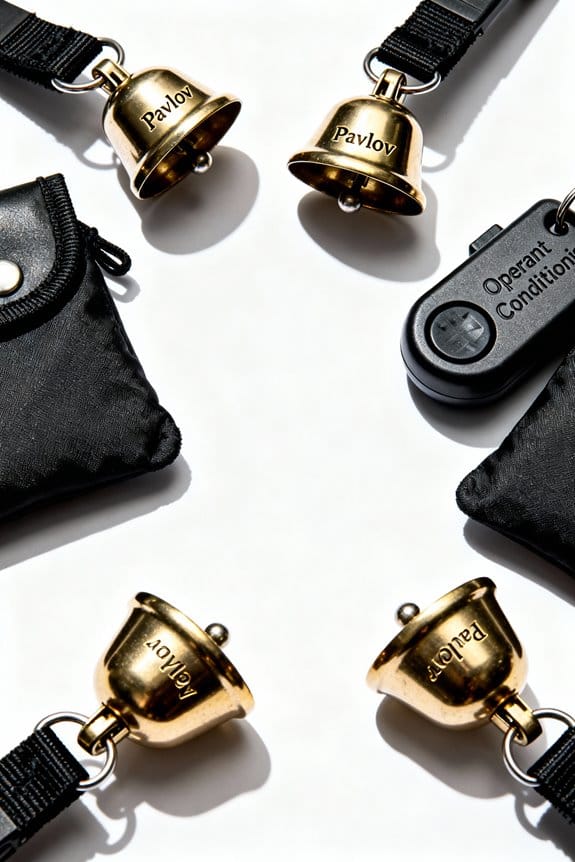
How Animals Associate Sounds With Rewards

Animals learn to link neutral sounds to rewards through repeated pairings, often within 5–20 trials, while brain circuits register these cues. Dopamine neurons in the ventral tegmental area and nucleus accumbens mark cue importance, with phasic 20–50% changes that alter learning speed. Suppressing dopamine during learning reduces sign tracking but leaves goal tracking unaffected, reflecting neural priorities. About 20–30% of rats become sign trackers, showing stronger cue-driven approach, and sections explain mechanisms and applications below.
Key Takeaways
- Animals learn to associate sounds with rewards through repeated pairings, forming classical (Pavlovian) cue–reward associations.
- Timing matters: shorter delays between the sound cue and reward strengthen the learned association.
- Dopamine signals in brain regions like the VTA and nucleus accumbens assign motivational value to reward-predicting sounds.
- Individual differences (sign tracking vs. goal tracking) reflect varying reliance on dopamine and affect cue-driven behaviors.
- Animals generalize to similar frequencies, and 10–20 pairings (rats) typically suffice to establish robust sound–reward learning.
How Sound Becomes a Signal in the Brain
You may be interested



When a neutral sound consistently precedes a reward, the brain begins to treat that sound as a predictive signal, a process called associative learning. Neural circuits, including the ventral tegmental area and nucleus accumbens, register that sound as meaningful, and dopamine release strengthens the connection between cue and outcome. How quickly does this occur, after one trial, ten trials, or dozens of trials, depending on species and reward value? In experiments, rats often show behavioral change after ten to twenty pairings, while some birds learn within five pairings. Different responses appear, such as sign tracking toward the sound source, or goal tracking toward the reward location, which reflect distinct neural priorities. Optogenetic studies confirm causality, manipulating dopamine alters learned cue responses directly in vivo. Just like the importance of proper fit in dog life jackets, the precision of these neural connections is crucial for effective learning and safety.
Classical Conditioning and Auditory Cues
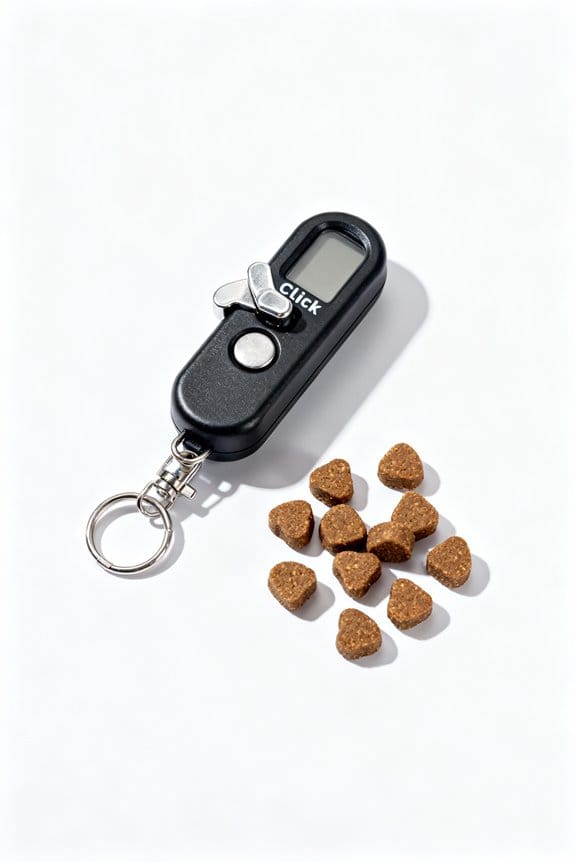
Although originally neutral, an auditory cue like a bell or tone becomes a reliable predictor of reward after repeated pairings. Classical conditioning pairs a sound with food delivery, animals learn within tens of trials, measurable responses emerge. What behaviors appear, salivation, approach movements, or orienting, depend on training parameters like timing and reward frequency? If the cue precedes reward by one to two seconds, association strengthens faster, longer delays weaken learning rates. Experiments show generalization to nearby frequencies, a 4 kHz tone can evoke responses to 3.8 and 4.2 kHz. Researchers measure response strength across sessions, plot learning curves, and adjust schedules to gain a better understanding of mechanisms. These controlled paradigms, with quantified trials and timelines, offer reliable data for comparisons across species. In puppy house training, positive reinforcement techniques involve rewarding with treats immediately after a desired behavior, which helps build a strong association between the action and the reward.
Sign Tracking Versus Goal Tracking
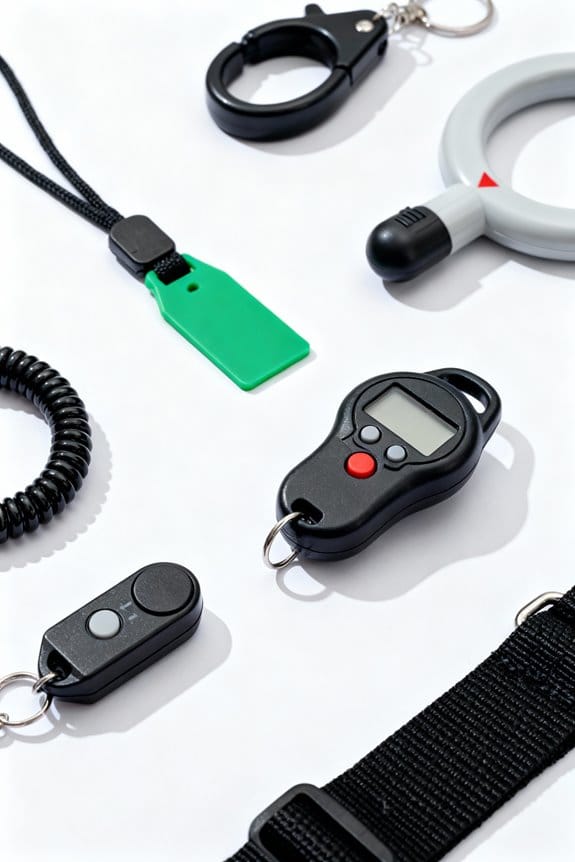
Building on conditioned auditory cues, researchers distinguish two response patterns, sign tracking where animals engage the cue itself, and goal tracking where they go directly to reward locations. Sign tracking involves animals interacting with a cue, for example pawing or gnawing at a light or speaker before reward delivery. Goal tracking involves approaching a food cup or location, bypassing the cue to access reward. Why do some animals become sign trackers while others do not? One explanation emphasizes motivational attribution to the cue, causing persistent behavior even when rewards are omitted. In three experimental scenarios researchers observe differing proportions of sign tracking, each informing models of impulsivity and risk-taking. These contrasts yield practical insights for understanding cue-driven disorders, and guide future experimental designs effectively. For example, the use of positive reinforcement is crucial in training and can significantly influence whether an animal becomes a sign tracker or a goal tracker.
The Role of Dopamine in Cue-Driven Learning
Dopamine acts as a neural signal of cue significance, guiding animals to assign motivational value to sounds, lights, or other predictors. Dopamine neurons fire to reward-predicting cues, increasing approach tendencies, and strengthening the association between cue and outcome. For example, when cues precede food by two seconds within fifty trials, many animals develop sign tracking, contacting the cue more than the feeder. In experiments, inhibiting dopamine release during learning reduces sign tracking, which indicates dopamine availability drives acquisition of cue-directed behaviors. By contrast, goal tracking, where animals approach the reward location, depends more on predictive information, and less on dopamine-mediated incentive salience. Does this explain impulsivity linked to addiction risk; yes, pronounced sign tracking, modulated by dopamine neurons, correlates with risk-taking and substance misuse. Bright reflective strips on harnesses enhance nighttime visibility for the safety of dogs during walks.
Optogenetics and Causal Tests of Learning Mechanisms
When researchers apply optogenetics to reward learning, they can switch specific neurons on or off with millisecond precision, altering behavior predictably. In rat experiments, 8-second auditory cues predicted sugar pellets, while light controlled dopamine neurons in the ventral tegmental area precisely. When dopamine release was inhibited during conditioning, sign tracking failed to develop, demonstrating causal influence on cue-directed behavior across rats. Does this mean dopamine is always necessary, or do distinct processes underlie different learning types, such as goal tracking? Optogenetic tests revealed divergence, showing dopamine dependence for sign tracking, but relative independence for goal tracking, thereby refining models. These causal manipulations, using light to control VTA neurons with millisecond timing, provide concrete, quantitative evidence that links neural activity to learned auditory-reward associations directly. Just as dogs respond to engaging squeaky features for enhanced playtime, rats demonstrate distinct learning behaviors when specific neural pathways are manipulated.
Reward Scaling, Learning Rates, and Expectation
Multiple experiments show that altering dopamine peaks changes how animals value rewards, without necessarily increasing the speed of learning. In one study, a twofold dopamine increase doubled subjective reward magnitude, yet trial-to-criterion remained near 100 trials, illustrating reward scaling separate from learning rate. What happens when dopamine is removed briefly, does learning suffer? Temporary removals impaired acquisition, suggesting consistent dopamine presence supports stable updating across trials. Rats also adjusted behavior when baseline dopamine shifted by 30 percent, treating new output as a benchmark for expectation, and modifying responses accordingly. These findings imply the brain uses adaptive reward scaling to optimize prediction errors and adjust learning rates based on past outcomes, improving decision accuracy over repeated experiences, and sensory context across varying task demands reliably. Positive reinforcement techniques can enhance happy, well-behaved pets by utilizing consistent reward systems to strengthen the bond between pets and owners.
Individual Differences: Impulsivity, Risk-Taking, and Tracking Styles
Findings about adaptive reward scaling and stable updating across trials set the stage for examining individual differences in behavioral responses to cues. Some animals become sign trackers, they approach cues vigorously; for example, 30% of subjects show persistent cue interaction before reward delivery. These behaviors correlate with higher impulsivity scores, increased risk-taking, and challenges in withholding prepotent responses during delay tasks. Dopamine availability differs between tracking styles, it directs incentive salience, and distinct pathways support sign versus goal tracking. Experiments measuring phasic dopamine show amplitude differences of 20–50%, which alter learning rates and cue-induced approach probability. Understanding individual variance guides experimental design, suggests targeted interventions, and clarifies when pharmacological or training approaches may reduce maladaptive cue responses. This informs risk assessment and treatment planning. Additionally, reflective elements on dog collars enhance visibility during nighttime walks, providing safety for both the dog and the handler.
Links Between Cue-Reactivity and Addiction Vulnerability
Because cues acquire motivational power through repeated pairing with rewards, cue-reactivity substantially increases the risk of compulsive, cue-driven behavior in animals. Sign tracking, observed in about 20–30% of laboratory rats, links cues to approach, persistent interaction, and heightened relapse probability, and increased incentive salience overall. Dopamine activity in specific pathways mediates cue-reactivity, causing strong conditioned responses even when the primary reward is absent. Do impulsive animals, showing frequent risk-taking in 5–10 trials, develop more entrenched cue associations, and thereby greater addiction vulnerability? Goal tracking contrasts with sign tracking, it relies less on dopamine, and it predicts lower compulsion, offering comparative scenarios for intervention design. Because cue-reactivity can persist for weeks or months after reward removal, relapse remains a practical concern in animal models and human translation. Understanding positive reinforcement techniques in animal training can provide insights into how consistent rewards shape behavioral responses, potentially mitigating the impact of cue-reactivity.
Methods for Mapping and Measuring Animal Vocalizations
Studies of cue-driven behaviors often rely on sound cues, and researchers consequently use acoustic methods to map animal vocalizations across environments. Acoustic tracking devices record thousands of hours per deployment, capturing territory use, movement paths, and resource hotspots over weeks or months. Passive acoustic monitoring, or ecoacoustics, uses arrays of low-cost recorders to sample habitats, yet creates challenges because data volumes exceed manual review capacity. How are calls identified among noise? Machine learning classifiers, trained on labelled examples, distinguish individuals with accuracies often above 85%, enabling population tracking and behavioral analysis. These advanced techniques parallel the adjustable harness designs used in animal training, which also prioritize precision and comfort. Researchers combine spatial tagging, spectrogram analysis, and automated detection, to produce heatmaps and temporal patterns across seasons. These approaches reveal different things about communication, and they guide hypothesis testing about cue-reward associations, effectively.
Conservation, Monitoring, and Applied Uses of Sound Cues
When conservationists incorporate sound mapping into management plans, they gain continuous, quantitative data on species distribution, behavior, and habitat use across seasons. Acoustic tracking devices collect long-term datasets, revealing territory sizes, movement corridors, and population density, which inform zoning and protection measures. Low-cost autonomous recorders enable deployments over months, increasing sample sizes and reducing field costs, so monitoring becomes scalable. Machine learning algorithms detect individual calls automatically, speeding analyses, and improving detection rates in noisy environments. Utilizing reflective stitching in equipment can enhance nighttime visibility, ensuring that data collection continues effectively even in low-light conditions. How can this guide interventions, and what metrics indicate success? Economic valuation, estimated at $125-$140 trillion annually, links biodiversity soundscapes to tourism and livelihoods, reinforcing protection incentives. Monitoring also shows how ocean acidification disrupts communication, consequently prompting mitigation and adaptive management measures. As a result, animals learn, aiding ecological restoration.
What Animal Studies Tell Us About Human Learning
Although animal experiments are simpler than human trials, they reveal robust principles of learning, such as how cues become predictive of rewards. Studies with rats show sign tracking to discrete sounds, where 30 percent of subjects approach sounds directly, illustrating variability across individuals. Does liking equal wanting, or can pleasure remain low while motivation climbs, influencing choices despite stable hedonic responses? Animal models using dopamine manipulation reveal neural mechanisms, for example, phasic dopamine bursts increase cue-driven pursuit within seconds, changing behavior probability by amounts. Retrospective causal learning shows that rewards delayed by five seconds can retroactively assign credit to earlier neutral sounds. Machine learning analyzes vocal patterns and behavior, offering quantitative tools that translate animal findings into hypotheses about human communication and educational strategies.
Practical Tips for Using Sound to Shape Behavior
Several trainers recommend a single, consistent sound cue, such as a bell or 1-kHz tone, to signal reward availability during routine sessions. Use that sound cue before offering a treat, repeat it 5–10 times per session, and space sessions twice daily to build association. Should the animal falter, vary volume by 10–20 percent, or add a second tone to increase attention. For complex tasks, implement a short sequence of 2–3 sounds, and link each to incremental rewards, for example small food morsel then larger reward. Monitor behavior changes, record response latency in seconds, and adjust timing accordingly. Do these steps reliably, and sound cues will shape expectation, improve learning rates, and clarify contingencies. Document outcomes, compare groups of three to five animals, and refine protocols based on data.
Frequently Asked Questions
When an Animal Learns to Associate Its Behavioral Response With a Reward or a Punishment, This Is Referred to As?
Operant conditioning. It refers to the process whereby an organism’s behavior is strengthened or weakened through rewards or punishments, shaping response probability via reinforcement schedules, operant contingencies, and systematic Behavioral Conditioning procedures across species broadly.
What Are the Benefits of Animal Sounds?
Animals benefit from Vocal Communication by coordinating group behaviors, locating mates, warning of predators, guiding environments, facilitating social bonds, enabling individual recognition, assisting tracking and monitoring, and supporting economic activities like whale-watching through sound-based research.
What Is the Reward System in Animals?
The reward system in animals is centered on circuits, particularly the VTA and nucleus accumbens, where Neurochemical Rewards, primarily dopamine release, reinforce behaviors, guide learning, influence motivation, memory, risk, including impulsivity, addiction, and decision-making processes.
How Are Sounds Important for Animals?
Sounds are essential for animals, enabling Sound Communication that mediates mating, social bonding, navigation, territory defense, coordination, and predator avoidance; researchers use acoustic tracking to reveal species identity, population dynamics, and ecological interactions across systems.
Conclusion
The researcher explains how a 1 kHz tone or 5 ms click, presented 10 seconds before reward, becomes a predictor for rodents and birds, systematically. How do sign trackers, who approach the cue, differ from goal trackers, who approach the food, across trials and varying cue intensities and contexts experimentally? Because dopamine encodes prediction error, brief 0.5-second optogenetic bursts can confer incentive value, and conservationists map calls across 1,000 hectares, imagining a pocket watch practically.