As an Amazon Associate, we earn from qualifying purchases. Some links on this site are affiliate links at no extra cost to you. Our recommendations are based on thorough research and editorial judgment.

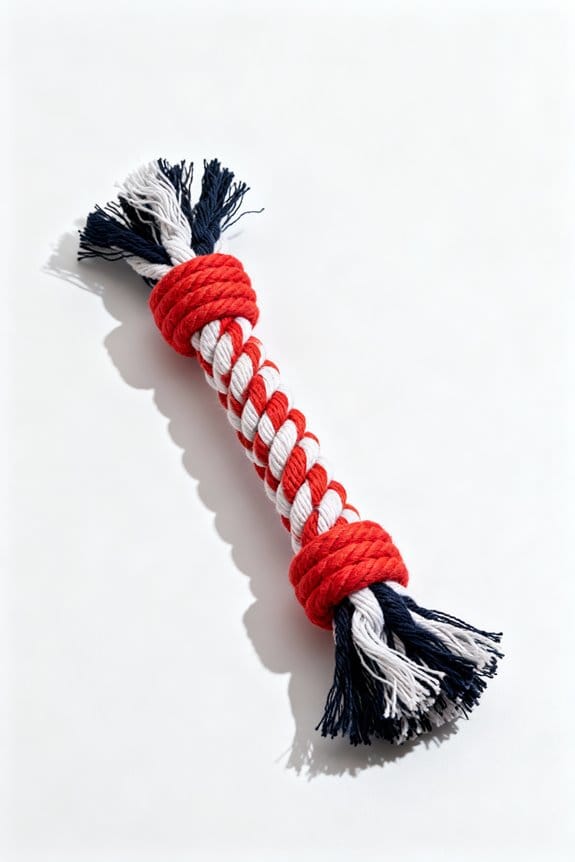
Tug Toys as Rewards in Training Sessions

Tug toys work well as immediate, high‑value rewards during short training bursts, increasing task reliability by about 30–50%, and channeling arousal into controlled responses. Which toy fits best depends on size, age, and chewing style, for example soft fabric for puppies, firehose or Syntek for adults. Keep sessions brief (3–5 minutes), teach a clear release cue, allow occasional wins to build confidence, and inspect toys regularly for safety; more practical guidelines follow in subsequent sections.
Key Takeaways
- Tug toys act as high-value rewards that quickly reinforce desired behaviors when used immediately after correct responses.
- Keep tug-based training sessions short (3–5 minutes) and use brief tug bursts (3–4 seconds) to prevent overstimulation.
- Always teach and practice a reliable release command (e.g., “drop it”) so the toy remains valuable and controllable.
- Choose toy size, material, and handle design to match your dog’s age, strength, and chewing style for safety and durability.
- Alternate tug with food rewards, vary locations, and track correct responses to measure progress and maintain motivation.
Benefits of Tug Play for Dogs
You may be interested


When incorporated into a routine, tug play delivers concentrated physical benefits, building muscle tone and agility through short, intense bursts of activity. Trainers report two to three weekly training sessions increase strength and endurance, while short five-minute rounds sustain focus. How does tug play influence dog behavior during learning? It channels arousal into controlled interaction, so commands like “drop it” become reliable, because positive reinforcement pairs release with correct responses. Toy rewards function as immediate feedback, improving task acquisition by 30 to 50 percent in novice dogs. Mental stimulation arises from strategy and timing, which refines impulse control and problem solving. Regular, supervised tug play reduces anxiety and boredom, creating predictable outlets that support long-term obedience and owner-dog bonding, and often measurable behavioral improvements. Additionally, interactive toys to stimulate mental engagement can complement tug play by providing varied forms of mental challenges and entertainment during playtime.
Choosing the Right Tug Toy
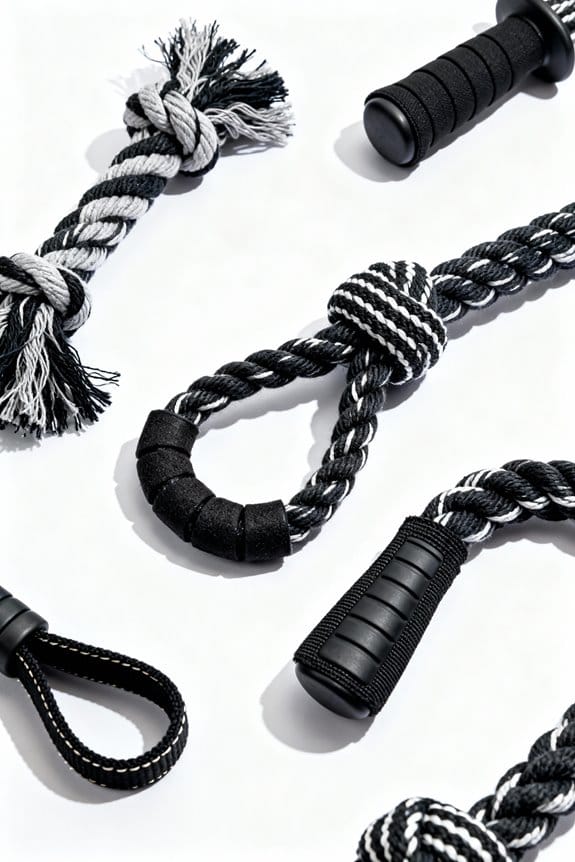
Although selection may seem simple, choosing a tug toy requires matching size, material, and handle design to the dog’s strength, age, and chewing style. Assess dogs size and age first, select sizes like 2×12 or 3×22 to align with strength and training requirements. Consider durability of the material, choose Syntek or firehose tug toys for aggressive chewers, while softer fabrics suit puppies and light players. Would a handle improve control during sessions, or is a knot sufficient for handler preference and rapid reward delivery? Monitor wear routinely, inspect seams, fibers, and replace when fraying appears, replacing tug toy to prevent ingestion or injury. Clear guidelines reduce risk and optimize training outcomes, so choose the right tug toy deliberately, balancing durability, size, and handling needs. For those seeking additional enrichment, look into interactive treat dispensing toys which promote mental stimulation and physical activity for dogs.
Recommended Products

STRONG & TOUGH - Worlds “Tuffest” Soft Dog Toy Durable, squeaky toy for dogs of all sizes

Incredibly easy to set up - The Tumbo dog trolley comes with all components needed for a fast and easy one person set up to have a great dog zipline for backyard. Our pre-looped dog run cable is easy to attach to a secure connection point. Then quickly set up the dog line between trees by connecting the opposite side with our ratchet action tensioning device for a super tight non-sagging long lead for dogs. Tumbo's dog trolley system for large dogs comes with our triple wheel dog pulley.

STRONG & TOUGH - Worlds “Tuffest” Soft Dog Toy Durable, squeaky toy for dogs of all sizes
Fenrir Tug Toy Lineup

Since trainers must match tools to canine needs, the Fenrir lineup presents targeted options, each specified for breed size, chew strength, and training goals. The Fenrir Jute Dog Tug Toy, made from durable jute, suits medium to large breeds. For young dogs, the Puppy Bite Training Tug Toy uses tear-proof linen to redirect biting, creating appropriate play behaviors. The Bite Resistant Tug Toy, made from firehose material, challenges aggressive chewers, prolongs engagement, and protects hands. Each Tug Toy serves as a training reward, enhances bonding with handlers, and supports structured reinforcement. Which toy fits a program depends on objectives, intensity, and the dog’s play style, so trainers plan accordingly. When matched precisely, these toys reduce unwanted chewing, increase motivation, and produce measurable progress in obedience. For agility training, ensuring the right equipment aligns with the dog’s specific needs can enhance performance and safety during sessions.
Recommended Products

20" long. An x-large dog toy.

100% Organic & Locally-sourced Sheepskin: Our durable bungee dog tug toy has a generously-sized bite area that is made from responsibly-sourced sheepskin, which is not just of high-quality but also extremely soft. The bite area measures 20 cm (8 inches) long and 8 cm (3 inches) inches wide, making it irresistible for your dog to bite it instantly.

Virtually Indestructible — Lifetime Replacement Guarantee: No dog toy is truly indestructible — but this is as close as it gets. If it’s not the longest lasting toy your dog has ever had, you get a one-time replacement or refund. No sqeaks, no fluff, no BS.
Selecting Tugs for Puppies Versus Adult Dogs
Three core considerations guide selection of tug toys for puppies versus adult dogs: material softness, toy size, and durability appropriate to bite strength. For puppies, choose softer, tear-resistant fabrics like linen or jute to protect developing teeth and gums during early training and chewing habits. Select smaller sizes for young dogs, provide gradual introduction over multiple short sessions to prevent overstimulation, and reinforce commands. Adult dogs require tougher constructions such as firehose or Syntek materials, which withstand stronger bite forces and prolonged play duration. Inspect tugs regularly, remove frayed or damaged toys immediately, because torn fibers can become choking hazards and compromise safety ultimately. Slip leads usage with a harness can complement tug toy training for enhanced control and safety. Which size and material fit a dog best, depends on weight, bite intensity, and training goals, so assess each animal individually.
Recommended Products

Hard-wearing Material: Our durable dog training wedge is made of high quality jute and linen material, design well constructed, which come with double stitching. It can not only withstand strong pulling force,but also strengthen the biting ability of the dog's teeth when you training your dog

Great reward toy for all breeds of dogs

Police and sports such as schutzhund IPO ring sport training favorite
Basic Safety Rules for Tug Play
A clear set of safety rules for tug play helps trainers maintain control, protect canine dental health, and promote consistent learning outcomes, and reducing liability. Establish a command for release, teach when to release the toy, and practice short routines of two to three minutes, vary toy type weekly. How should trainers respond if aggressive behavior appears, stop immediately, assess triggers, and calmly end the play session? Do not pull excessively, limit force to gentle resistance, because excessive tugging can fracture teeth or strain jaws. Inspect toys before each use, replace any with fraying, tears, or loose parts to prevent choking in the dog’s mouth. Allow the dog to win occasionally, for example one in four sessions, to build confidence and reinforce cooperative play. A well-fitted harness with reflective materials can enhance safety during training sessions, especially in low-light conditions.
Teaching Release and Drop Commands
Although many handlers expect instant compliance, teaching release and Drop It requires systematic back-chaining, precise timing, and graduated difficulty. When teaching your dog, instruction begins with looking at the tug, then touching, mouthing, and light tugging, steps clicked. The handler rewards the release, using a high value treat and a consistent cue to reinforce the behavior during play daily. For clarity, the command can be phrased as “Release’ the toy”, given when the dog lets go, followed by a toy reward. Consistent use of “Drop It” during play establishes the cue, and the clicker marks success when the mouth opens and the item is released. Short training sessions, lasting two to five minutes, maintain focus, prevent over-excitement, and allow multiple repetitions without fatigue. It’s important to choose a no-pull design harness during these sessions to prevent any pressure on your dog while they are learning.
How to Introduce Tug Play to Your Dog
How should handlers begin introducing tug play to a dog, to guarantee safety and sustained interest during training sessions? First, introduce your dog to a properly sized, durable tug toy that matches chewing habits, to prevent hazards and avoid boredom. Create interest by moving the toy enticingly, then invite gentle pulls, keeping play controlled, rather than overpowering the dog. Handlers should use tug as a reward within short, timed sessions of two to five minutes, reinforcing effort with verbal praise consistently. Play as a reward increases motivation, so reward your dog using toys, combine tug with treats or commands, fostering faster learning. After each session, store the toy away to keep the game special, maintain value, and promote enthusiastic, predictable engagement next time afterwards. Consider using adjustable dog crates for controlled environments during training sessions, ensuring a safe and comfortable space for your furry friend.
Advanced Tug Play Techniques
Advanced tug play techniques combine controlled movement, obedience cues, and measured rewards to increase engagement, agility, and training value. Trainers change directions suddenly during a tug game, for example five short pulls followed by a lateral pivot, to sharpen agility and attention. They integrate simple commands like sit or down between rounds, to guarantee dogs obey commands reliably and calmly. Why alternate play with commands, and how does it help focus? Interval training, such as thirty seconds of tug followed by one minute of obedience drills, reduces overstimulation and sustains motivation. Allowing the dog to win occasionally, perhaps one in four matches, builds confidence and positive association. These practices reinforce training, increase control, and make playing tug a constructive, measurable exercise. Consistent application of these techniques helps in achieving measurable, incremental goals, which are crucial for tracking improvements effectively. Apply consistently, observe.
Using Tug Toys Effectively as Training Rewards
When used correctly, tug toys provide a high-value reward that reinforces desired behaviors, supplies physical exertion, and adds mental stimulation, reliably. Handlers should alternate tug with food rewards, keep sessions short to three to five minutes, and use clear cues for consistency. How long should tug bursts be; three to four seconds post-command reinforces behavior without causing overexcitement or fatigue, improving consistency. Teach your dog release commands like “drop it,” practice ten repetitions, then reward briefly with tug or small food rewards. Keep high toy value, use toys sparingly by storing the toy as a reward, this preserves novelty and increases focus consistently. Record measurable outcomes, for example aim for twenty correct responses per short session, then raise difficulty gradually to generalize skills effectively. Maintaining obedience under extreme distractions is crucial for advanced training, ensuring that your dog remains focused and responsive even in challenging environments.
Recommended Products

PERFECT FIT & VALUE PACK: Maximize convenience with a bulk 600 pack of PetsWorld disposable male dog wraps, ideal for toy-sized dogs weighing up to 10 lbs. Each wrap fits a 8.5–10.5 inch waist, offering dependable comfort for long-term use and multi-dog households.

This rope is made from 100% pure USA Grown Cotton! Many other "cotton" ropes are mostly Polyester or Acryllic (basically plastic) yarn with dyes.

ONE-IN-A-MILLION ROBOT DOG, MINTID JUST FOR YOU! Through the minting process, the all-white Dog-E comes to life and reveals a unique combination of colorful lights, sounds and personality traits, so your Dog-E is truly one in a million. No two Dog-Es are ever the same. Connect to the Dog-E app for even more ways to play.
Tug Play Strategies to Boost Recall
A structured approach to tug-based recall begins with short, focused sessions, where handler uses high-value toys like a Sheepskin Bungee Chaser or Pocket Fauxtastic Tug. Start with 30- to 60-second drills, reward a correct come with 5-10 seconds of interactive play, and repeat drills 8–12 times per session each day. How can handlers shape reliable responses amid excitement, by gradually introducing mild distractions during tug play such as a dropped toy or passing nearby person? Encourage clear recall commands, reinforce clean responses, and reward voluntary dog offers to reinitiate play, so the dog learns consequences and choices through repetition consistently. Dog puzzle games can provide cognitive benefits akin to physical workouts, serving as a complementary tool to enhance mental stimulation during training. Vary locations, tug with your dog from living room to yard, maintain brief training sessions, increase challenges gradually, and track progress numerically weekly consistently.
Maintaining and Caring for Your Tug Toys
Although tug sessions are brief, proper cleaning and storage extend toy life, protect canine health, and preserve training value. Hand wash tug toys with non-toxic dog detergent, thoroughly rinse them, to maintain hygiene and lifespan. Where should toys be stored, and why is a dry area important to prevent mold or mildew growth during off hours? Regularly inspecting tug toys for frayed edges, loose threads, or tears reduces injury risk, and replacement is necessary when significant wear appears. To preserve the value of the tug toy, keep it hidden when not in use, making it a special reward during training. Follow the manufacturer’s care instructions for material-specific guidance, including temperature limits and drying methods. Consult veterinarian if ingestion or injury occurs. Regularly check seams.
Recommended Products

KEEPS YOUR DOG ACTIVE & MENTALLY STIMULATED: Give your dog something fun and exciting to focus on with this outdoor tug toy. It helps burn off energy, reduces boredom, and can even improve behavior by satisfying their natural tugging instincts. Great for playtime, exercise, and mental enrichment.

360° Rotation Dog Tug Toy Rack Set - The tether toy rack set includes a rotatable thick spring pole rack and 3 outdoor dog tug toys. It allows pet dogs slef play by pulling and dragging the toys. Keep them busy, relieve boredom and anxiety, release energy and exercise.

FREE YOUR HANDS: Say goodbye to tangled leashes and tired arms. Our reinforced dog tug of war toy with a sturdy anchor base lets your dog play independently—tugging, pulling, and chewing with full freedom. The weighted base grips firmly to grass, concrete, or tile, providing stable resistance that turns every tug into a full-body workout. This dynamic play helps burn off excess energy, reducing destructive behaviors at home
Common Misconceptions About Tug Play
Many owners assume tug play promotes aggression, but evidence shows structured sessions reduce arousal and teach impulse control. Research and practice counter common misconceptions, showing tug play can be a positive outlet for energy, and reinforce cooperative behavior with simple rules. Who benefits from this approach, puppies, adolescents, and adult dogs of small, medium, and large sizes? Structured tugging, when combined with clear cues and releases, teaches impulse control, and allows handlers to reward correct responses within training sessions. Using durable toys made for canine teeth minimizes dental risk, and sessions of 5–10 minutes, two to three times daily, balance exercise and learning. Trainers report measurable gains in obedience, reduced overexcitement, and stronger handler-canine communication after consistent, supervised tug work and clearer behavioral boundaries.
Frequently Asked Questions
What Can Be Used as a Reward During Training?
Treats, praise, and play can be used as training rewards; tug toy benefits complement positive reinforcement through engaging activities, improving dog behavior and motivation techniques while varying training rewards sustains interest and reinforces desired responses.
What Are the Benefits of Playing Tug?
Playing tug offers tug benefits: interactive play that provides exercise motivation, mental stimulation, and behavior reinforcement while serving as a bonding experience between owner and dog, consistently enhancing trust, impulse control, and focused training outcomes.
What Can Be Used as a Reward During Dog Training?
A handler can use treat rewards, praise techniques, toy incentives, clicker training signals, food motivation and playtime rewards; combining these allows varied reinforcement schedules that suit individual dogs, balancing immediate gratification with long-term behavior shaping.
What Are the 5 D’s of Dog Training?
Distance, Duration, Distraction, Direction, and Dependability define the 5 D’s of dog training. The trainer employs distance control, duration building, distraction techniques, double command use and exercises to improve dog focus and reliability over time.
Conclusion
The review shows tug toys increase engagement and reinforce cues, producing measurable recall improvements across 2 to 6 sessions. Can trainers expect faster response rates when combining tugs with verbal markers, for example during five-minute, repeated reward intervals? Because puppy jaws and adult bite strengths differ, choosing softer fabric tugs for puppies and reinforced rubber prevents injury. When safety rules, variable rewards, and maintenance routines are followed, tug play becomes a reliable, measurable training reward.