As an Amazon Associate, we earn from qualifying purchases. Some links on this site are affiliate links at no extra cost to you. Our recommendations are based on thorough research and editorial judgment.

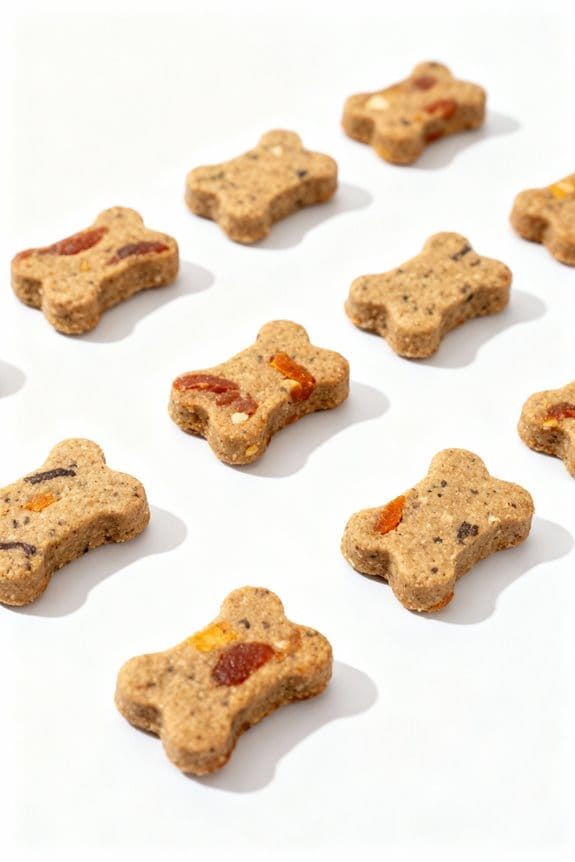
DIY Homemade Training Treat Recipes

Homemade training treats let owners control ingredients, reduce additives, and cut costs up to 50 percent, keeping bites 5–10 grams for reinforcement. What safe bases work best, oat or whole wheat flour, pumpkin puree, cooked chicken, or xylitol‑free peanut butter? How to adjust for allergies, seniors, or weight management is straightforward: swap flours, add applesauce, or reduce fat. Bake at 150–180°C, cool, store airtight or freeze for longevity, and guidance explains recipes, adjustments, and troubleshooting.
Key Takeaways
- Make treats at home to control ingredients, accommodate allergies, and avoid additives like xylitol, onion, and garlic.
- Aim for 5–10 gram pieces (about 10–20 kcal) for effective, low-calorie training rewards.
- Use oat or whole wheat flour, eggs, pumpkin or applesauce, and cooked lean protein or peanut butter as safe bases.
- Follow simple recipes—oat-peanut bites or banana-oat-applesauce—baked 160°C for 18–25 minutes for consistent results.
- Store cooled treats airtight; refrigerate moist recipes up to two weeks and keep dry biscuits sealed longer.
Benefits of Homemade Training Treats
You may be interested
Allergy-Friendly Training Treat Alternatives
November 7, 2025
Grain-Free Training Treats: Benefits and Options
December 23, 2025
Healthy Treat Options for Daily Training Sessions
January 1, 2026
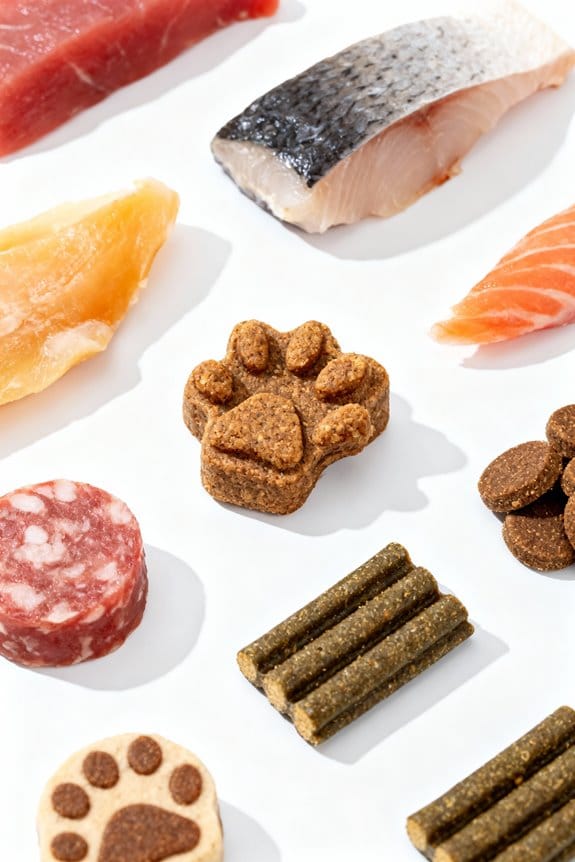
Because ingredients can be controlled precisely, homemade training treats allow handlers to tailor nutrition and flavor to specific dogs’ needs. This practice delivers health benefits, reduces unknown additives, and supports ingredient customization for allergies or caloric limits, and micronutrients. How much can handlers save when baking at home, could cost savings reach 50 percent compared with commercial treats? Smaller, consistent bite sizes of five to ten grams improve training effectiveness, by limiting satiety while maintaining motivation during sessions. Handlers may consider dietary considerations such as reduced fat for overweight dogs, or added protein for working breeds, planning recipes accordingly. For example, bonding experience increases when handlers bake together, pumpkin and chicken combos provide fiber and protein for active dogs, and storage affects shelf life. When selecting puppy essentials, material quality and safety are crucial to ensure the health and well-being of your pet.
Essential Dog-Safe Ingredients
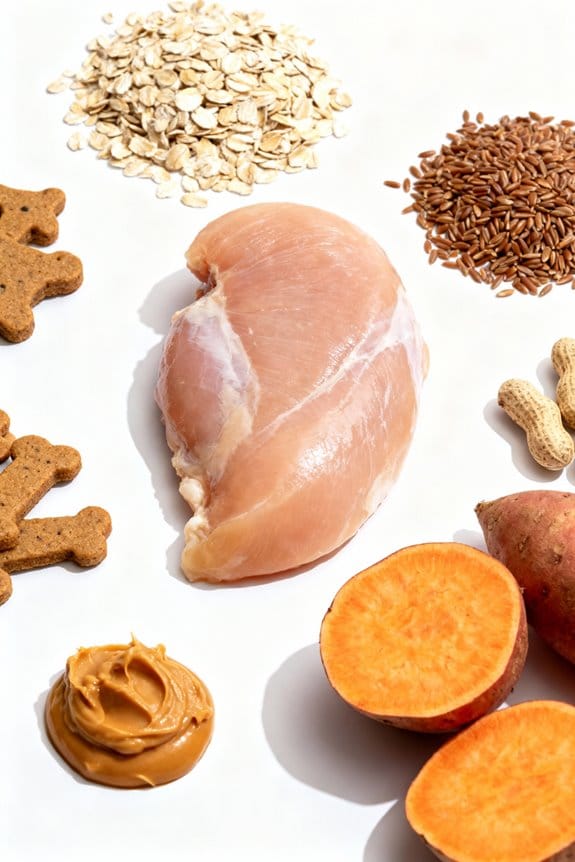
Several foundational ingredients reliably form the base of safe, effective homemade training treats, including oat or whole wheat flour, eggs, and pureed fruits or vegetables. Recipes typically include a protein like cooked chicken or plain peanut butter, fiber sources such as pumpkin puree or applesauce, and minimal added salt for canine health. Are there common allergens to bear in mind, such as dairy, soy, or nuts, and how should one manage them? Ingredient substitutions can reduce risk, for example swapping oat flour for coconut flour, or applesauce for banana, while maintaining texture and nutrition. Toxic items, including xylitol, onions, and garlic, must be avoided, causing acute harm. Portion size guidance, such as 10–20 kcal per training treat, supports safe calorie control. Check labels for additives always. It’s important to choose non-toxic materials when selecting toys or ingredients, ensuring the safety and health of your dog.
Recommended Products

King Arthur Oat Flour brings superior baking performance you can trust, along with more protein than traditional oat flour.

Whole grain oat flour contains all the flavor and nutrients of the original oat groats

HOMEMADE PERFECTION, EVERY TIME: Bob’s Red Mill Gluten Free Oat Flour is finely ground from high quality gluten free oats, perfect for bread, muffins, cookies, brownies, pancakes and more
Equipment and Prep Tips
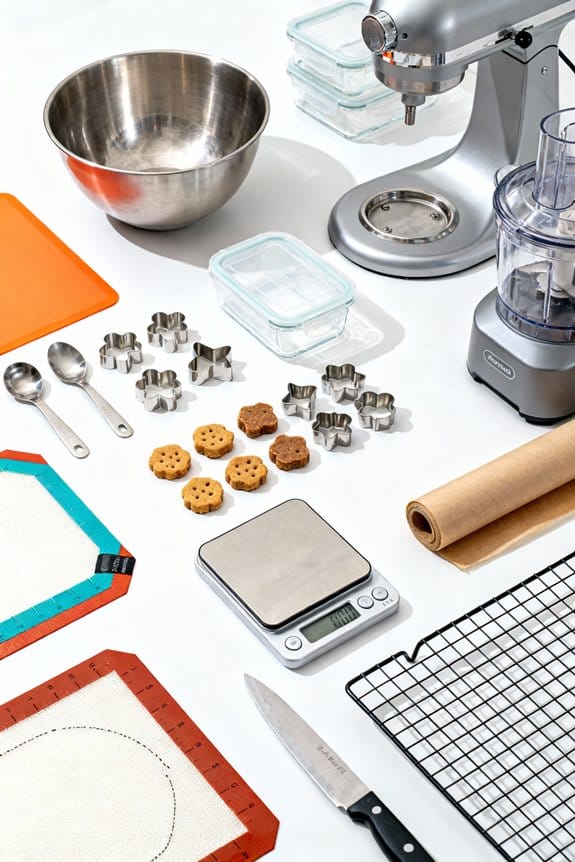
Many kitchens benefit from assembling a small set of core tools, including a food processor, silicone spatula, rolling pin, and baking sheets. These equipment essentials allow consistent texture control, faster prep, and easier portioning for bite-sized training treats. What measurement tools are needed, and how precise should portions be for consistent rewards? A digital kitchen scale, measuring spoons, and cookie cutters of defined sizes yield repeatable results, and portion control supports training goals. Prep techniques include pre-measuring dry and wet ingredients, chilling dough briefly for cleaner cutting, and lining trays with silicone mats to prevent sticking. Effective Separation Anxiety Training Techniques can be enhanced by incorporating reward-based training with these homemade treats, aligning with structured training guides. Cleaning protocols reduce cross-contamination, store tools dry, and inspect equipment for wear to maintain safety and longevity. Use airtight containers, label dates clearly, and rotate stored batches regularly.
Recommended Products

[All in One Kit] Master all baking projects with silicone baking mat set: 2pcs silicone baking mats (16.54"x 11.61"), 2pcs silicone baking mats cookie sheet (11.61"x8.5"), 1pcs 8.5" round silicone mat, and 1PCS square liner (8.5"x8.5"). Sized for half-sheet, quarter-sheet and round/square pans.

2 Half (16.53 x 11.61 inches) & 2 Quarter sheet (11.81'' x 8.26'')Silicone Baking Mats, perfect for keeping different recipes separate—no more mixing flavors
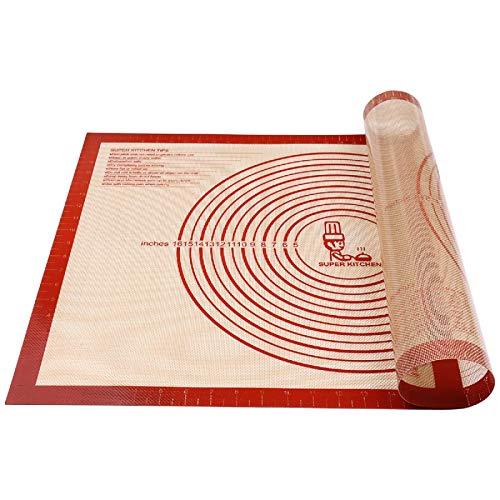
Premium Safe Silicone:We attach great importance to the health of our customers.So we offer the premium food grade silicone to pretect your safe.
Basic Oat and Peanut Butter Bites
Oat-based peanut butter bites provide a simple, reliable training reward, combining 2 cups oat flour with 1/2 cup xylitol-free peanut butter and one large egg. The mixture, baked at 160°C for 18 to 22 minutes, yields firm bites suitable for training sessions, and supports oat health through whole grain fiber. Portion control matters, cut treats into quarter-inch squares or small rounds, then refrigerate up to two weeks or freeze for three months, as needed, safely. Variations include adding grated carrot for texture, or a tablespoon extra peanut butter for richness, but guarantee all ingredients avoid toxic additives such as xylitol. Always check ingredient labels for xylitol, consult a veterinarian for special diets, and introduce treats gradually to monitor tolerances, and adjust portions accordingly safely. For additional safety during walks, consider using high-visibility orange leashes to ensure your dog is easily seen and stays safe in low-light conditions.
Banana, Oat, and Applesauce Training Treats
A simple three-ingredient mix of mashed banana, oat flour (or ground rolled oats), and unsweetened applesauce makes convenient, low-fat training treats for dogs when portioned. The recipe calls for one mashed banana, 1 cup oat flour, and 1/2 cup applesauce, mixed to a pliable dough suitable for small cutters. What are the benefits for dogs, and how should portions be adjusted for size and activity? Banana nutrition provides potassium and natural sugars, offering quick energy in brief training sessions, while oat benefits supply soluble fiber and sustained carbohydrates. Built-in attractants can significantly enhance the housebreaking process for puppies, making training treats even more effective when combined with consistent training routines. Bake at 160°C for 20–25 minutes, cool completely, then store refrigerated up to two weeks, or freeze for three months. Portions of one to three small pieces suit most medium dogs. Adjust calories based on activity.
Pumpkin and Chicken Protein Treats
Typically, pumpkin and chicken treats combine lean cooked chicken, pureed pumpkin, and minimal binders to create high-protein, fiber-rich rewards. The recipe emphasizes pumpkin benefits, supplying soluble fiber and vitamin A, which support digestion, stool consistency, and immune function in dogs. It also describes chicken nutrition, delivering lean protein, B vitamins, and usable calories, important for training performance and healthy weight management. To ensure a balance of toy size and weight for safe play, always choose toys that match your puppy’s growth. How should proportions be balanced, to achieve a dough that bakes evenly, remains soft, yet holds together during handling and reinforcement? A typical mixture uses one cup cooked shredded chicken, half cup pumpkin puree, one beaten egg, and half cup oat flour. Bake at 170°C for twenty to twenty-five minutes, cool completely, then refrigerate up to two weeks or freeze for longer storage.
Ground Meat and Egg Savory Treats
Ground meat and egg savory treats offer a higher-protein alternative to pumpkin-and-chicken snacks, suitable for intense training sessions or calorie-dense rewards. A basic recipe pairs 1 cup cooked ground meat with one egg and 1/2 cup oat flour, mixed until cohesive, then rolled and baked at 165°C for 15–20 minutes. What are the concrete benefits for training, and how do portions change with activity level? Ground meat benefits include concentrated amino acids and calories, which support muscle recovery after vigorous sessions. An egg variation swaps a whole egg for egg whites to reduce fat, or adds a second egg for higher binding and richness. Cool completely, portion into 10–20 small pieces, refrigerate up to two weeks, or freeze for three months. Serve as needed. For optimal results, early training sessions should incorporate these treats to promote bonding through structured activities.
Soft Moist Treats for Older Dogs
Soft moist treats designed for older dogs emphasize easy chewing and digestibility, using ingredients that remain pliable and palatable at room temperature. Recipes often use oat or coconut flour, applesauce, pumpkin puree, and egg, blended to a smooth consistency for gentle textures. How can caregivers adjust recipes for dental issues, weight concerns, or allergies, while maintaining balanced nutrition? Soft treat variations include pureed chicken and pumpkin, banana and peanut butter, or apple and egg mixtures, each offering different protein and fiber levels. Leashes with padded handles provide comfort and reduce hand strain during walks with older dogs. Ingredient substitutions are straightforward, swap oat flour for whole wheat or coconut flour, replace peanut butter with plain Greek yogurt for fewer fats. Portions of one to two teaspoons per training reward limit calories, and refrigerated storage extends freshness to two weeks.
Recommended Products

EVERYDAY WELLNESS FOR SENIOR DOGS – These functional soft dog treats are specially crafted to support overall health and help older dogs enjoy their daily routine.

REAL MEAT FIRST: These Blue Buffalo dog treats are made with real USA pork for a taste dogs love

EXTRA MEATY: Two meaty layers baked with >70% meat, plus a tasty, extra-meaty filling.
Oven Baking and Texture Tips
After addressing recipe adaptations for older dogs, attention turns to oven baking variables that determine treat texture and shelf life. Recommended baking temperatures range from 150°C for slow, drier results to 180°C for quicker browning and firmer treats. How thin should dough be rolled for training treats, one eighth to quarter inch helps create consistent pieces? Dough consistency, should be pliable but not sticky, permitting clean cutting and even heat transfer, aiding consistency. Lower temperatures and longer times produce drier, crunchier biscuits, which last longer, resisting crumbling during handling. Higher heat yields chewier centers, so adjust baking time and thickness accordingly to avoid underbaking. Always cool treats fully on racks, ensuring structure sets before any handling or packaging, helping prevent moisture buildup. Implementing impulse control cues during treat preparation can enhance training effectiveness, ensuring that the homemade treats serve as a strong reward.
Recommended Products

Mrs. Anderson's Baking Silicone Dog Biscuit Pan: flexible 35 cup dog biscuit pan delivers evenly baked, equal portions with uniform results and clean release for well-shaped bone treats without sticking or tearing for easy everyday and holiday baking

PREMIUM QUALITY - Chocolate Molds is made of high-quality food grade silicone which is BPA Free, Safe to use in Oven, Microwave, Dishwasher & Freezer, resists temperatures from -104℉ to 446℉, Flexible and Non-Stick. Soft silicone mold, quickly demoulding without waiting, works amazing that come out beautifully & evenly.

【Mini Dog Treat Molds】- Silicone dog treat molds are well-designed with paw print and dog bone. You can use the silicone molds to bake delicious desserts to treat your family and guests, and attract the attention of children.
Storage, Shelf Life, and Freezing
Storage practices determine treat longevity, so treats must cool completely, be placed in airtight containers, and be labeled with dates. For short-term use, refrigeration preserves moist recipes for up to two weeks, and drier biscuits last longer when kept dry and sealed. Rotating toys weekly can help maintain dog’s interest and engagement in play. What are practical storage techniques for busy owners, and how can portions be prepped for training sessions? Freezing methods extend shelf life to two to three months, so divide treats into single-use portions, wrap tightly, and use freezer-safe bags. Thaw overnight in the refrigerator, or offer frozen treats for cooling on hot days. Rotate stock using first-in, first-out, and discard any treats showing mold, odd smell, or texture changes. Clear labeling prevents confusion, and consistent routine reduces waste. Check dates monthly, routinely.
Troubleshooting Common Treat Issues
Address common problems early, as small mistakes can cause treats to be too hard, crumbly, or moist, affecting palatability. Measure ingredients precisely, weigh wet and dry components; oat flour often requires more liquid than coconut or whole wheat. What if treats are too dry and crumbly, reduce flour by ten to twenty percent, add a tablespoon of applesauce or an egg to bind? For overly moist or soft treats, extend baking time by five to fifteen minutes at 160–170°C, or increase dry ingredients slightly to restore structure. Use common ingredient substitutions thoughtfully, swap peanut butter for mashed banana when avoiding xylitol, and frequently adjust liquid ratios accordingly. Employ texture improvement techniques like chilling dough before cutting, rolling thinner, and dehydrating briefly to firm bites.
Recommended Products
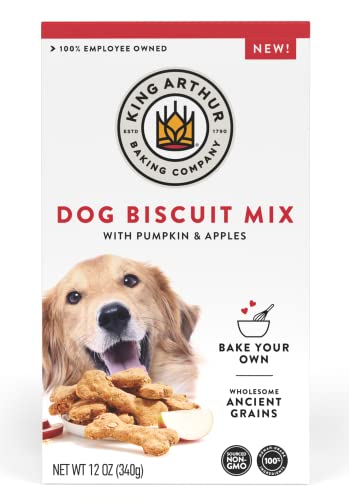
Made from a blend of ancient grains, fiber-rich pumpkin, and farm-fresh apples for healthy digestion, our mix makes it easy to create your own wholesome dog treats at home. They’re guaranteed to have your dog wagging for more!

Made from a blend of ancient grains plus carrots for healthy digestion and mouth-watering beef bone broth, our mix makes it easy to create your own wholesome dog treats at home. They’re guaranteed to leave your dog wagging for more!

Contains (1) 20 Ounce Pouch of Dog Treats for Dogs of All Sizes
Frequently Asked Questions
How Many Calories Are in a Typical Homemade Training Treat?
A typical homemade training treat contains about 10 to 30 kilocalories each, depending on ingredients; caloric content varies with size and density. He recommends careful treat portioning to control daily calorie intake for the dog.
Can I Sell Homemade Dog Treats Commercially or Need Permits?
Yes—typically the seller needs permits and must follow dog food regulations; over 70% of local health departments require inspection. They often must use a licensed commercial kitchen, obtain business permits, and meet labeling standards too.
Are Homemade Treats Appropriate for Diabetic or Overweight Dogs?
They can be appropriate with careful planning: diabetic dog diets require controlled carbohydrates and portioning, so owners should use healthy ingredient swaps (oat flour to coconut, pumpkin, lean protein) and consult a veterinarian before feeding.
Can These Recipes Be Adjusted for Very Young Puppies?
Like tiny saplings, yes: recipes can be adjusted for young puppies by prioritizing puppy nutrition, reducing treat size, using softer textures and bland ingredients, limiting calories, avoiding toxins, and consulting a veterinarian for appropriate portions.
Is It Safe for Humans to Taste These Dog Treats?
It is generally safe for humans to taste them if prepared with human-safe, dog friendly ingredients and no toxic additives; however, a cautious, small taste test is advised, avoiding xylitol, onions, garlic, and nutmeg altogether.
Conclusion
Homemade training treats offer measurable benefits, allowing owners to control calories and monitor ingredients using two to four items.
Which option suits puppy, adolescent, or senior, low-calorie oat bites or moist banana treats for sensitivity?
Because texture affects training response, softer treats improve success in 60 to 80 percent of older dogs, while firmer bites increase durability.
Practical recipes stored five to seven days refrigerated or three months frozen make training a piece of cake.