As an Amazon Associate, we earn from qualifying purchases. Some links on this site are affiliate links at no extra cost to you. Our recommendations are based on thorough research and editorial judgment.

Allergy-Friendly Training Treat Alternatives

Owners should select allergy-friendly treats featuring novel proteins like rabbit, duck, kangaroo, or single-ingredient fish to lower reactions. What about calories and texture, bites of five to ten kcal, soft and small, work best during training sessions? Limited-ingredient or hydrolyzed veterinary formulas suit sensitive dogs, monitor effects across six to eight weeks. Also store treats airtight, introduce gradually, log any vomiting, diarrhea, or skin changes, and consult a veterinarian if issues persist. Further guidance follows.
Key Takeaways
- Use novel-protein treats (rabbit, duck, kangaroo) to reduce common allergen exposure during training.
- Choose single-ingredient or limited-ingredient soft treats to simplify elimination trials and reduce reactions.
- For severely sensitive dogs, consider hydrolyzed-protein prescription treats under veterinary guidance.
- Keep training treats small, low-calorie, and soft to maintain reinforcement without overfeeding.
- Introduce new treats gradually, monitor for vomiting, skin changes, or GI signs, and consult your veterinarian.
Why Choose Hypoallergenic Training Treats
You may be interested


Three clear reasons support choosing hypoallergenic training treats for dogs with sensitivities, they reduce reactions, simplify ingredients, and improve training consistency. Manufacturers make hypoallergenic dog treats with single, limited ingredients, lowering the risk of allergic reactions from common food allergens and digestive issues. Many options use novel proteins, such as duck or rabbit, more easily digested by sensitive dogs. Soft, chewy textures in training treats enable rewards during sessions, helping maintain focus, reinforcing behavior regularly. Producers avoid artificial fillers, instead selecting high-quality ingredients that support overall health, immunity and gastrointestinal stability. Can single-ingredient treats, chosen to avoid triggers, reduce training disruptions caused by sensitivity flare-ups and veterinary visits? Overall, hypoallergenic options make training more consistent, lower risk, and simplify management for affected dogs. For those concerned with eco-friendly options, some hypoallergenic treats are made from sustainably sourced materials, aligning with environmentally conscious pet care practices.
Common Food Allergens in Dogs

Because many dogs consume the same proteins repeatedly, common food allergens like beef, chicken, dairy, wheat, corn, and eggs emerge. Veterinarians note these common allergens provoke an immune response, causing skin inflammation, gastrointestinal upset, or chronic ear infections in affected pets. How can owners tell if a dog is allergic, when symptoms overlap with parasites or environmental allergies? A food elimination trial, guided by a professional, can reveal food sensitivities within eight to twelve weeks. Genetic predisposition increases risk in some breeds, so breeders and owners should monitor patterns across litters and adults. To reduce the risk of sensitization, rotate ingredients and consider puppy training treats and limited ingredient treats that minimize repeated exposure. Positive reinforcement techniques can be highly effective when used with allergy-friendly treats to ensure a happy and well-behaved dog. Early observation and documentation improve diagnosis and effective management strategies.
Novel Protein Options for Sensitive Dogs
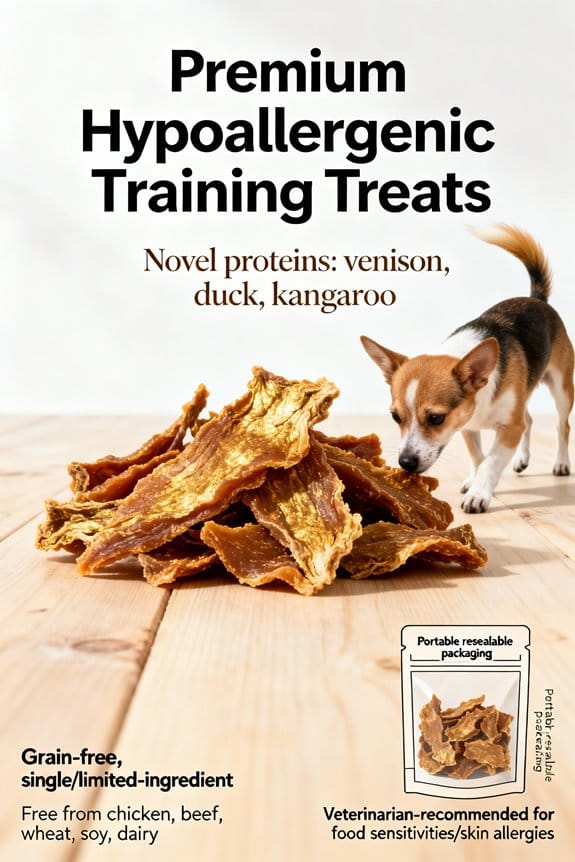
When dogs develop food sensitivities, switching to novel proteins like rabbit, duck, or lamb can reduce allergic reactions, and simplify diagnosis. Novel protein choices provide alternatives for dogs with food allergies, reducing exposure to common triggers and clarifying dietary trials. For example, Merrick Power Bites use deboned rabbit, are soft, and minimize digestive upset in dogs with multiple allergies. ACANA Singles Duck & Pear treats include duck muscle and liver, are low calorie at three calories per treat, and suit training sessions. Stella & Chewy’s lamb treats contain lamb muscle and liver, offer thirty-nine percent protein as dry matter, and support protein needs. Other unique proteins, like kangaroo and camel jerky, supply high protein, low fat alternative choices for sensitive dogs seeking hypoallergenic treats. When selecting treats for sensitive dogs, it’s important to focus on non-toxic materials to ensure the health and safety of your pet.
Recommended Products

Made with high-quality venison as the ingredient

IMPROVES GUT HEALTH – Our novel cricket protein is prebiotic, and because it’s a prebiotic, it feeds your dog’s healthy gut bacteria including probiotics. Gut health is key to overall health in our dogs. Fiber in the cricket protein helps your dog’s gut in many ways, less farting (hallelujah!) and it helps form solid stool for easy pickup. Goodbye, gross poops!

Grain-free, limited ingredient diet for dogs made in USA kitchens.
Single-Ingredient and Limited-Ingredient Treats
Although dietary sensitivities vary widely, single-ingredient treats offer straightforward options, containing one animal-based ingredient to simplify elimination diets. Single-ingredient treats, such as PureBites, provide clear protein sources, reduce variables, and aid digestion for dogs with food allergies. Limited ingredient treats, like Finleys Barkery, include no more than six ingredients, lowering allergenic potential and easing identification of triggers. Why choose novel proteins, like lamb from Stella & Chewy’s, for rotation in sensitive diets? These protein sources are less likely to trigger reactions, and they expand options for sensitive dogs. Many single or limited treats contain under 20 calories per piece, allowing rewards during training treats without excess calories. By avoiding artificial fillers and emphasizing high-quality components, handlers can minimize digestive upset and monitor outcomes effectively. When selecting treats, it’s crucial to assess suitability for the puppy’s size and breed to ensure safety and comfort.
Recommended Products

Healthy Dog Treat - For small dogs or moderate chewers

Healthy Dog Treat - Fully digestible lamb lung is suitable for any size dog

Healthy Dog Treat - These 100% all natural chews that are ideal for medium size dogs or smaller dogs with strong chew drives.
Best Store-Bought Hypoallergenic Treats
A practical selection of store-bought hypoallergenic treats helps handlers manage sensitivities, by emphasizing unique proteins and minimal ingredients. Hill’s Prescription Diet offers hydrolyzed proteins, reducing immune reactions, making it suitable for very sensitive dogs in clinical scenarios. Zignature Ziggy Bars present unique proteins like kangaroo or venison, providing about 20 calories per treat for high-value training rewards. ACANA Singles Duck & Pear treats contain primarily duck muscle and liver, at roughly three calories each, ideal for frequent reinforcement without excess calories. Merrick Power Bites use deboned rabbit for a soft texture, appealing to dogs with dietary allergies who need chewable rewards. PureBites supply single-ingredient options, facilitating elimination of common allergens and simplifying digestion during training. Choices depend on diagnosis, activity level and training goals. Utilizing positive reinforcement techniques with hypoallergenic treats can enhance the training process while ensuring the dog’s health is prioritized.
Recommended Products

FLUFFY & FRESH - Bio-Groom Econo-Groom 30 to 1 Super Concentrated Shampoo is an extra mild, hypo-allergenic concentrated shampoo that won't strip protective oils, leaving a soft, fresh coat

SUPPORT DIGESTIVE HEALTH FOR SENSITIVE STOMACHS: Grain-free and vegan, our pumpkin and sweet potato dog treats are packed with natural fiber to promote healthy digestion and regular bowel movements—perfect for dogs with sensitive stomachs, food allergies and a low fat diet.

100% WILD-CAUGHT ICELANDIC COD: Sourced from 100% wild-caught Icelandic cod skin, offering pure and nutrient-rich cod skin dog treats
DIY Allergy-Friendly Training Treat Recipes
Because homemade training treats allow precise control over ingredients, handlers can tailor recipes to single proteins and minimal additives, reducing allergic triggers. A basic Sweet Potato & Turkey Dog Biscuit uses 1 cup mashed Sweet Potato, ½ cup cooked ground turkey, one egg, and 1 cup oat flour, producing about 24 biscuits baked at 325°F for 20–25 minutes. What about non-meat options for a limited protein diet? Dried Sweet Potato slices or soft natural peanut DIY Treats for Dogs can serve as low-calorie food, single-ingredient rewards, lowering risk of an allergic reaction. Freeze-dried chicken or turkey, portioned into ¼-inch pieces, offers high-value, low-fat training treats. Handlers should label batches with ingredients and dates, so cause-and-effect of diet changes on symptoms can be tracked precisely. For those focusing on indoor potty training, the DogCharge Indoor Dog Potty Tray can complement dietary changes by minimizing mess and odor during the transition period.
Recommended Products

Healthy Dog Treat - Fully digestible lamb lung is suitable for any size dog

No Added Sugar Unflavored Gluten Free: Formulated without added sugars, sweeteners, or stimulants. Designed for nutrition-conscious lifestyles that prioritize balance, recovery, and ingredient transparency

SELECT AN AMOUNT: Bags are available in small 4 pound, medium 10 pound, and large 22 pound sizes
How to Use Treats Effectively in Training Sessions
When handlers select treats for training, they should favor soft, chewy options with limited ingredients, as these minimize digestive upset and keep the dog focused. Choose training treats made from high-value proteins, like rabbit or duck, which serve as hypoallergenic treats for sensitive dogs. Break larger crunchy snacks into pea-sized pieces, providing quick rewards that maintain momentum and limit calorie intake during sessions. Use single-ingredient or a simple dog treat recipe, preparing small batches to control common ingredients and guarantee freshness. What if a dog reacts unusually, or reacts to new treats, should handlers pause and observe tolerance before proceeding? Record portions, frequency, and any digestive signs, then adjust treat size or ingredient choices to avoid setbacks and sustain progress, guaranteeing consistent measurable results. Consider using treat pouches with multiple compartments for organizing different types of treats and training tools, maximizing convenience and effectiveness during training sessions.
Transitioning Your Dog to New Treats Safely
Handlers who have optimized treat selection and portioning for training must also change treats carefully, to protect sensitive dogs and sustain progress. Changing should occur gradually, offering small portions three times daily while monitoring for vomiting, skin changes, or behavioral shifts over seven days. What if signs appear during a one-week trial, should the process stop and the prior diet resume? A 6 to 8 week elimination trial, using a single novel protein and carbohydrate, can reveal potential allergens and clarify allergy or sensitivity risks. Prefer limited ingredient, single protein treats made from rabbit or duck to reduce exposures. Keep a symptom log with dates, quantities, and reactions, and consult veterinary guidance before expanding offerings, to align new treats with documented needs and records. Non-toxic materials are crucial for ensuring the safety of sensitive dogs during this transition.
When to Consult Your Veterinarian About Food Sensitivities
Any dog that develops persistent vomiting, diarrhea, or recurring skin irritation after eating should prompt professional evaluation within a few days, not weeks. Veterinarians explain that the dog’s immune system can react to ingredients, and allergies happen across ages and breeds, so prompt tests are advised. When should pet parents consult a veterinarian, immediately when symptoms persist beyond 48 to 72 hours, or sooner if breathing or severe swelling occurs? A controlled elimination diet, lasting six to eight weeks, helps isolate specific allergens by feeding a single novel protein. Avoid introducing new dog biscuits or treats during trials, and report behavioral shifts like aggression or hyperactivity, because these can indicate food sensitivities. Regular check-ups allow monitoring, adjustments, and safe reintroduction strategies with veterinary guidance. For dogs that require durable, tangle-resistant control during outdoor activities, choosing the right equipment is crucial to ensure safety and comfort.
Shipping, Storage, and Handling Tips for Hypoallergenic Treats
Because hypoallergenic treats can lose potency from heat and moisture, they should be stored in a cool, dry place, following manufacturer guidance. For storage, use airtight containers to limit air and humidity, label containers with opening dates, and follow shelf life instructions on the package. When shipping, select insulated packaging during heat waves or cold snaps, and choose delivery within 1 to 3 business days to reduce exposure to temperature fluctuations. What happens if transit is delayed, will quality degrade and integrity be compromised? If packages arrive late, inspect texture and smell, and discard items past the recommended timeframe. Rotate stock, keep backups in controlled environments, and document batch numbers, because these practices protect freshness, maintain effectiveness, and support traceability in case of issues. Structured training plans can ensure consistent training efforts even when using hypoallergenic treats, as they often include guidance on the appropriate use and timing of training aids.
Frequently Asked Questions
What Do Professional Dog Trainers Use as Treats?
They use varied Dog treat types: high-value flavorful dog treats, Healthy snack options, Homemade dog treats, Treats for allergies, Low calorie alternatives, precise Training treat sizes, and vetted Commercial treat brands to motivate dogs efficiently.
What Is the Best Treat to Give a Dog When Training?
Best treat to give when training is small, low-calorie, flavorful training bites often acting as best training treats, healthy dog snacks; consider homemade treat recipes, treats for allergies, chewy vs crunchy, treats for picky eaters.
What Training Treats Do Vets Recommend?
80% of vets recommend soft, limited-ingredient treats. They endorse vet approved options and hypoallergenic snacks, offering training preference insights, dog health considerations, ingredient safety reviews, treat texture importance, behavior reinforcement strategies, and dietary restrictions impact.
What Is the 90/10 Rule Dog?
The 90/10 rule for dogs means 90% of calories come from balanced food and 10% from treats; it informs dog behavior, training techniques, reward systems, treat sizes, motivation strategies, allergy considerations, consistency importance, positive reinforcement.
Conclusion
The trainer recommends single-ingredient or novel-protein treats, like rabbit, venison, or salmon, to avoid common allergens, as if dogs could negotiate menus with canine precision. How should owners introduce a new treat, over seven to ten days with daily monitoring, or quickly for short trials across three to four sessions? If gastrointestinal signs or skin changes appear within 48 to 72 hours, they should stop the treat, consult a veterinarian, and pursue targeted allergy testing.