As an Amazon Associate, we earn from qualifying purchases. Some links on this site are affiliate links at no extra cost to you. Our recommendations are based on thorough research and editorial judgment.

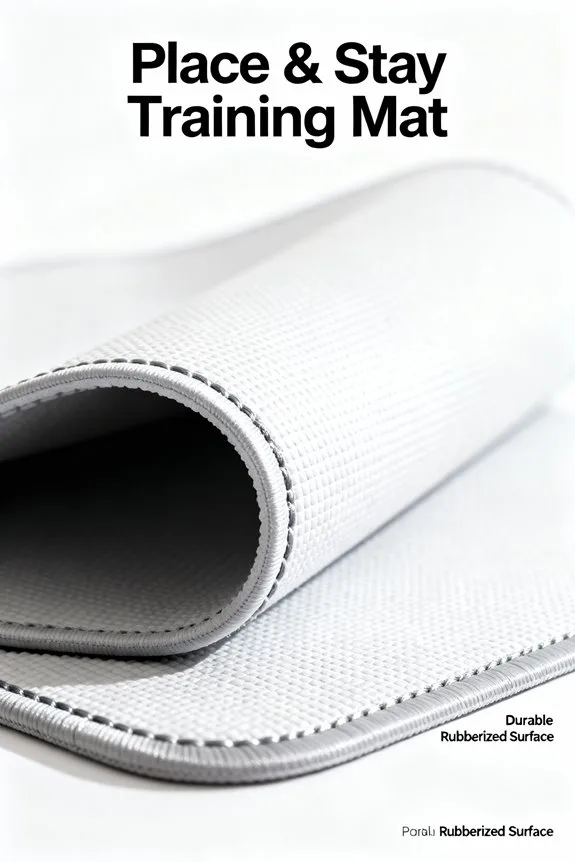
Using Training Mats for Place and Stay Commands

Mat training uses a distinct, slip‑resistant surface to teach place and stay, starting with short stays of five to ten seconds and progressing to forty minutes, and increasing distance from zero to thirty feet. Trainers select mats three to five inches thick, sized to allow full contact, use five to twenty repetitions per step. Add verbal cue and gradual distractions for proofing; want reliable calm during meals and greetings? Further guidance explains progression and troubleshooting.
Key Takeaways
- Choose a distinct, slip‑free, comfortable mat sized for your dog and reserve it solely for “place” training.
- Introduce a single verbal cue (e.g., “Place”) and reward immediately when the dog goes to the mat.
- Shape the down and stay on the mat gradually, starting with brief stays before marking and rewarding.
- Increase distance and duration in small increments, aiming for reliable five‑to‑forty minute stays over time.
- Proof reliability by adding low‑level distractions and practicing in varied locations to generalize the behavior.
What Is Mat Training and How It Works
You may be interested


Because mat training establishes consistent boundaries, it teaches dogs to go to a designated mat on command and remain there until released. Mat training begins with short, guided sessions that teach a place command, using treats and markers to encourage a dog to stay in a down position. Trainers increase duration gradually, from one to fifteen minutes, then toward forty minutes, so impulse control strengthens without overwhelming the animal. How are distractions incorporated safely? They are added progressively, first by moving a foot, then by introducing toys, people, or classroom noise, while rewarding correct responses. This method supports basic obedience by combining positional cues with self-control, it creates a conditioned space apart from bedding, and it produces reliable behavior in varied environments and settings. Snuffle mats are excellent tools for mental stimulation, promoting dogs’ overall health by engaging their natural foraging instincts and reducing anxiety.
Key Benefits of Using Training Mats
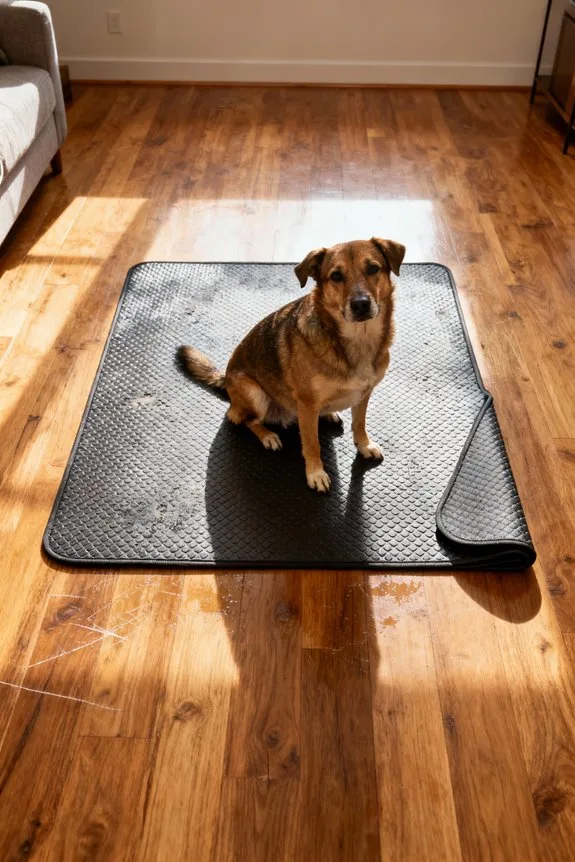
After establishing reliable duration and handling low-level distractions on the mat, trainers can focus on the key benefits training mats provide. Training mats create a designated space for dog training, they teach a clear place cue and support a consistent go to mat behavior. How does a mat reduce attention-seeking during door greetings? By offering an alternative location, dogs learn to relax and the handler gains control, which improves impulse control in three to five repetitions per session. Slip-free surfaces prevent accidents, ensuring dogs can maintain position during the stay command when handlers move around. Distinct mats, separate from bedding, form conditioned cues, increasing focus amid distractions in public settings. Gradual progressions, measured in seconds and yards, consolidate reliable stays consistently, and long-term reliability. Additionally, snuffle mats can be utilized for mental stimulation, helping to reduce anxiety and destructive behaviors through engaging activities.
Choosing the Right Mat for Your Dog
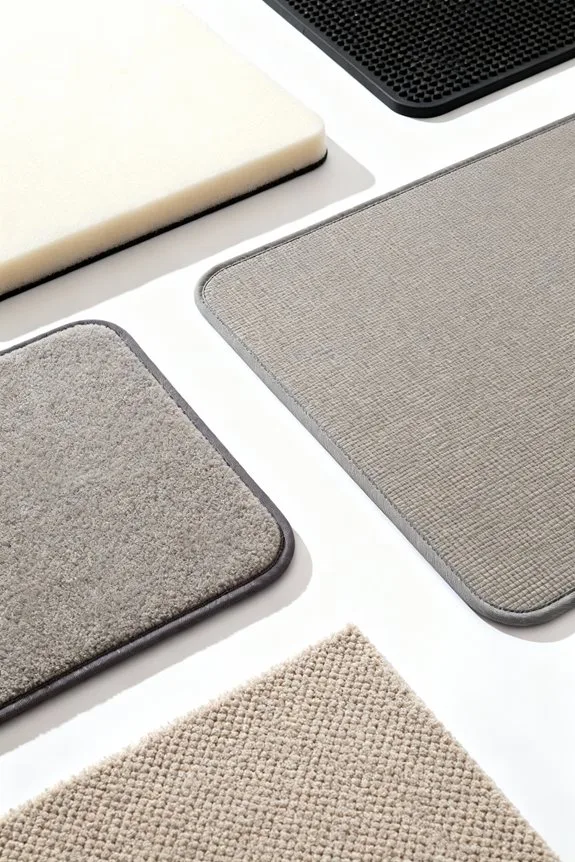
Selection of an appropriate mat requires attention to size, surface, and distinctiveness, ensuring safety and clear training cues for the dog. Choose a training mat with a slip-free bottom, such as rubberized backing, to prevent sliding during sits, downs, and recalls when you train your dog. Should the mat resemble a dog bed, how will the dog distinguish play and rest from conditioned place behavior? Make the mat comfortable, at least three to five inches thick for medium breeds, yet distinct from the actual bed to avoid casual use. Use towel, bath mat, or pillowcase options when portability matters, prefer materials easy to clean, durable, odor resistant. Replace or wash the mat after heavy use, because hygiene supports consistent responses during training sessions regularly. Suction strength is vital; consider mats with multiple suction cups for stability to prevent slipping, similar to slow feeder mats.
Preparing Your Dog and Training Environment
When introducing a training mat, place it in a quiet, well-lit area free of foot traffic and competing toys, to aid focus. Select a distinct mat, not the regular bed, with a slip-free bottom to guarantee safety and make the dog comfortable. Prepare the training environment by removing clutter, turning off noisy devices, and positioning the mat against a wall to limit visual distractions. Consider the dog’s energy level and recent exercise, does high energy reduce focus, or is the dog calm enough? Plan progressive exposure to mild distractions, such as a person walking 3 meters away, maintaining clear commands and consistent timing. Record outcomes and session length in a daily log, so adjustments reflect measurable progress, and the dog remains comfortable with demands. Soft, breathable fabrics are important for ensuring comfort and preventing irritation during training sessions.
Step One: Engaging Interest With the Mat
To begin engaging a dog with the mat, the handler should place it in the same quiet spot used during preparation, and allow unsupervised inspection for two to five minutes. The handler encourages engaging interest by letting the dog gently explore textures and scents, tossing a treat onto the mat to create curiosity. Every sniff and paw touch is marked with positive reinforcement, for example one to three treats, brief praise, or click, which builds a favorable association. Handlers should gradually reward longer interactions, first for two seconds, then five, then ten, so cause yields sustained presence on the mat. A clear cue word tied to the mat is introduced early, repeated consistently, and paired with treats to guarantee the association strengthens over sessions. For more effective training sessions, consider using a dog treat pouch with features like quick-access openings and adjustable straps for convenience and efficiency.
Step Two: Shaping the Down on the Mat
Begin by reinforcing any mat interaction, such as sniffing or pawing, and gradually raise expectations toward a full down. The trainer marks and rewards initial touches, then requires a nose on the mat, then a head down, finally a full down position on the mat. How can progression stay clear, predictable, and fair for the dog? Use a visible lure, step back one to three paces, then reward immediately when the dog lies down, reinforcing the down command consistently. Repeat short 3 to 5 minute sessions, two to four times daily, to build muscle memory and reliability. If the dog fails, reduce criteria, reward partial effort, and rebuild toward the behavior. Consistency in timing, cues, and rewards produces dependable responses across sessions and settings. It is important to ensure that training tools, like whistles with adjustable pitch, provide clear cues and support positive reinforcement.
Step Three: Reinforcing the Mat Position From Different Angles
Although the handler approaches the mat from different directions, the dog should receive consistent marking and immediate reward, reinforcing the position regardless of angle. The instructor will reinforce the mat position by varying how they approach the mat, moving left, right, diagonal, so the dog can generalize. How will the dog understand the command if cues change? Use clear markers, switch quickly between various angles to prevent anticipation, and maintain clear communication through voice and body. Begin with three to five repetitions from each side then mix sequences, increasing complexity as confidence grows. Include varied cues and body language, document progress in the training plan, and avoid relying solely on verbal prompts for robust responses. Measure success with duration, accuracy, and reduced handler prompting. To ensure optimal results, short, frequent training sessions should be implemented, as these prevent fatigue and maintain the dog’s interest.
Step Four: Increasing Distance and Duration
Three progressive stages of distance help structure Step Four, starting within five feet, extending to twenty feet, and eventually beyond thirty feet. Begin with the handler standing one step away from the mat on the floor, maintain eye contact, then step back slowly. How long should the dog stay, aim for a duration goal of at least five minutes before marking and rewarding? Gradually increase the distance in stages, move to about twenty feet, then to beyond thirty feet, while keeping clear sight lines. Reinforce the down position exclusively on the mat, this prevents the dog associating the command with the handler’s location instead of the mat. Regular rotation of toys keeps playtime fresh and engaging, which can help maintain the dog’s interest during training. Keep your dog challenged with mild distractions, toys or people, progress slowly, troubleshoot errors, and reward success.
Step Five: Adding a Verbal Cue and Proofing With Distractions
Introduce a concise verbal cue, such as “Places!”, just before sending the dog to the mat, to link cue and action. The trainer then uses the cue consistently, one clear command per trial, and rewards immediately after the dog goes to the mat. How many repetitions are needed, five to twenty, depends on the dog, and on consistency of timing. Next, the trainer increases difficulty, step by step, adding short delays and brief household noises to proof reliability. To teach your dog longer stays, extend duration in increments of five to ten seconds, and only mark successes when the dog understands. Finally, add distractions progressively, include another person walking by or a tossed toy, and reinforce calm, correct stays, practice in varied locations regularly. Many indoor dog potties feature reusable designs, reducing waste compared to disposable pads, which is cost-effective over time.
Applying Mat and Place Training to Everyday Situations
When integrated into daily routines, the Place command gives dogs a predictable refuge, reduces impulsive behaviors, and supports household calm. Handlers should use a mat that is comfortable and big enough, encouraging the dog to lie quietly, even during meals or guest arrivals. How can one generalize this skill to new environments, such as parks or relatives’ homes, without losing reliability? Gradually increase durations, aiming for incremental targets up to forty minutes in high-distraction settings, to build stay. Teach your dog to accept brief departures, then extend distance, which causes stronger impulse control and fewer interruptions. During work-from-home periods, direct dogs to their mats between meetings, reinforcing routine. Graduated Desensitization, a technique involving slowly increasing alone time, is effective in building your dog’s impulse control. Consistent practice across scenarios produces a calmer household, simplifying management of daily activities.
Frequently Asked Questions
How to Teach Your Dog to Stay in Place?
They teach a dog to stay in place by using Training Techniques that combine clear commands, Positioning Tips, gradual Duration Control, Reinforcement Methods, staged Distraction Training, and progression toward Advanced Commands while rewarding consistent behavior.
What Is the 3 3 3 Rule for Dog Training?
The 3-3-3 rule guides adjustment: three days, three weeks, three months; it frames dog behavior milestones, informing training techniques and canine psychology, addressing obedience challenges while emphasizing reward systems and consistency methods for lasting success.
What Is the 10 10 10 Rule for Potty Training?
The 10 10 10 rule requires taking puppies out every ten minutes for ten weeks, stressing potty training essentials, timing strategies, reward systems, attention to dog behavior cues, avoiding common mistakes, and using effective rewards.
What Is the Hardest Command to Teach a Dog?
The hardest command is ‘Stay.’ Trainers note that behavioral challenges, consistency issues and distraction management complicate teaching; success requires incremental training, building long distance stays gradually and sustaining dog motivation through rewards and patient repetition.
Conclusion
The trainer concludes that consistent mat practice builds reliable place and stay behaviors, using short sessions, clear cues, and progressive distance increases. How will the dog respond when greeted by visitors, with a five-minute mat hold and gradual distraction training introduced? Because repetitions of three to five daily trials, coupled with variable rewards, reinforce the cue everyday reliably. Owners who proof in kitchens, parks, and car interiors achieve dependable stays, like a compass guiding behavior.