As an Amazon Associate, we earn from qualifying purchases. Some links on this site are affiliate links at no extra cost to you. Our recommendations are based on thorough research and editorial judgment.

Clicker Training Without Treats: Alternative Rewards

Clicker training can work without treats by pairing the marker with toys, play, movement, or social rewards. Trainers should test preferences in 3–5 short trials, rotating options every 2–3 minutes. After each click provide a 30–60 second play reward, or brief enthusiastic praise and tactile affection within 0.5 seconds. Use short sets of 8–12 repetitions, and link clicks consistently to one reward type. More guidance shows how to shift from treats to variable rewards soon.
Key Takeaways
- Identify the dog’s preferred nonfood rewards (toys, games, movement, praise, petting) using 3–5 short preference trials.
- Link the click to a toy or play session immediately, then deliver focused 30–60 second play after each click.
- Use enthusiastic verbal praise and brief tactile rewards within one second of the click to reinforce behavior.
- Rotate three to five different toys and switch reward types every 2–3 minutes to prevent habituation.
- Gradually shift to variable reinforcement, reducing treats to 20–25% while mixing toys, play, and surprise jackpots.
Understanding Reward Motivation
You may be interested

Although many training guides emphasize food rewards, not every dog is treat-motivated, and handlers must recognize this variability early. Trainers should assess individual preferences by offering toys, movement, and game-based options, which function as alternative rewards and keep sessions engaging. How can one reliably reward your dog without treats, and what indicators show success during a short trial? Use brief trials of three to five repetitions to test types of nonfood rewards, observe interest levels, and measure response speed. Rotate rewards every two to three minutes to prevent habituation, and note which activities increase repetitions of good behavior. Positive reinforcement remains central, applied with consistent timing, clear markers, and incremental challenges. Pet parents benefit from structured observation, recording results, and adjusting plans regularly thereafter. Incorporating advanced obedience techniques can further enhance impulse control and precision, creating a well-rounded training approach.
Verbal Praise and Physical Affection
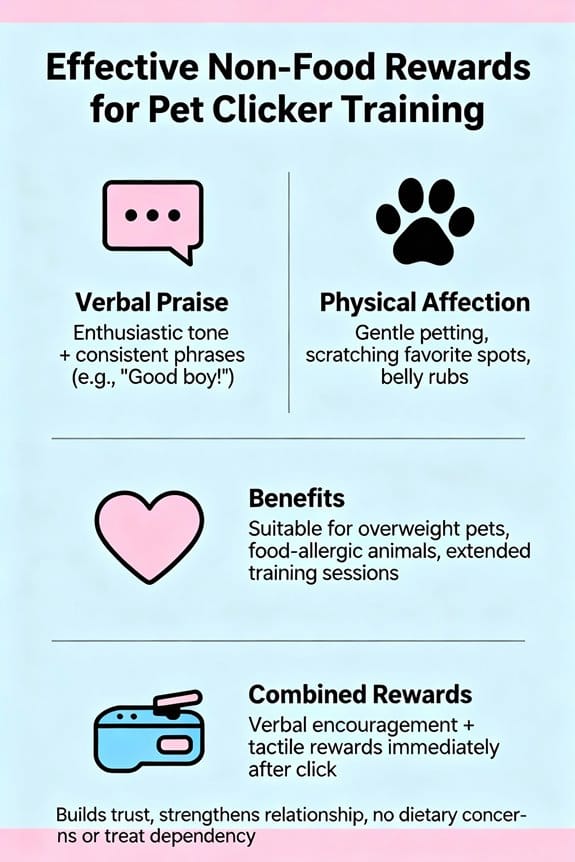
Verbal cues and touch, when applied precisely, form reliable nonfood rewards that communicate success and strengthen owner-dog bonds quickly and clearly. Trainers should use enthusiastic verbal praise, timed within one second of the desired action, and follow with brief physical affection such as a pat or belly rub, depending on what dog loves. Which signals work best for this dog? Observing responses clarifies whether animal values tactile contact or vocal cues more than training treats. Combining both rewards, alternating intensity and duration, increases reinforcement without overusing one stimulus. A calm “good boy” in an excited tone, followed by two to three seconds of petting, links click to consequence, and boosts repetition. Owners must monitor body language, adjust delivery, and be consistent across different handlers. For effective training, it’s important to choose a leash length that matches specific training scenarios, ensuring both control and comfort for the dog.
Recommended Products

Stop the endless search & forget dense books. This 50-card puppy training system replaces your old dog training book. Get clear, stage by stage visual guides for everything: Housetraining, Crate Training, Biting, & Basic Cues. No more "walls of text"—just simple, actionable steps.

🐶 COMPLETE DOG AGILITY TRAINING SET – Weave Poles & Jump Bar Combo This dog agility training equipment set includes 2 weave poles (45.3") with steel ground spikes (6.1"), 1 adjustable dog jump bar (43"), and 2 height clips. Perfect for creating a dog obstacle course for backyard training, dog sports, and outdoor play.

Engaging Dog Activities – Complete scent dog training kit includes tools for backyard play and training such as dog lure course machine, bite sleeve dog training, and dog agility training equipment. Use with scented dog toys to keep dogs active and focused.
Toy-Based Rewards and Play Sessions
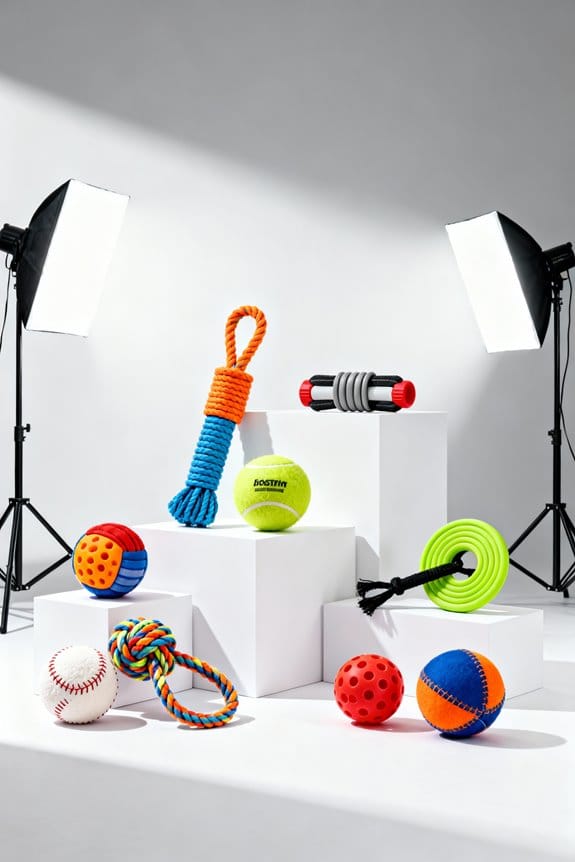
Toys can serve as primary reinforcers in clicker training, creating a clear reward link when used consistently and predictably. Trainers should employ toy-based rewards immediately after the click, for 30-60 seconds of focused play sessions that reinforce desired behaviors. Which toys work best, squeaky balls, tug ropes, or retrieval dummies, depends on individual preference and arousal level. Use interactive play such as fetch or tug-of-war to reward correct responses, because movement and engagement increase motivation and retention. Rotate three to five different toys across sessions to provide varied reinforcers, and to prevent habituation. Short trials of two to five repetitions, followed by brief rest, maintain excitement and learning efficiency. Regular cleaning of toys, such as treat dispensing balls, prevents bacteria and residue buildup, ensuring hygiene during training sessions. Consistent toy timing builds a strong bond, and shifts training from food-based incentives smoothly, regularly.
Recommended Products
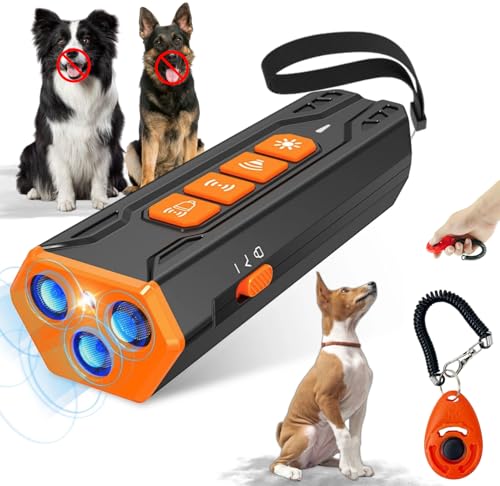
✅ 𝐄𝐅𝐅𝐄𝐂𝐓𝐈𝐕𝐄 𝐍𝐎 𝐁𝐀𝐑𝐊𝐈𝐍𝐆 𝐃𝐄𝐕𝐈𝐂𝐄 𝐅𝐎𝐑 𝐃𝐎𝐆𝐒 – This humane anti barking device uses advanced ultrasonic sound to gently stop barking and correct behaviors like digging or jumping. Ideal for dog bark control both indoors and outdoors, creating a calm environment for you and your pet.

Puppy Starter Kit :dog chew ball toy, plush dog squeaky toys, dog rope toys, dog poop bag dispenser and waste bag, dog treat bag, dog blanket, puppy training clicker, pet grooming glove, pet id tag, dog 3 refills stick roller, nail clipper and nail grinder, brush, water bottle, dog collars and leash. Meet your pet's daily needs and easily start your pet-raising journey.

ALL-INCLUSIVE CAT TRAINING KIT: Crafted to simplify your pet training journey. It includes Quiet Clicker, Target Stick Clicker, Treats Pouch, and a comprehensive beginner's guide. Everything you need to train your pet to their full potential.
Clicker Timing and Marker Training
After establishing play as a reward, the handler must focus on precise click timing, because timing dictates which action is reinforced. In clicker training the click should occur within 0.5 seconds of the desired behavior, for example when a sit is completed, otherwise the association blurs and learning slows. Should the handler click too late, what happens to reinforcement? The click is a marker that signals correct performance, so clicking immediately allows replacing food with alternative rewards like a five-second tug or enthusiastic verbal praise. Train with short sets of 8–12 repetitions, click each success, then deliver play or praise, which builds positive experiences and steady engagement. Over sessions, the click predicts reward, causing confident responses across varied contexts, and reduces handler timing errors. To enhance training sessions, consider using versatile clickers that are suitable for various animals, which can improve communication and learning outcomes.
Environment and Freedom as Rewards
When handlers use the environment as a reward, dogs gain meaningful reinforcement through exploration, scent sampling, and voluntary movement in safe spaces. Trainers can designate a fenced area, allow five to ten minutes of free sniffing after a successful exercise, and thereby link commands to tangible rewards. Why not change a walking route, introduce a park visit, or offer a supervised off-leash loop to reinforce learning? Allowing controlled freedom acknowledges natural drives, increases motivation, and supports sustained engagement during training sessions. Handlers should gradually expand permitted distances, for example from one meter to five meters, based on consistent good behavior. Clear boundaries, timed opportunities, and predictable cues guarantee environment-based rewards remain effective and safe, while monitoring recall reliability, social interactions, and leash response consistently. For dogs that need additional training support, using no pull collars can be an effective method to manage pulling tendencies while ensuring humane and gentle corrections.
Recommended Products

MATTE CUROGAN NECK TECH PRONG COLLAR WITH CLICLOCK QUICK RELEASE BUCKLE: Stylish Matte Finish. Curogan is a Copper and Tin Alloy. It does not contain nickel, thus making it a good choice for dogs who are allergic to nickel. This model comes with two O rings: Size Small 2.25mm x 16 inches long (overall collar length)

Type:Martingale Collars for Dogs, Dog Size:xSmall, Small, Medium, Large, xLarge, Model:Dog Training Collar, Sizes:10 to 16 Inch - 14 to 20 Inch - 18 to 26, Bundle Listing:No

CUROGAN PRONG COLLAR WITH CLICLOCK QUICK RELEASE BUCKLE: Curogan is a Copper and Tin Alloy. It does not contain nickel, thus making it a good choice for dogs who are allergic to nickel. This model comes with two O rings: Size Large Size 4 mm x 24 inches long (overall collar length)
Transitioning From Treats to Variable Reinforcement
Although many trainers begin with food as the primary motivator, a structured fade to variable reinforcement maintains enthusiasm and builds reliability across contexts. In Dog Training, start by rewarding all correct responses with treats, then reduce to three out of four responses, before introducing play and praise as alternatives to food. How should rewards be mixed as consistency improves? Mix 50/50 between treats and other types of rewards, such as toys, games, or environmental access, to broaden motivation. Occasionally deliver a jackpot reward for exceptional performance, to sustain excitement and engagement in training. Aim for a final schedule where treats occur only twenty to twenty-five percent of the time, while continuing to vary rewards, and reinforce through meaningful, enjoyable outcomes, and maintain consistent timing. Additionally, positive reinforcement techniques can be tailored to suit the temperament and age of your pet, ensuring effective learning and long-term success.
Recommended Products

Dog Training Dummy: Elevate your hunting sessions with The Original Clone Game Bird Gundog Training Dummy range. Designed specifically to stimulate your gundog's three primary hunting senses - Sight, Smell & Touch, bring a new life like realism to your gun dog training.
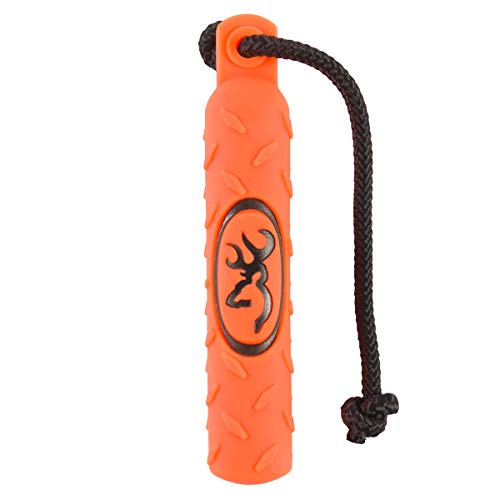
BROWNING | Since 1878, Browning has continued to represent "The Best There Is" in firearms and outdoor products

SPECS: Rated for pistols or rifles from .22lr up to 50 BMG
Troubleshooting Common Challenges
Having reduced food rewards to roughly twenty to twenty-five percent, handlers may encounter uneven responses, and must troubleshoot common challenges. If a dog shows disinterest in clicker training, introduce toys or brief play sessions as alternative rewards, observe which items dogs love, then use them selectively. Does inconsistent rewarding cause frustration? Yes, inconsistent reinforcement breaks trust, so establish a clear, predictable reward schedule, and mark precise moments with the clicker. Shift gradually from treats to non-food rewards, pairing praise, play, and affection over several weeks to prevent confusion. Volume-adjustable clickers can help accommodate sensitivities in noise-sensitive pets and maintain a calm training environment. For dogs trained on treat dependency, increase patience, repeat cues with enthusiasm, and reinforce small successes. These training tips emphasize consistency, observation, and stepped changes to restore reliable positive behaviors. Measure progress weekly, adjust reinforcement schedules.
Recommended Products

Bundle of 2 Items: Dogtra T&B Dual Dial for two dogs remote training collar and PetsTEK clicker. Perfect for dogs from 35 pounds and up. Unique single-body, built in downward facing beeper horn to eliminate the risk of catching on obstacles when in the field. This dog behavior training collar is designed to fit dogs with neck sizes between 10 - 26 inches. The advanced Dual Dial system is designed for long range upland hunters.

INTERACTIVE PLAY: Lights, music, and sound effects activate as kids scan their play groceries, turning everyday pretend shopping into an engaging, hands-on experience with the Radio Flyer Scan & Sort Shopping Cart.

【 𝐍𝐨 𝐒𝐡𝐨𝐜𝐤 𝐍𝐨 𝐏𝐫𝐨𝐧𝐠𝐬 】 Are you looking for a humane and effective way to train your small puppy medium dogs? Our no shock dog training collar offers a safe alternative to traditional shock collars. Designed without any prongs that might irritate your dog's sensitive skin, it provides gentle yet effective corrections to help manage unwanted behaviors. Say goodbye to harsh methods and embrace a kinder approach to training
Frequently Asked Questions
How to Reward Your Dog Without Treats?
They reward their dog without treats through positive reinforcement: verbal praise, playtime rewards and toy interaction, affection gestures for calm behavior, and activity engagement like fetch or sniff breaks, reinforcing obedience and bonding over time.
Can You Use a Clicker Without Treats?
Yes, trainers may use a clicker without treats; Positive reinforcement techniques with Non food rewards and Engaging training activities promote Dog behavior modification, highlight Clicker training benefits, and aid Building trust bonds through play praise.
What Is an Alternative to Clicker Training?
An effective alternative is lure-and-reward methods emphasizing positive reinforcement, combining varied training techniques to shape dog behavior through non food rewards like play, praise, walks — illustrating practical clicker alternatives within diverse reward systems effectively.
What Are the Downsides of Clicker Training?
Clicker training has downsides: trainers may face training difficulties, behavioral confusion, inconsistency issues, diminished motivation, reliance on treats, and timing challenges, causing reduced generalization, frustration, and occasional regressions in learned behaviors and trainer-dog disconnect sometimes.
Conclusion
The trainer recommends diverse rewards, using verbal praise, brief two toys, or five-minute play sessions to replace treats, because variety sustains motivation. Which alternative fits shy dog, a high-energy spaniel, or an anxious rescue? For example, click then offer 3 seconds of petting, or click then release to free-roam for 2–3 minutes. Phase treats over one week to variable reinforcement, so behavior persists without constant food rewards, following adage, slow and steady wins the race.