As an Amazon Associate, we earn from qualifying purchases. Some links on this site are affiliate links at no extra cost to you. Our recommendations are based on thorough research and editorial judgment.

The Role of Motivation in Animal Behavior Training

Motivation determines training success, combining internal drives like hunger or play with external rewards such as high-value treats and toys. How can it be increased, by aligning sessions with activity peaks, limiting free feeding, and using 5 to 10 minute focused trials? Consistent timing and clear markers prevent accidental reinforcement, while proportional penalties correct behavior without inducing fear. Breed-specific drives matter, for example herding dogs prefer movement games, and further examples follow in subsequent sections.
Key Takeaways
- Motivation blends internal drives and external rewards, determining learning speed, focus, and persistence in training.
- High-value, timely rewards increase engagement and strengthen desired behaviors, especially in distracting environments.
- Poorly timed or inconsistent reinforcement unintentionally maintains problem behaviors through accidental reward associations.
- Manipulating motivating operations — hunger, novelty, or social access — raises reinforcer value and improves training outcomes.
- Penalties must be immediate, proportional, and consistent, targeting actions not the animal, and paired with clear cues and rewards.
What Motivation Means in Animal Training
You may be interested



Motivation, as a guiding force, determines why an animal chooses to perform a behavior, and it combines internal drives with external incentives. In dog training, motivation affects focus and learning speed, for example a highly motivated dog may complete ten repetitions with minimal distraction. Is motivation intrinsic, derived from enjoyment, or extrinsic, driven by treats and toys, and how does each influence outcomes? A trainer might use low value kibble for 5 repetitions, then switch to steak for higher engagement, demonstrating reward value matters. Poorly matched motivators can produce problem behavior, such as ignoring cues or escalating attention-seeking, which reduces training efficiency. Dog Training Aids included in puppy starter kits can be instrumental in establishing positive behaviors early on. Establishing a clear motivation framework strengthens trainer-animal bonds, improves measurable performance, and supports consistent generalization across three or more contexts, for trainers.
The Four Basic Drives That Shape Behavior
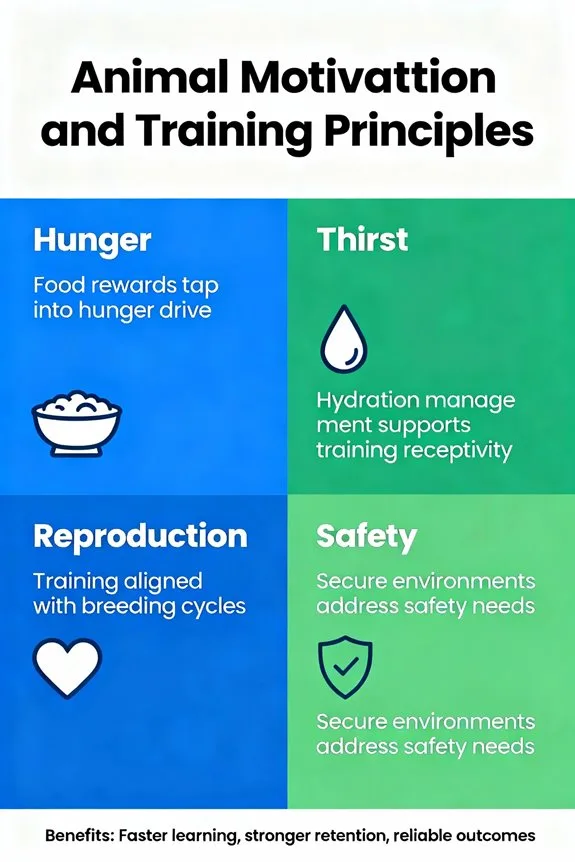
Identify the four basic drives—fear, aggression, learned response, and instincts—that consistently shape animal behavior across contexts, species, and situations. Each drive influences choices animals make, for example fear can cause agitation, fleeing, or freezing when novel stimuli appear. Genetic temperament matters, so high-strung animals react more readily to perceived threats, and trainers must note individual differences. Learned responses form from repeated consequences, so reinforcement schedules, timing, and clarity determine behavior frequency. Instincts drive innate actions like hunting, nesting, or herding, and these can override training unless accommodated. Aggression may emerge when resources or mates are contested, yet proper socialization during development reduces rivalry-based conflicts. Positive reinforcement techniques provide a framework for building trust and addressing individual emotional triggers effectively. How should a trainer proceed, by evaluating drives, then adapting management, desensitization, and reward strategies? Document outcomes, adjust plans accordingly.
Distinguishing Fear From Aggression
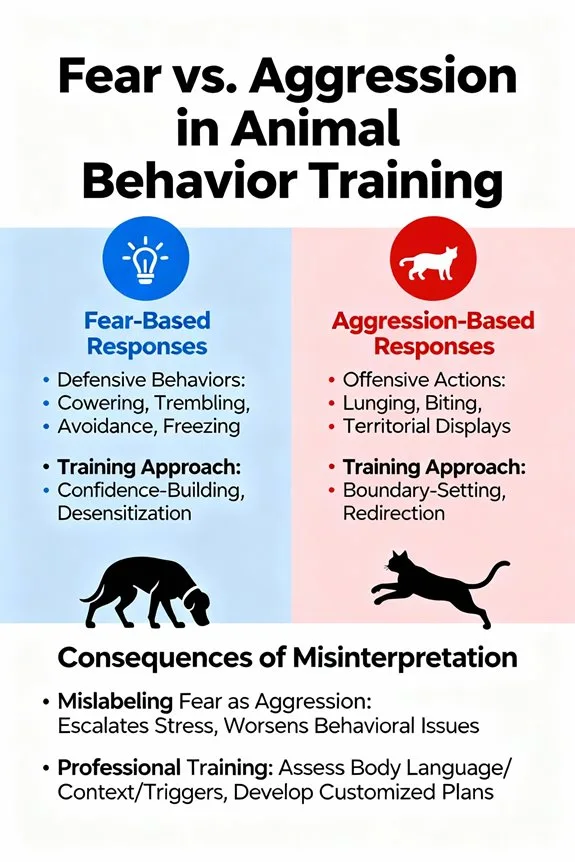
Observe body language closely, because fear and aggression often produce overlapping signals like kicking, growling, and raised hackles in similar contexts. Trainers should note context, duration, since fear responses often follow sudden novelty and subside with retreat, whereas aggression may escalate when resources are contested. How can one tell them apart, when both involve defensive postures and vocalizations? Genetic temperament, such as high-strung lineage, predisposes animals to fearful reactions and requires gradual desensitization. Environmental triggers such as crowded kennels or loud noises can amplify either drive, producing similar outward signs. Misidentification leads to inappropriate punishment, consequently assessment guides whether to desensitize, manage the environment, or modify training when one attempts to train a dog. Objective measurement and careful observation reduce errors, improve outcomes consistently. An effective approach to managing dog anxiety involves graduated desensitization, which gradually increases the duration of alone time to help condition calm behavior.
Learned Behaviors and Unintentional Reinforcement
Although many problem behaviors appear intentional, they often arise from repeated reinforcement, accidental timing, and predictable human responses. Trainers observe learned behaviors forming when actions are rewarded repeatedly, for example, a horse pawing at a stall door receives food three times daily, so the action persists. How does timing alter outcomes, when rewards follow calming signals within two seconds, animals link calmness to reward, not pawing? Positive reinforcement used inconsistently creates schedules that maintain undesirable behaviors, such as a dog barking until attention arrives intermittently. Clear markers facilitate communication between the owner and the dog, accelerating the learning process and providing immediate feedback. Restructuring rewards requires measuring responses, adjusting timing, and reinforcing alternative behaviors immediately, two to five seconds after the desired act. Systematic changes reduce unwanted habits, by shifting associations and stopping inadvertent encouragement. Outcomes improve when consistency guides reinforcements daily.
Harnessing Pleasurable Rewards Effectively
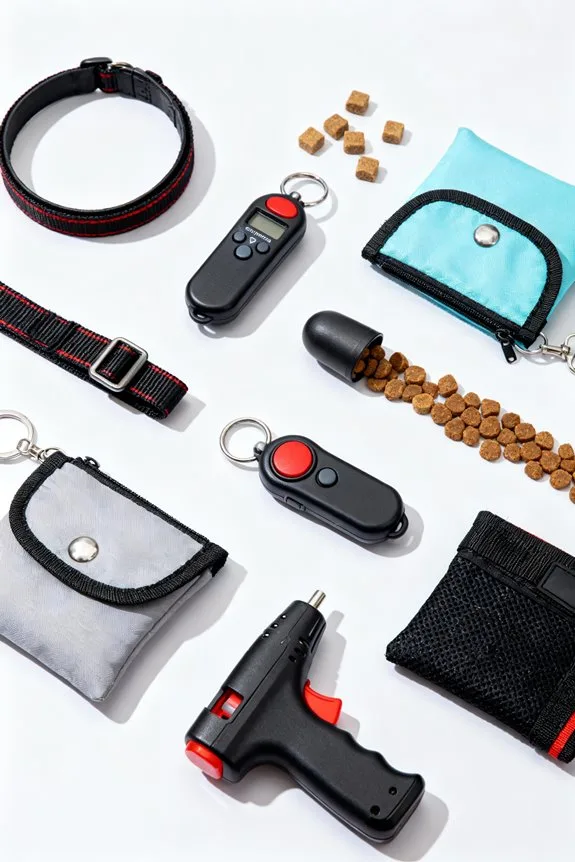
Motivation in training often depends on clearly valued rewards, which can include favorite toys, high-value treats, or brief play sessions. Trainers should use immediate reinforcement, within one second after the behavior, to strengthen associations, and they should select high-value items such as steak or cheese when distractions increase. How often should rewards be given, five to ten times per session early on, then gradually reduced? Limiting access outside training preserves reward value, so dogs receive rewards only during practice periods, and play becomes contingent on correct responses. A structured plan, documenting preferences, schedules, and quantities, improves consistency, and positive feedback, combined with appropriate rewards, yields measurable gains in response rates over weeks. Data collection, through simple trials, permits adjustment of reward type and timing. It’s also essential to consider adjustable and lightweight straps in training collars to ensure comfort and effectiveness during sessions.
Recommended Products

Healthy Bully Sticks for Dogs - Wholesome - tasty chew treats for small to medium dog breeds, Medium 12 Inch

Healthy Bully Sticks for Dogs - Meaty dog treats with a taste and texture dogs can't resist, Thick 6 Inch

Healthy Bully Sticks for Dogs - Wholesome - tasty chew treats for small to medium dog breeds, Medium 6 Inch
When Extrinsic Rewards Outperform Intrinsic Motivation
When a dog shows little intrinsic interest, trainers must rely on extrinsic rewards, such as treats or toys, to initiate engagement. Trainers select higher-value treats, multiple treats per session, when a pet is likely going to ignore low-value ones. Immediate delivery matters, so they deliver rewards within one second after a correct response, reinforcing timing and clarity. In distracting environments, extrinsic motivators increase compliance; thus, sessions may include three to five short repetitions before moving on. Consistent click-treat pairing ensures stronger associations and helps in modifying aggressive behaviors effectively. Should trainers fade rewards later, they plan a gradual schedule, reducing frequency by twenty percent each week, to encourage intrinsic behavior. Trainers use positive reinforcement principles consistently, while monitoring stress, fatigue, and motivation levels during sessions. Overall, using extrinsic rewards in such cases is a good idea now.
Recommended Products

Healthy Bully Sticks for Dogs - Meaty dog treats with a taste and texture dogs can't resist, Thick 12 Inch

Healthy Dog Treat - Fully digestible lamb lung is suitable for any size dog

TRIPLE FLAVOR BEEFHIDE CHEW: Good ‘n’ Fun Triple Flavor Twists are made with long-lasting beef hide, delicious pork hide and premium chicken.
Using Penalties and Pressure Fairly
If penalties are used, they should be timely, predictable, and proportional, so a dog links the consequence to the specific action. Trainers should balance positive reinforcement with fair penalties, for example using one brief verbal correction after two identical errors, to clarify rules. How can a handler avoid fear while still enforcing boundaries? Apply pressure release methods that allow escape when the desired response is made, for instance two to three seconds of gentle leash pressure followed by release. Consistency matters, trainers must deliver penalties every time a prohibited behavior occurs, such as snatching food during counter-surfing or leaving food unattended. Penalties should target actions, not the animal, and be paired with clear cues and immediate rewards for correct behavior for long-term learning success. A well-designed nylon dog harness can aid in behavior training by providing comfort and control, ensuring the dog responds appropriately to cues without experiencing discomfort or fear.
Recommended Products

【UPGRADED PIN-HINGED SLAT RUNNING SURFACE】 Addressing core safety features, our track uses an innovative pin-hinged linkage system instead of traditional screws. This structural design prevents the belt from detaching, providing a secure, non-slip running surface that ensures stable footing during intense physical activity.
Easily converts into a 3-wheeled stroller when not in trailer use, perfect for taking the children sightseeing or doing errands

THE ULTIMATE CANINE SAR HARNESS: A full body harness designed specifically for SAR dogs, this design helps you to safely and securely lower or raise your dog down cliffs, into collapsed structures or from helicopters
Applying Motivating Operations to Increase Value
After balancing timed penalties with clear rewards, trainers can manipulate environmental factors that change reinforcer value, increasing training efficiency. Trainers identify motivating factors, such as hunger, novelty, and social access, then apply establishing operations to amplify reinforcer appeal. Keeping two to three special toys or treats out of sight until sessions begin can elevate perceived value quickly. What happens when a favorite toy is introduced after play, does engagement rise noticeably? Abolishing operations, like recent feeding or constant toy access, reduce response rates and should be avoided before sessions. Trainers may use brief exercise or restricted access for 5–15 minutes to boost food incentive, producing measurable increases in correct responses. These environmental changes shift training incentives, improving focus, compliance, and learning speed in scenarios. When choosing training tools, closure mechanisms such as magnetic or wide-mouth designs are essential for quick, spill-free access to treats during training.
Timing Training Around Rest and Activity Cycles
Schedule training sessions to align with an animal’s natural activity peaks, typically mid-morning or early evening, for higher focus and compliance. Trainers should observe animal activity patterns for one week, noting peak energy spans of two to three hours, then plan sessions within those windows. Should sessions follow exercise, or precede it, for best engagement? Often short play, then 10 to 20 minute sessions boost motivation, and reduce fatigue. Rest cycle awareness requires scheduled naps or quiet time between sessions, so animals remain mentally sharp and responsive. Crate use can support a predictable routine, helping the animal associate rest with a specific location. Monitor signs of tiredness, adjust session length to five to fifteen minutes, and make training schedule adjustments accordingly. Improve learning outcomes. Additionally, incorporating anti-slip bottoms in crate mats can enhance stability and safety during rest periods, ensuring the mat stays in place and providing a secure environment for the animal.
Tailoring Rewards to Breed and Individual Drives
While different breeds share broad tendencies, trainers must tailor rewards to breed-specific drives, individual preferences, and situational demands. Effective breed behavior analysis begins with observing responses to common stimuli, for example, measuring reactions to toys, food, and scent over three sessions. Which rewards consistently elicit focus and approach, and which ones fail to motivate? High prey drive hounds may favor toy-based rewards, engaging for five to fifteen minutes, whereas low drive companions often prefer small food treats, timed every four to six repetitions. Reward preference identification requires testing, noting intensity and duration of response, and adjusting schedules accordingly. Instinct driven training combines breed instincts with individual personality, using scent work for retrievers, or chase games for terriers, to increase compliance and learning speed overall. Additionally, using adjustable head halters can provide gentle control for dogs that pull, aiding in the training process by managing head movement effectively.
Recommended Products

Chest circumference: 26 - 33.5 in, weight of the dog: 50.5 - 66 lbs

STAGE A STARTER BIT FOR TRAINING - The Reinsman 223 Offset Dee is a Stage A bit designed for starting horses, basic training, and maintaining steady contact; This direct reining bit is perfect for riders working with both hands, promoting communication and confidence in young or green horses

GREAT BIT - Reinsman's Josey Mitchell 3-Piece Fast Gag is a great choice for horses that need help picking up their shoulders. This shorter shank bit gives a moderate amount of "Whoa".
Socialization and Its Impact on Aggression and Calmness
Beyond tailoring rewards to breed and drive, trainers must prioritize structured social exposure during the sensitive period, to shape calm adult behavior. Socialization techniques include planned visits with at least five different people, controlled meetings with three other animals, and short exposures to traffic and household noises, all introduced before 16 weeks of age. How can trainers reduce future aggression without clear early experiences? Young animals raised in isolation often misread social cues, which increases fear responses and triggers defensive aggression. Age-appropriate sessions build confidence, promote anxiety reduction, and produce calmer reactions to novel stimuli. Studies show consistent socialization in formative months lowers fear-based reactions by measurable margins, improving adaptability, reducing anxiety, and decreasing the likelihood of aggression in varied real-world scenarios over time.
Practical Steps to Build Reliable Motivation in Dogs
Establish reliable motivation by using high-value rewards, consistent scheduling, and controlled environments that reduce distraction and reinforce desired behaviors. Use high-value motivators like steak or favorite toys to boost responsiveness, especially in noisy or distracting locations. Which reward works best, play or food, depends on the dog, session length, and training goal. Employ positive reinforcement techniques with pressure-release cues, so dogs learn compliance through relief and voluntary choices. Keep treats and toys out of sight between sessions, maintain consistent schedules, and use short frequent trainings for focus. Apply engagement enhancing strategies like variable rewards and play breaks, while following distraction management tips to increase success. Monitor rest, adjust timing, and reward immediately so cause-and-effect is clear, leading to reliable motivated behavior. Consistency matters greatly.
Recommended Products

THE BEST BULK DOG BULLY STICKS & LONG LASTING DOG CHEWS FOR LARGE DOGS - These 6 inch thick bully sticks 100 count deliver genuine dog chews long lasting satisfaction sourced from 100% grass-fed free-range USA beef a single ingredient beef stick and natural dog chews formula with zero additives, zero chemicals, and zero coloring the safest most digestible bully sticks for dogs small, medium & large who deserve only the best

INGREDIENTS YOU CAN TRUST: Made with just one ingredient, lamb lung. These oven-roasted lamb treats for dogs contain no wheat, corn, soy, grains, gluten, artificial colors, flavors, or preservatives—just real flavor dogs love.

Made With Real Peanut Butter, Chicken And Vegetables
Frequently Asked Questions
What Is the Concept of Motivation in Animal Behavior?
Motivation in animal behavior comprises internal and external processes that prompt action, driven by instinctual drives, modulated by behavioral rewards, and shaping learning; trainers adjust training techniques to align reinforcement with animals’ needs and contexts.
Why Is Motivation Important in Training?
?Who resists a well-timed reward? It increases learning efficiency, guiding Behavior modification through Positive reinforcement, sharpening focus and consistency; Training techniques become more effective, accelerating skill acquisition and strengthening desired responses and retention without coercion.
What Role Does Motivation Play in Behavior?
Motivation shapes behavior by driving initiation, persistence, and choice; intrinsic motivation fuels self-directed actions, extrinsic motivation provides external incentives, and behavioral reinforcement strengthens repeated responses, guiding adaptive learning and situational performance across contexts and time.
What Are the 4 R’s of Motivation?
Ready reminder: Reinforcement, Rewards, Risks, Repercussions. They encompass intrinsic motivation and extrinsic rewards, using behavioral reinforcement alongside deterrents and consequences to guide learning, stabilize responses, and calibrate future behavior in animals for adaptive, predictable outcomes.
Conclusion
Effective motivation integrates drive, timing, and rewards, and trainers should assess four drives—food, play, sex, and territory—quantitatively, for example using 1–5 scales to rank intensity. What practical adjustments follow when a dog scores high on food but low on play? Trainers can switch to high-value treats, shorten sessions to 5–10 minutes, or add 2–3 play breaks, producing faster learning through clear consequences, like a key, consistent reinforcement opens reliable, transferable behaviors across contexts and situations.