As an Amazon Associate, we earn from qualifying purchases. Some links on this site are affiliate links at no extra cost to you. Our recommendations are based on thorough research and editorial judgment.

Soft Vs Crunchy Treats for Training Purposes

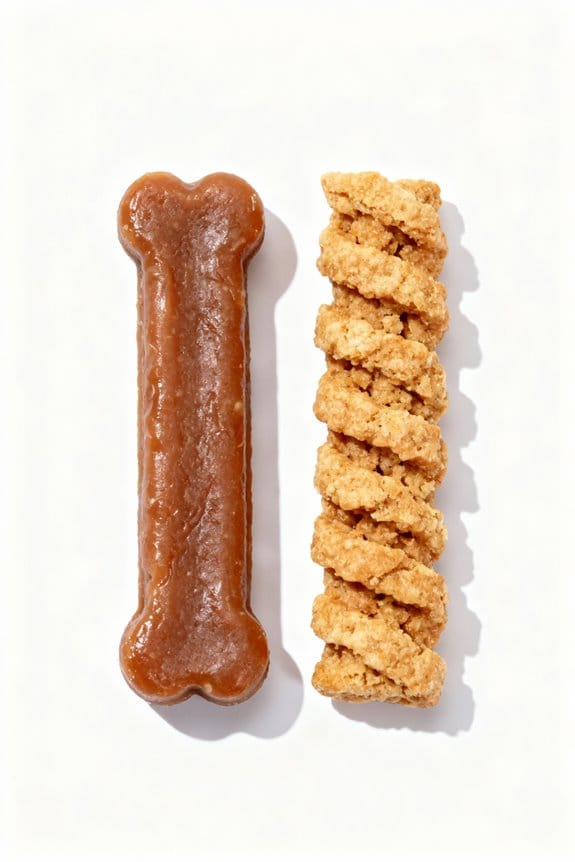
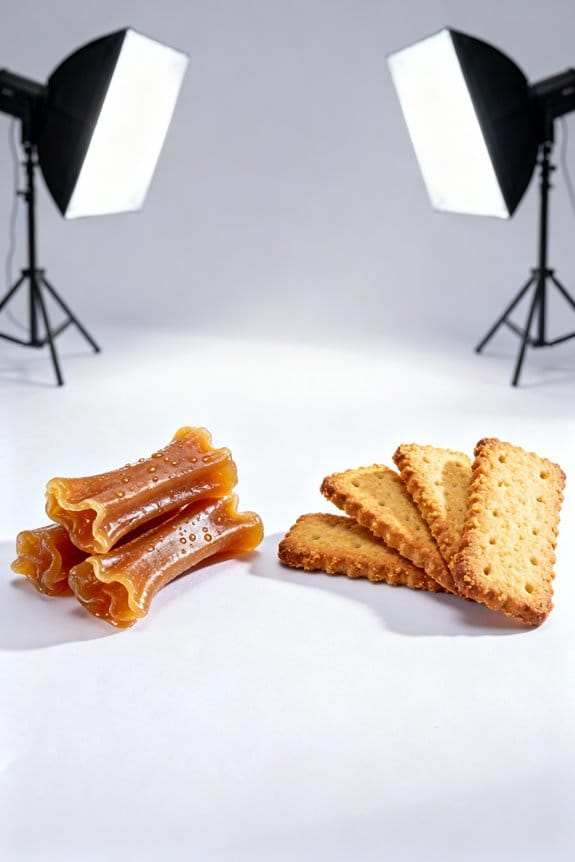
Treat texture influences training rate and attention, so soft treats like cheese or liver allow rapid reinforcement, enabling about 20 to 50 repeats. Crunchy treats, for example dental chews or kibble pieces, prolong chewing, support oral health, and suit single-reward tasks or longer engagement. Puppies and seniors need softer options, adults benefit from mixed textures, and low-calorie pieces under three calories reduce weight risk. Find practical examples, recipes, selection guidance, and shopping tips up ahead.
Key Takeaways
- Soft treats enable rapid, repeatable reinforcement during high-repetition training because they’re eaten quickly and keep momentum.
- Crunchy treats provide prolonged engagement and mechanical dental benefits, helping reduce plaque while offering mental stimulation.
- Puppies and senior dogs generally need softer textures for dental comfort and easier chewing.
- Use a mix of soft and crunchy treats to prevent treat fatigue and maintain motivation across sessions.
- Prioritize low-calorie, high-value options and portion control to avoid excess calories while maximizing training effectiveness.
Why Treat Texture Matters in Training
You may be interested

Because dogs must refocus quickly between repetitions, trainers often choose soft treats that can be eaten in two to three seconds. Treat texture influences engagement and focus, as quick consumption reduces downtime, distractions, and loss of momentum during training sessions. What role do crunchy treats play, when they require longer chewing and produce audible feedback? They provide dental stimulation and varied mouthfeel, which can alter attention spans, depending on the individual dog and context. Puppies and senior dogs often prefer softer textures, because tender gums and weaker teeth make hard pieces difficult to manage in practice. Trainers thus carefully rotate reward types, offering a mix of soft and crunchy options across sets of five to fifteen repetitions, to sustain interest and minimize treat fatigue. Chew toys provide distraction and soothe sore gums during teething, adding another dimension to the training and reward process.
Benefits and Best Uses of Soft Treats
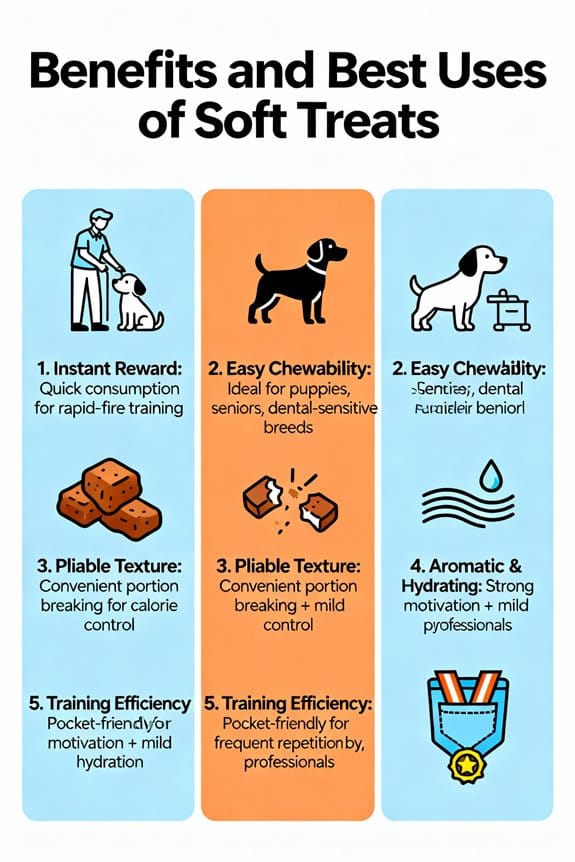
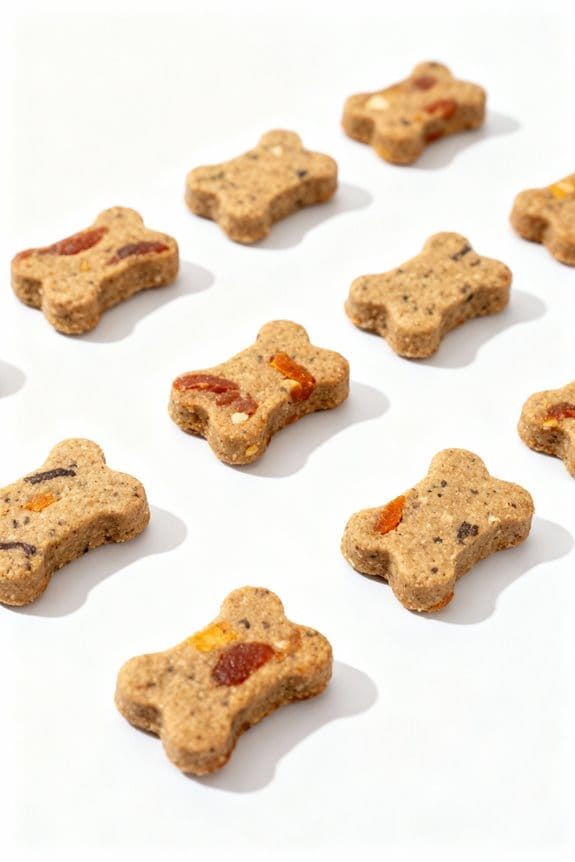
Many trainers prefer soft treats during high-repetition sessions, especially with puppies, seniors, or dogs with dental issues consistently. Soft treats are easy to chew, consumed quickly, and useful for rapid reinforcement during training sessions that require many repetitions regularly. They often contain meat or cheese, which increases palatability and motivation, so dogs respond faster to cues and commands reliably. Treats can be broken into pea-sized pieces, enabling portion control, maintaining caloric limits such as ten to twenty small pieces per session daily. Puppy training treats perform well for short attention spans, they permit immediate reward, which reinforces behavior effectively in quick succession frequently. Soft texture also suits seniors and those with dental sensitivities, reducing chewing effort, improving comfort, and preserving training momentum comfortably safely. Additionally, using adjustable-tone training whistles alongside soft treats can further enhance the effectiveness of training sessions, as they allow for customized cues tailored to each dog’s hearing capabilities.
Recommended Products

Healthy Dog Treat - Fully digestible lamb lung is suitable for any size dog

Single Ingredient - Chewy and satisfying dog treats made from 100% beef and nothing else
Healthy Dog Treat - Ideal size for medium dogs
Benefits and Best Uses of Crunchy Treats
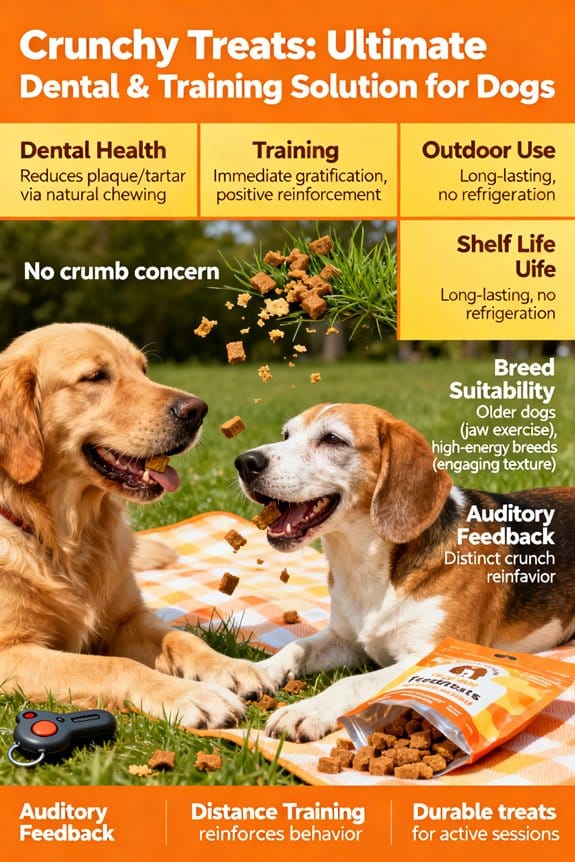
While soft treats suit rapid reinforcement and dental sensitivities, crunchy treats serve different training needs, offering mechanical dental benefits and prolonged engagement. Crunchy treats reduce plaque and tartar through chewing, improving dental health when included in regular feeding and care routines. Their firm texture provides mental stimulation and requires sustained concentration during training sessions, promoting longer focus and engagement. Are they messy for recall drills, or better suited for reinforcing calm behaviors like stays and long, patient sits? They can be broken into many small pieces, for example ten to twenty morsels per biscuit, extending reward delivery without quick consumption. Used appropriately, crunchy treats diversify reinforcement, sustain motivation across sessions, and support oral hygiene as part of balanced training plans, and overall dental longevity. Additionally, using positive reinforcement techniques with crunchy treats can enhance pet-owner bonding and reduce stress during training sessions.
Recommended Products

REAL BEEF - Imagine a bowl filled with air dried dog food made with real quality beefy goodness. This high protein dog food will have your pup's tail thumping with joy. It's not just real meat air dried dog food; it's a meaty party for their taste buds, crafted with care

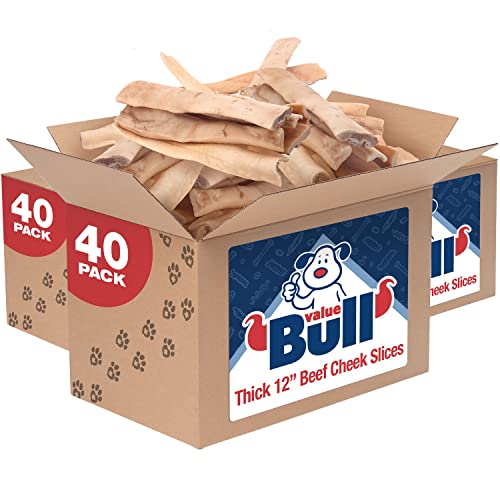
Bull Chews for Dogs - Varied all natural rawhide alternative cow tails for dogs come in multiple thicknesses and sizes to suit any chewing situation.

INGREDIENTS YOU CAN TRUST: Made with just one ingredient, lamb lung. These oven-roasted lamb treats for dogs contain no wheat, corn, soy, grains, gluten, artificial colors, flavors, or preservatives—just real flavor dogs love.
Choosing Treats by Life Stage and Dental Health
Puppies need small, soft dog treats that are gentle on developing teeth, can include DHA for brain support, and reward frequent training sessions. Adult dogs benefit from a balance of soft and crunchy training treats, to maintain engagement, support dental health through chewing, and avoid exceeding ten percent of daily calories from treats. Senior dogs require mostly softer options that are easy to chew, lower in calories, yet may tolerate occasional crunchy pieces for jaw stimulation. Owners should assess individual oral health, consult a veterinarian for periodontal concerns, and adjust textures accordingly, to match motivation with safety. Reflective materials enhance visibility during low-light situations, improving safety during walks. Reassess dental status regularly, adjust accordingly.
Treat Size and Timing: Big Vs Small Rewards
Treat size matters in training, as large jackpot rewards after five to ten correct repetitions signal the end of an exercise, and small bites reinforce quick responses. Trainers should match treat size to canine size, using tiny morsels for rapid reinforcement and larger pieces for jackpot rewards after multiple successes. How does one balance frequency and impact? Use small rewards every one to three repetitions, conserving large rewards for five to ten consecutive correct responses, this avoids satiation. Varying treat size prevents fatigue, and maintains interest across sessions lasting ten to twenty minutes. Keep training treats distinct, so dogs recognize value, and adjust portioning for different exercises or difficulty levels. Monitoring responses guides timing decisions, which increases motivation and learning efficiency. Quick-dry surfaces in puppy training pads ensure hygiene and odor control, making them an essential consideration for effective house training. Track and refine.
Low-Calorie and High-Value Treat Options
Why select low-calorie, high-value treats when training, especially so dogs can receive many rewards without exceeding daily calories? Trainers recommend treats under three calories each, allowing dozens of rewards per session, while maintaining overall diet balance. High-value options, such as freeze-dried liver, cheese, or real meat, excel in distracting environments, and capture focused responses. Puppies benefit from soft, low-calorie morsels with added DHA for brain support, and these are gentle on developing teeth. Selecting the right chew toy can also support healthy chewing habits and promote dental health throughout the puppy’s growth. Adult dogs respond well to varied low-calorie treats, keeping total training calories under ten percent of daily intake. Senior dogs need soft, low-calorie options that are easy to chew, aiding engagement despite dental decline. Adjust portions, monitor weight.
Recommended Products

REAR-MOUNTED AUTOMATIC FAN: The Fan Inside This Dehydrator Circulates Warm Air with 1000W of Heating Power to Ensure Your Food Product Is EVENLY DRIED from All Angles.


HEALTHY BEEF JERKY STICKS - We use meat from cattle that are 100% grass-fed and finished, and pasture-raised. They're non-GMO and never given hormones or antibiotics. Enjoy delicious meat sticks that are healthier and more nutritious!
Mixing Textures to Maintain Motivation
A mix of soft and crunchy rewards keeps dogs engaged during training, accommodating preferences and preventing boredom over multiple daily sessions. Trainers should alternate textures every 3 to 5 repetitions, offering a soft bite for rapid reinforcement, and a crunchy piece too. How can one prevent treat fatigue, and maintain enthusiasm across sessions; varying type, size, and timing addresses this consistently daily? Trainers may plan 20 to 30 minute sessions, or multiple short sessions, alternating textures to sustain attention and quick responses daily. Soft options consumed in one to two chews enable fast rewards during shaping, while crunchy treats provide chewing-based mental stimulation. Using both soft and crunchy types maximizes training treats for dogs effectiveness, supports positive reinforcement, adapts to individual needs, improves learning. Consider choosing a durable, waterproof material for your treat pouch to keep treats fresh and protected during training sessions.
Homemade Training Treats and Safe Ingredients
Prepare homemade training bites using lean proteins, whole grains, and dog-safe vegetables, ensuring recipes exclude garlic, onions, and excessive salt. Small, soft pieces allow quick chewing for puppies and seniors, reducing breaks in training, and increasing consistent responses session efficiency. Use lean chicken or fish to create high-value dog treats, combining protein with oats or sweet potato for palatability and appeal. Store homemade batches in airtight containers, refrigerate when moist, and limit portions so treats remain under ten percent daily calories recommended. Select wholesome ingredients like oats, sweet potato, and lean meat, balance texture for training, and adjust recipes for dental needs appropriately. A balanced mix of chewable, squeaky, and puzzle toys can cater to different play styles and prevent boredom. How will a consistent, nutritious approach change results, and will reliable, consistent reinforcement increase learning speed and durability over time considerably?
Alternatives When Food Isn’t the Motivator
How can a handler maintain progress when food fails as the primary motivator, while still reinforcing desired behaviors reliably? The trainer examines treats for training alternatives when food isn’t the motivator, emphasizing toys, praise, play, and affection as options. Interactive toys provide mental challenge and can replace treats during longer sessions, for example ten-minute puzzle play after five correct repetitions. Verbal praise, used consistently, strengthens the bond, increases attention, and supports shifting away from constant edible rewards. Short play sessions, such as two-minute fetch breaks, restore focus and reward desired responses without calories. Gradual substitution, replacing every third food reward with a toy or cuddle, maintains momentum and prevents frustration. Documented consistency and timing guarantee effective rewarding your dog across varied contexts, daily practice. Incorporating reflective stitching in training collars can enhance safety during nighttime training sessions, ensuring your dog’s visibility while you focus on non-food rewards.
Shopping Tips and Recommended Training Treats
When shopping for training treats, the handler should prioritize low-calorie options under three calories each, and choose products with natural ingredients and minimal additives. Consider the dog’s age and size, since soft treats aid puppies and seniors, while crunchy treats support adult dental health. Should one mix textures to sustain interest, or rely on a single high-value option like freeze-dried liver? Combine both approaches, using high-value dog training treats in distracting settings, and lower-value pieces for routine practice. Inspect ingredient lists, look for single-protein sources, and avoid artificial colors and preservatives. Measure portions, calculate daily calories to prevent weight gain, and adjust treats as exercise and feeding change. Purchase sample packs initially, compare palatability and texture, then standardize a reliable, healthful selection for effectiveness. When considering agility training equipment, opt for portable designs with carrying cases for easy transport and storage.
Recommended Products

RECOMMENDED SIZE: Like all pets, each antler is different. If your pet is an aggressive chewer, we recommend going up at least one size. This Split Elk Antler Dog Chew – Jumbo Treat – 5-Count is sized for Dogs 100+ lbs. Our Jumbo Split Elk Antler Dog Chew will be 8-11″ long and weigh 9.1-13 oz.

RECOMMENDED SIZE: Like all pets each antler is different, if your pet is an aggressive chewer we recommend going up at least 1 size.

SUPPORT DIGESTIVE HEALTH FOR SENSITIVE STOMACHS: Grain-free and vegan, our pumpkin and sweet potato dog treats are packed with natural fiber to promote healthy digestion and regular bowel movements—perfect for dogs with sensitive stomachs, food allergies and a low fat diet.
Frequently Asked Questions
What Kind of Treats Are Good for Training?
Soft, low‑calorie, small treats and occasional high‑value bites work best for training; trainers consider treat size, offer flavor variety, and adjust choices to each dog’s preference to maintain focus, motivation, and avoid overfeeding during sessions.
Are Soft or Crunchy Treats Better?
Both can work; one chooses based on situation and dog. One notes soft treat advantages for quick reinforcement and acknowledges crunchy treat drawbacks for slow consumption, and evaluates training treat effectiveness by motivation and context.
What Is the 3 3 3 Rule for Dog Training?
Like a traveler unpacking, the 3-3-3 rule describes adjustment phases: three days, three weeks, three months. Owners observe stress, settling, then stability; employ positive reinforcement techniques, strict timing of rewards, and reducing distractions during training.
What Is the Best Treat to Give a Dog When Training?
The best treat is small, low-calorie, highly palatable food used as high value rewards within positive reinforcement techniques; timing and portioning follow treat frequency guidelines consistently to avoid overfeeding while maintaining motivation during training sessions.
Conclusion
The trainer should select treat textures like tools in a kit, matching softness or crunch to task demands. Soft treats reward rapid, repeated behaviors because they are quick to chew and allow multiple reinforcements per minute session. Would a trainer not prefer crunchy treats for intermittent reinforcement, given dental benefits and slower consumption that extends value? Mix textures strategically, adjust sizes to two-to-four millimeters for small dogs and five-to-seven millimeters for larger breeds, and observe.