As an Amazon Associate, we earn from qualifying purchases. Some links on this site are affiliate links at no extra cost to you. Our recommendations are based on thorough research and editorial judgment.

Materials Used in Training Leashes Explained

Training leashes use nylon, leather, Biothane, rope, and chain, each offering different strength, feel, and weather resistance. Nylon is lightweight and affordable, but can chafe and fray. Leather softens with use, needs conditioning, and suits larger dogs. Biothane is waterproof, cleans easily, and supports 225 lbs per 0.25-inch width. Rope offers strong, lightweight handling; chain is chew-proof yet heavy. Match material to dog size, training goals, and conditions; further sections cover maintenance and sport-specific choices.
Key Takeaways
- Common leash materials include nylon, leather, Biothane, rope, and chain, each offering distinct strength, weight, and weather properties.
- Nylon is lightweight, affordable, and versatile but can chafe, fray, and absorb water without proper drying.
- Leather offers durability and improved grip over time but needs regular conditioning and is less weatherproof.
- Biothane is waterproof, low-maintenance, UV-resistant, and ideal for wet conditions though initially stiffer.
- Match leash material to dog size, strength, and activity: heavy-duty for strong dogs, lightweight for agility, and weather-resistant for outdoor use.
Why Leash Material Matters for Training
You may be interested



Because the choice of leash material affects control, comfort, and longevity, trainers must select materials that match training goals. Material determines durability and grip for dog leashes, for example Biothane supports strength ratings up to 225 lbs per quarter inch, useful for high-intensity work. When comfort matters, leather softens over time and reduces handler blisters, whereas nylon may cause chafing, needing padding. For agility, lightweight options such as nylon or rope improve maneuverability, enabling faster turns and clearer signals during timed drills. Weather resistance matters for outdoor training, because waterproof Biothane prevents water absorption that can weaken materials and degrade performance, and preserve consistent handling feel daily. Reflective stitching improves safety and visibility during nighttime walks, making it an important consideration for leashes used in low-light conditions. Which material matches a plan, control needs, or environment, depends on scenarios, so what do trainers evaluate?
Common Materials Used in Training Leashes
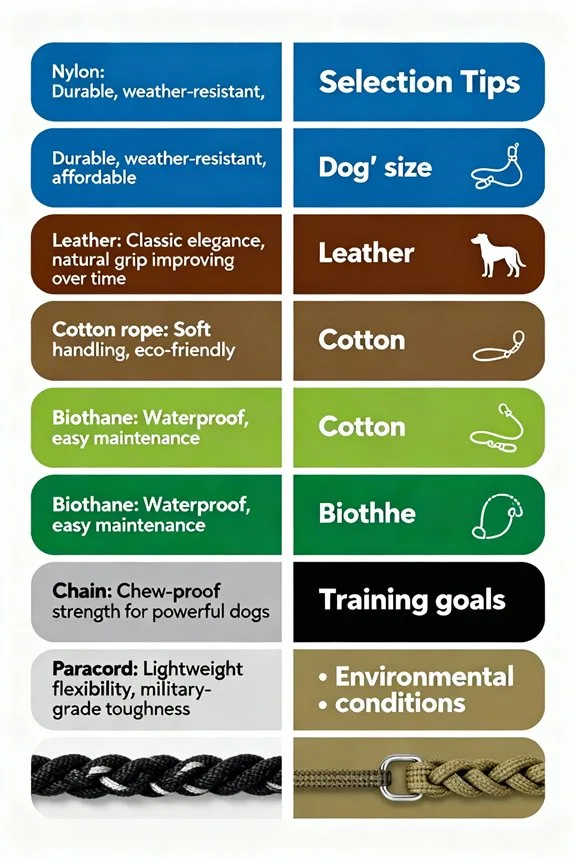
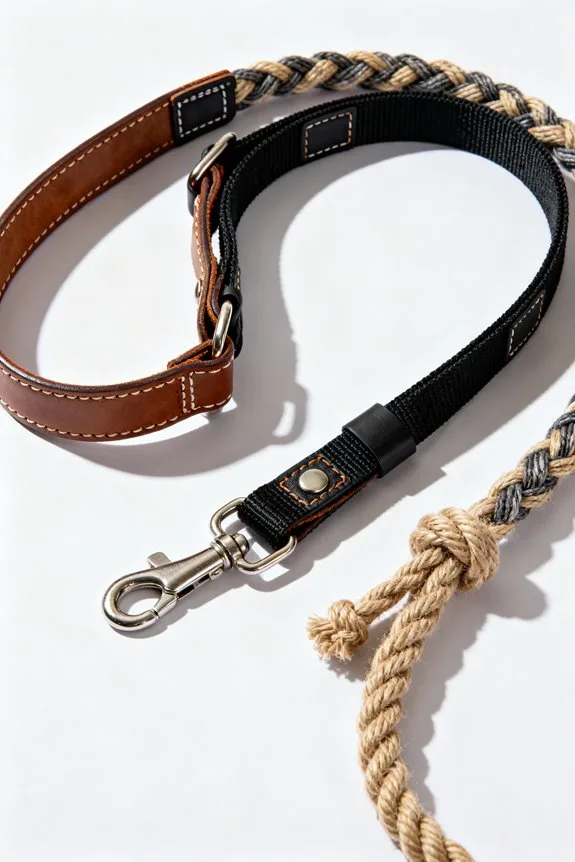
After evaluating training goals, trainers compare common leash materials—nylon, leather, Biothane, rope, and chain—to match performance needs. Nylon leashes are lightweight materials, affordable and versatile, suited to obedience work, but they can chafe during long sessions, so handlers should consider padding or grips. Leather leashes provide a comfortable grip that improves with use, offer durability, yet require maintenance to prevent moisture damage, making them costlier upfront. Biothane leashes are waterproof, easy to clean, and resist abrasion, ideal for wet or muddy fieldwork, though they may feel stiff or become slippery when wet. Rope leashes combine strength and lightness, good for recall drills, but may roughen hands and suffer from heavy chewing. Chain leashes are nearly chew-proof, durable materials, however their weight limits agility training. Additionally, heavy-duty nylon materials with reinforced stitching are recommended for increased durability and longevity in various dog collars.
Nylon: Pros, Cons, and Best Uses
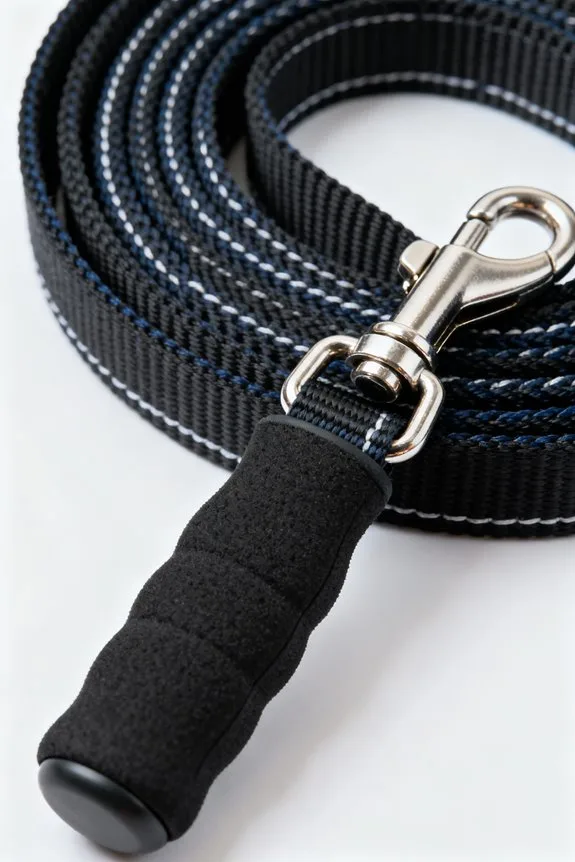
Nylon leashes combine lightweight fibers and high tensile strength, typically available in widths from 1/2 to 1 inch and lengths of 4 to 6 feet. This nylon option is lightweight and strong, suited for everyday training, or outdoor activities with dogs of many sizes. It remains water-resistant and durable in wet conditions, but can fray under heavy use, so regular inspections are advised. What are the pros and cons, then: affordability, wide color choices, and low weight, versus rough feel and potential fraying over time? For trainers who need budget-friendly gear, nylon provides low cost per leash, and easy replacement when wear appears. Choose widths from 1/2 to 1 inch based on dog size and strength, inspect hardware and fabric during routine inspections. Stay vigilant. Heavy-duty nylon leashes often include additional features like reflective stitching and padded handles to enhance safety and comfort during walks.
Leather Leashes: Durability and Care
A leather leash, typically crafted from U.S. oak-tanned hides, offers long-lasting strength and a refined appearance for everyday use. High-quality leather provides superior durability, resisting abrasion and stretching when properly cared for, which extends service life considerably. How should owners preserve that durability, and what routines are effective for regular care, seasonally and after exposure? Routine maintenance includes wiping after wet walks, monthly conditioning with leather balm, and professional treatment every two to three years for deep restoration. Leather softens over months of use, increasing comfort and improving grip stability, which reduces hand fatigue on long outings. The added weight gives a sense of control, though it may increase user fatigue during prolonged training sessions. Available in colors with metallics, it remains functional, stylish. For those interested in added safety during nighttime walks, LED dog collars provide increased visibility and safety, making them a valuable accessory for pet owners.
Biothane: Waterproof Performance and Benefits
Durability is a defining trait of Biothane, a polyester webbing with PVC coating that yields consistent performance in wet conditions. Biothane is waterproof, with a strength rating of 225 lbs per quarter inch, so trainers can rely on quantified load capacity during handling and restraint. It permits easy cleaning after muddy hikes, resists odors, and supports outdoor activities year-round. The material is durable, shows superior resistance to wear, and offers excellent grip despite reduced flexibility compared with some alternatives. Its non-toxic composition protects animals, while a wide palette provides versatile options for function and style. Biothane is not widely recyclable, but it may be more eco-friendly than leather or new plastics. How should handlers choose between stiffness and grip? Examine task demands, weather exposure, and required cleaning frequency, then select Biothane when durability and low maintenance are priorities for training.
Rope and Climbing‑Style Leashes Explained
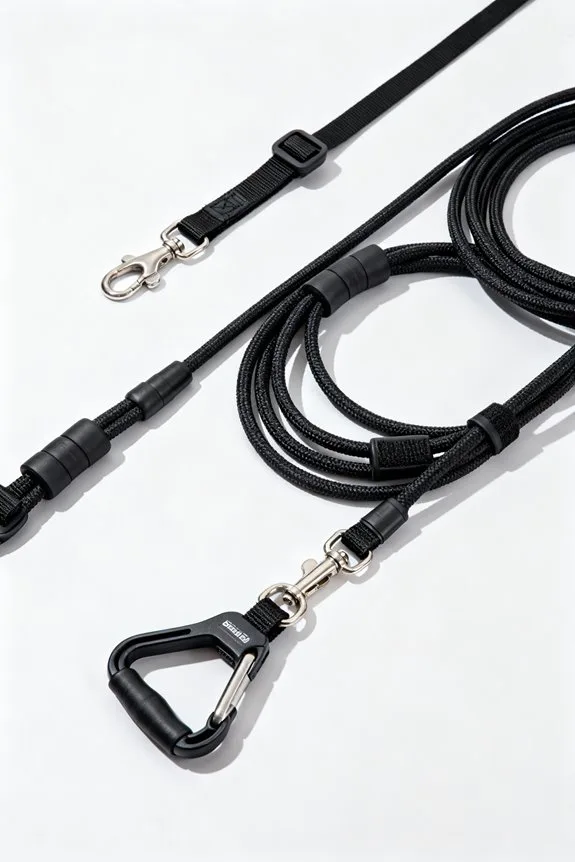
Climbing rope-style leashes use kernmantle or braided rope constructions, providing high tensile strength and a soft handle for comfortable, reliable control. Rope leashes often use climbing rope materials such as 8–10 mm kernmantle, offering strength and durability for active dogs during pulling scenarios. How should an owner choose diameter and length for hiking and tracking, or training and everyday use? Choose wider diameters for large breeds, and lengths from 1.2 to 2.5 metres for control and freedom. The soft texture reduces hand fatigue, yet abrupt pulls can cause rope burn, so gloves or techniques are advised. Many models are machine washable, and they remain lightweight and flexible after cleaning, in general. Available in customizable designs, they balance function and personal style and visual appeal. For those looking for added safety features, consider leashes with reflective stitching to enhance visibility during nighttime walks.
Chain and Metal Leashes: When to Choose Them
Security is often the deciding factor for handlers, as chain and metal leashes offer near‑indestructible resistance against determined chewers and strong dogs. Chain leashes and metal leashes provide indestructible control and security during training sessions, especially with aggressive behavior, reducing failure risk. They are weather resistant, so rain or mud do not degrade performance, and longevity lowers replacement costs over years of use. The extra weight improves control for powerful dogs, but the same weight can be uncomfortable for handlers during long walks or repeated drills. Leashes with swivel clips prevent twisting and enhance control, making them particularly useful during training sessions. When are they appropriate, then? Use them for short training sessions, protection work, or specific situations requiring maximum restraint, and avoid everyday casual outings because bulk and weight impair comfort. Proper handling technique reduces strain and injury risk.
Matching Material to Dog Size, Strength, and Sport
Leash selection requires matching material to a dog’s size, strength, and sport, and this choice directly affects control and safety. For stronger and larger dogs, durable leash materials like leather or Biothane resist pulling forces and heavy wear during training sessions. Smaller dogs can use lightweight materials, nylon or rope leashes provide sufficient control without unnecessary bulk or stiffness for daily walks. Dog sports differ; for agility, lightweight flexible lines encourage rapid turns and comfort, while tracking and search work requires longer, robust lines. Obedience training often benefits from medium-length leather or rope leashes, they balance control and comfort for handlers and dogs alike. In wet environments waterproof materials perform better, they extend functional life, and they maintain handling characteristics under varied conditions reliably. Some citronella bark collars offer adjustable sensitivity levels and various working modes to match the individual training needs of dogs, ensuring effective and humane behavior correction.
Weather, Maintenance, and Longevity Considerations
Because weather alters material performance dramatically, handlers should choose leashes that match expected conditions, use cases, and maintenance capacity. Biothane resists moisture and UV, so a handler working in rain or snow can expect multi-year longevity with minimal upkeep. Leather offers comfort and traditional feel, but requires cleaning and conditioning every one to three months; otherwise, moisture causes stiffness and reduced durability. Nylon is lightweight and easy to wash, yet it can absorb water, fray at points, and lose strength if not dried promptly. For improved visibility features, rubber leashes with reflective threads can be beneficial during evening walks. Which material fits high-frequency, rough use, versus occasional, dry-condition training? For abrasion resistance and long life, choose heavy-duty Biothane or chain for strong dogs, and high-quality nylon for everyday scenarios. Regular inspection, cleaning, and timely replacement preserve performance and safety.
Advanced Materials, Features, and Innovations
After evaluating weather effects and maintenance routines, handlers should consider advanced materials and features that enhance safety, durability, and convenience. Reflective threads increase visibility in low light, improving safety during walks, training sessions, and roadside exposures. For situations involving sudden pulls and high-energy dogs, shock-absorbing components reduce peak force transmission by up to 30 percent, protecting shoulders. Eco-friendly fabrics use recycled fibers or hemp blends, offering durability comparable to nylon, with lower environmental impact across production. Unique innovations include non-toxic coatings, and antimicrobial properties that inhibit odor and microbial buildup, extending usable life between washes. For tech-forward handlers, GPS tracking and activity monitoring integrate with apps, providing location fixes, pace metrics, and session summaries for analysis. Handlers can choose leashes with padded, ergonomic handles to enhance comfort during prolonged use. Handlers should match features to needs, budget, and training goals.
Frequently Asked Questions
What Material Are Leashes Made Of?
They are made from Nylon options, Leather durability, Cotton comfort, Chain strength, Reflective visibility, Eco friendly choices, Biothane benefits, Webbing structure, Adjustable lengths and Weather resistance, suiting varied training needs and user preferences across conditions.
What Type of Leash Is Best for Training?
Biothane or leather leashes suit training. Best training practices, leash length advantages, collar comparison, behavioral training methods, leash handling techniques, distractions management strategies, positive reinforcement training, breed specific considerations, training environment impact, dog personality traits.
What Is the Best Material for Dog Leads?
Durable, dependable, dapper, Biothane excels overall: leash durability factors, leash weight considerations, style versus function, leash length recommendations, environment suitability, texture for grip, reflective materials benefits, adjustable leashes types, eco friendly options, handling materials comparison
What Are the Components of a Retractable Leash?
Retractable leash components: casing, spring, cord, handle, clip; leash material durability, handle grip design, locking mechanism types, safety features analysis, leash length options, cord thickness comparison, ease of use, dog behavior influence, extra features assessment
Conclusion
The choice of leash material directly affects control, durability, and comfort, influencing training outcomes across different breeds, activities, and environmental conditions, and handler preference too. Was one striking statistic that 45% of handlers reported fewer leash-related incidents after matching material to dog size, strength, and activity over time and training? Assess dog weight and behavior, consider weather and maintenance needs, then select a material and hardware combination that guarantees safety, longevity, and progress for training.