As an Amazon Associate, we earn from qualifying purchases. Some links on this site are affiliate links at no extra cost to you. Our recommendations are based on thorough research and editorial judgment.

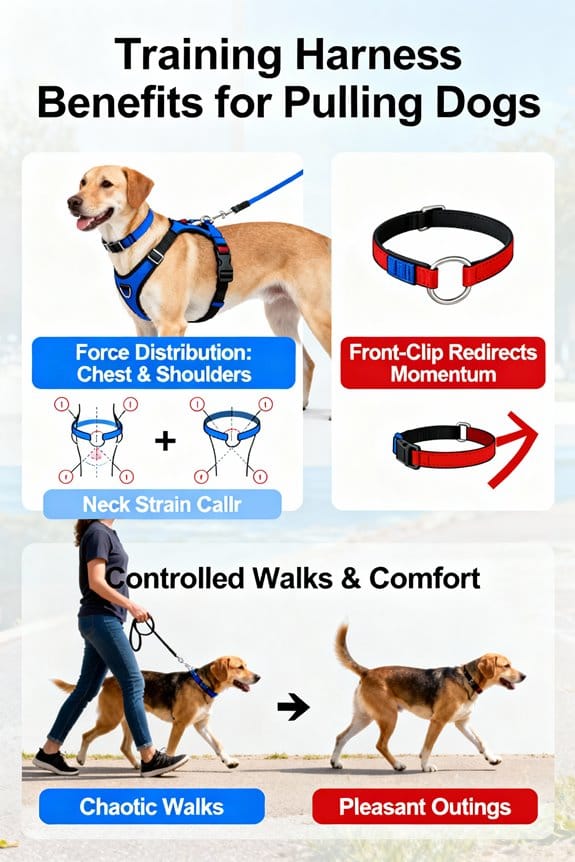
How Training Harnesses Help With Pulling

Training harnesses act as guidance systems, distributing pressure across the chest and shoulders to reduce neck strain, can lower leash force by about 40%. Front-clip designs redirect momentum toward the handler, turning the dog inward, while head halters give direct head control for strong pullers. Proper fit allows two flat fingers, use a four- to six-foot leash, and limit initial sessions to 10–15 minutes. Want to improve loose-lead walking? Continue for steps and safety tips.
Key Takeaways
- Training harnesses distribute pressure across the chest, reducing neck strain and making corrections safer than collars.
- Front-clip harnesses redirect forward momentum toward the handler, causing the dog to turn inward and stop pulling.
- Properly fitted harnesses can reduce leash force by about 40%, improving handler control during walks.
- Consistent harness use signals training sessions, reinforcing close walking and rewarding slack-lead behavior.
- Short, regular training sessions with a 4–6 foot leash and removing the harness afterward prevent overuse and confusion.
How Training Harnesses Work on the Leash
You may be interested

Although often mistaken for simple restraint devices, training harnesses function as guidance systems, redirecting a dog’s forward momentum through specific attachment points and strap geometry. Dog harnesses distribute pressure across the chest, reducing neck strain, and can lower leash force by about 40 percent. A front clip redirects momentum toward the handler, causing the dog to turn inward, which interrupts pulling and encourages attention. How should handlers practice? Short sessions, three to five minutes with treats, repeated several times daily, are effective for training. A well-fitted harness, adjusted to allow two fingers at the shoulder straps, improves loose leash control, helping dogs walk nicely. Consistent use signals a training session, so rewards for close walking reduce pulling long-term. Make sure to select a harness with adjustable straps for a snug and comfortable fit, crucial for effectiveness across different dog sizes.
Types of No-Pull Harnesses and When to Use Them

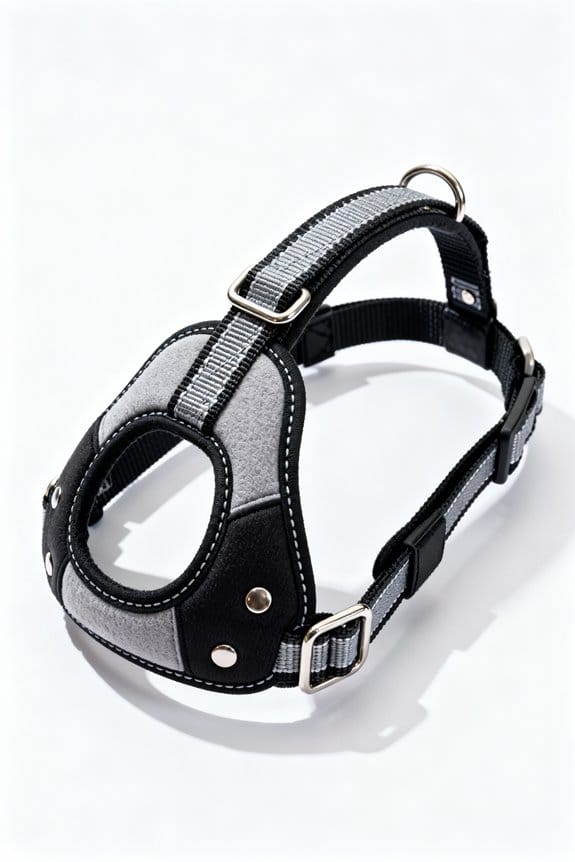
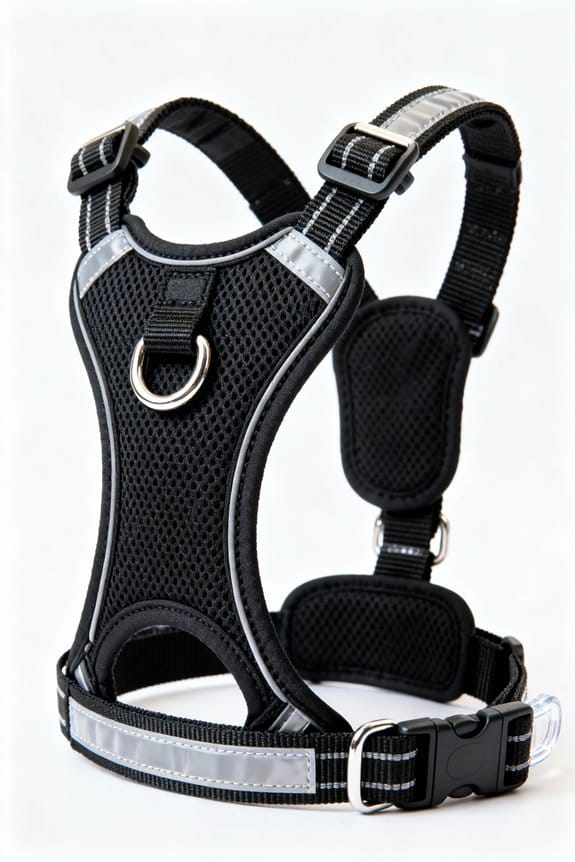
Having established how front attachments and strap geometry redirect momentum and reduce leash force, handlers must choose the appropriate no-pull style. Front-clip designs, such as the Easy Walk Harness, attach at the chest, redirecting pulling behavior by shifting the dog’s direction with lateral pressure. Around-the-torso models wrap the body, offering control without neck stress, recommended for dogs with spinal or neck injuries. Combo harnesses combine front-clip and around-the-body features, they work well with double-ended leashes, allowing quick adjustments and fewer tangles. What about head halters? They control the head directly, useful for strong pullers, but require gradual introduction and short training sessions. A certified dog trainer evaluates size, shape, and specific pulling behavior, matching harness type to individual needs for safer, more effective walks. Many leather harnesses feature a no-pull and no-choke design for better control and comfort during walks, ensuring a safe and enjoyable experience for both dogs and their owners.
Proper Fitting, Wear Time, and Safety Tips

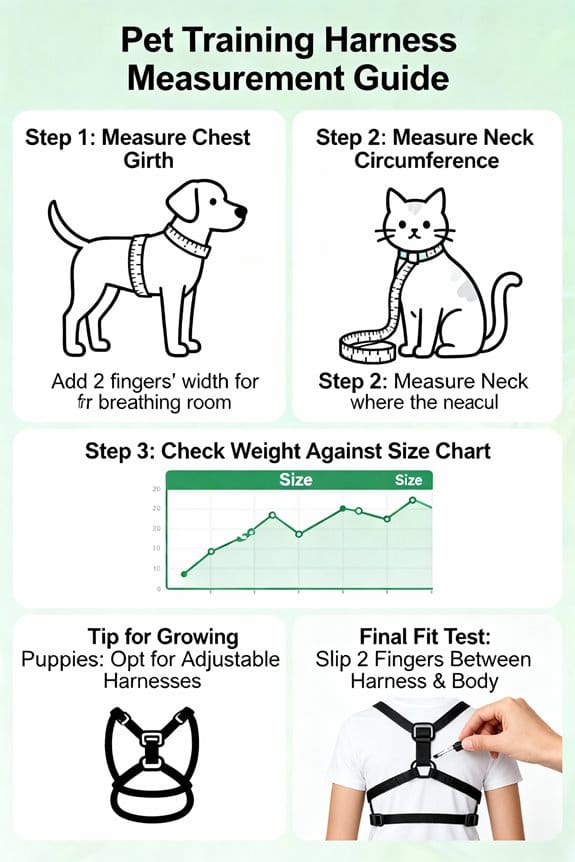
When properly adjusted, a training harness should sit snugly against the chest and ribcage, allowing two flat fingers under straps, preventing escape while avoiding pinching or chafing. Proper fitting reduces chafing, distributes pressure across the chest, and minimizes neck strain during dog pulling, so check fit before each session. Limit wear time to short intervals, typically up to 15 minutes for beginners, and remove the harness immediately after walking to prevent skin irritation. Constant monitoring prevents chewing, entanglement, or injury, and using a 4 to 6-foot nylon leash improves control compared with a retractable lead. Train your dog with brief, frequent sessions, follow these safety tips, and adjust equipment as the dog grows or behavior changes, regularly inspected. Additionally, adjustable slip/martingale designs are preferred for providing gentler control during training scenarios.
Step-By-Step Loose-Lead Training With a Harness
Begin the loose-lead training by fitting a front-clip harness snugly, attaching a four to six foot nylon leash, and choosing a quiet location. The trainer begins with short fifteen minute sessions, in low-distraction areas, so the dog can focus and learn loose-lead walking without becoming overwhelmed. Handlers reward the dog with treats or praise when it walks beside them and the leash remains slack, reinforcing desired behavior consistently. If the dog attempts to pull, the handler pauses and waits for slack, then resumes walking, creating a clear cause-and-effect lesson. Sessions always use the same leash and harness, avoiding retractable leads that create tension and confusion. After each training walk the harness is removed, signaling off-duty status and reinforcing boundaries. Progress is tracked, adjustments made. Using an eco-friendly harness made from recycled materials can further support sustainable practices while training.
Common Myths and Misconceptions About Harnesses
After routine fifteen-minute loose-lead sessions with a front-clip harness, handlers often encounter persistent myths about what harnesses do. A common misconception is that harnesses make dogs pull, yet pulling behavior usually reflects reward history, not device causation. How can a tool be blamed when a dog reaches desired stimuli and is reinforced repeatedly? Harnesses distribute pressure across the chest, reducing neck risk compared to collars, but they do not teach loose-lead walking by themselves. If handlers omit consistent training methods, a harness can inadvertently reinforce forward pulling, especially when the dog enjoys exploring. Some dogs appear more reactive in certain harness designs, which can confuse training progress and timing. Effective loose-lead walking requires clear communication, consistent practice, and management, dispelling many misconceptions about harnesses.
When to Get Professional Help or Personalized Support
When dogs continue pulling despite consistent training, a professional can assess causes, quantify tension during walks, and tailor a program. A trainer may offer a 1-2-1 plan, like Your Walking Buddy, scheduling three to six sessions over four weeks, to reshape pulling behavior. Can underlying fear or anxiety be driving the problem? If so, targeted desensitization and confidence-building replace repetitive corrections, producing measurable progress. Experts demonstrate alternative handling, adjust harness fit, and introduce graduated challenges, reducing sudden tugging and leash tension. Owners receive new techniques, clear feedback, and ongoing support, improving communication and long-term loose-lead walking success. Results often emerge within weeks, showing fewer pulls per walk. Flirt poles for obedience training can also be an effective tool to channel a dog’s energy, promote focus, and enhance owner-dog interaction, complementing harness training efforts.
Recommended Products

【Help Your Large Dog Burn Energy Indoors】 Bad weather, busy workdays, hot sidewalks, or apartment living can make daily walks hard. The HSAUPI dog slatmill gives large, active dogs a controlled way to move, release energy, and keep a more consistent exercise routine at home
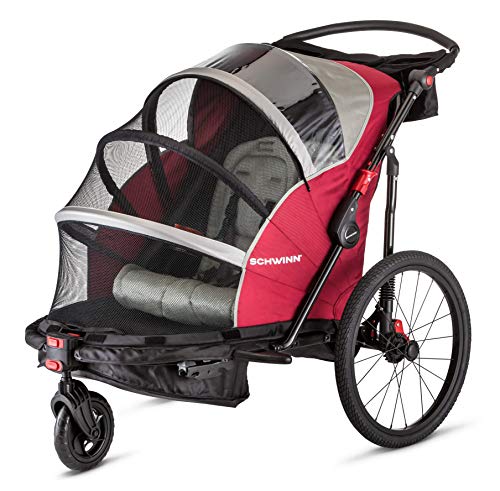
Easily converts into a 3-wheeled stroller when not in trailer use, perfect for taking the children sightseeing or doing errands

VERSATILE DOG PULLING CART: Use this dog cart wagon to haul toys, water, camping gear or training weights. Ideal dog weight pull cart for exercise and conditioning on walks—start light and increase gradually.
Frequently Asked Questions
How Do Harnesses Stop Dogs From Pulling?
Harnesses reduce pulling by redirecting force and cueing dogs to stay close; different harness types and leash techniques, combined with consistent training methods, account for breed differences while maintaining dog comfort and reinforcing pulling behavior.
Do Harnesses Increase Pulling?
No, like a sail catching wind, harness types do not increase pulling; they interact with dog behavior, requiring proper pulling techniques, leash control and safety measures, while providing training benefits when paired with consistent instruction.
What Is the Best Device to Stop a Dog From Pulling?
A front‑clip combo harness with anti pull technology is often best to stop pulling; experts note dog leash compatibility, comfort features and breed differences matter, user reviews support effectiveness, and training tips enhance long‑term results.
What Is the Best Dog Harness to Stop Pulling?
Like a ship’s rudder steadying a storm, the best no pull choice is a front clip harness—an adjustable harness, padded dog harness, balancing comfort and control; inexpensive options exist, but careful size selection remains essential.
Conclusion
The harness acts like a rudder for a wayward ship, directing force away from the neck, increasing control, and improving leash manners within six weeks. Can front-clip harnesses reduce pulling by about 60%, while back-clip styles suit calm walkers, and no-pull vests redirect motion for varied breeds across different sizes? Poor fit or wear beyond six months causes slipping and setbacks, so schedule monthly fitting checks, and train five-minute sessions three times daily, reliably improving.