As an Amazon Associate, we earn from qualifying purchases. Some links on this site are affiliate links at no extra cost to you. Our recommendations are based on thorough research and editorial judgment.

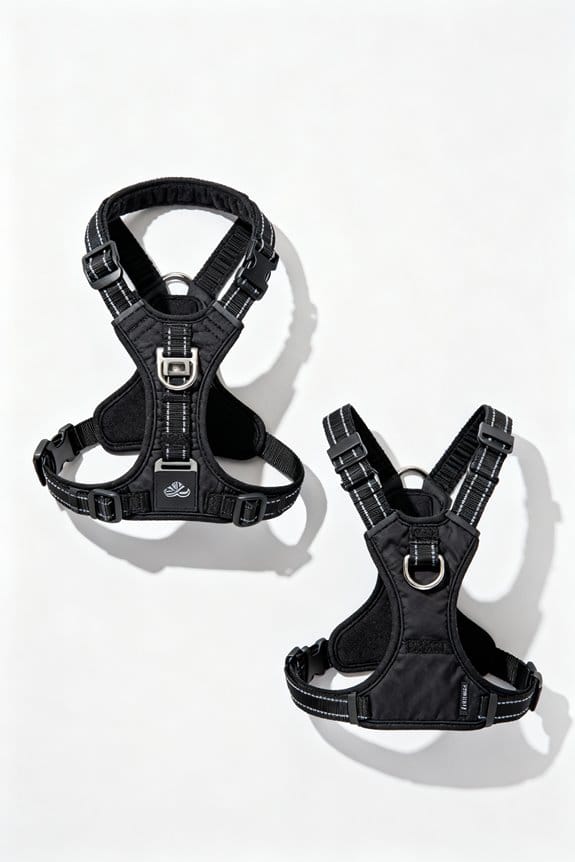
Front-Clip Vs Back-Clip Harness Designs

Front-clip harnesses attach at the chest, offering strong steering and corrective control for dogs that pull, useful for breeds over 25 lb. Back-clip harnesses fasten on spine, preserving a natural gait, and suit small breeds under 25 pounds or calm walkers. Which suits a specific dog depends on behavior and training goals, because front-clips reduce pulling while back-clips increase comfort. More detail and fitting guidance follow for application and scenarios, with step-by-step sizing additional tips.
Key Takeaways
- Front-clip harnesses give stronger steering control and redirect pulling, making them effective training tools for dogs that lunge or pull.
- Back-clip harnesses prioritize comfort and natural gait, suitable for calm dogs or small breeds that rarely pull.
- Dual-clip harnesses offer flexibility: use front for training and back for relaxed walks or car travel.
- Front-clip use can alter gait if misfitted or overused, so monitor fit and joint health during training.
- Proper sizing—measure chest and neck, allow two fingers under straps—is essential for safety and to prevent chafing.
Understanding Different Harness Types
You may be interested
Because different dogs have distinct temperaments and body types, handlers should select harnesses based on function and fit. Front-clip harnesses attach near the chest, provide increased control, discourage pulling, and suit training for energetic or hard-to-manage dogs during initial leash training sessions. Back-clip harnesses place the leash on the back, simplify fitting, and remain comfortable for well-behaved dogs which seldom pull. Dual-clip harnesses offer both attachments, allow strategy changes during a walk, and address different walking situations, accommodating walking habits. Padded harnesses often include reflective strips for visibility, enhancing safety during nighttime or low-light conditions. What measurements matter most, chest girth and waist circumference, and how do they prevent chafing during two to four mile outings? A proper fit requires accurate measurement, charts, and adjustments, because dogs’ temperament and poor sizing cause pressure points, decreased mobility, and injury risks.
Why Choose a Harness Over a Collar
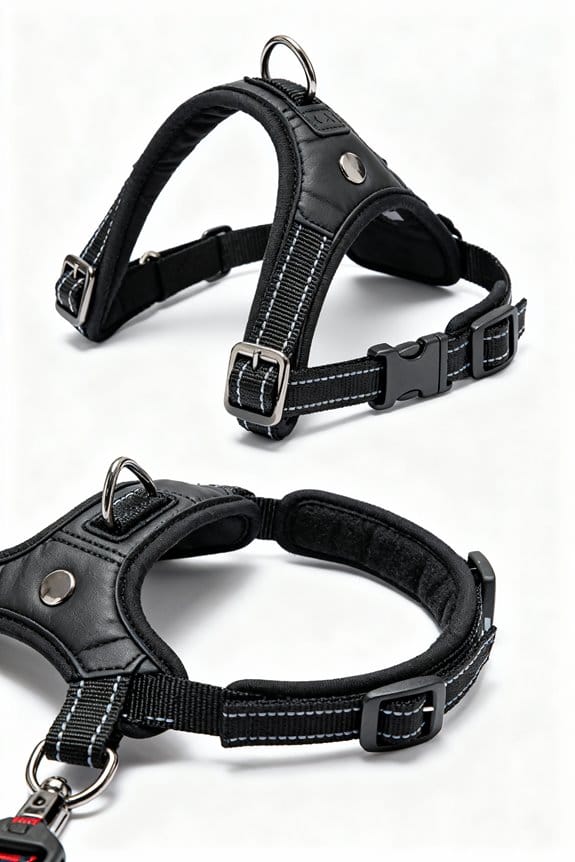
A harness spreads leash pressure across the chest and shoulders, protecting the neck, which benefits small breeds and brachycephalic dogs. Dog harnesses offer a safer alternative to collars, reducing choking risk during sudden pulls, and aiding control for a 5–30 kg dog. A harness provides distributed force, preventing throat injury, and promoting better walking habits with less strain. Front clip harnesses and back clip harnesses present different benefits and drawbacks, so selection depends on behavior and activity. For strong, energetic dogs, harnesses provide better control, enabling directional guidance during training walks or hikes. Using the harness correctly, with adjustment points and pads, improves safety and comfort, and minimizes rubbing. The ideal choice balances function, leash attachment, and a perfect fit, ensuring confidence, canine welfare. Harnesses with reflective materials improve safety during nighttime outings by enhancing visibility.
Recommended Products

Versatile and Fun: You can use the bicycle trailer to take your children on exciting adventures and create lasting memories.The baby bike trailer can hold up to 88 pounds, making them suitable for children aged 12 months and older. Enjoy school trips, parks, and picnics with your children in the trailer

No Pull Dog Harness with Front Clip Control: Front leash clip helps reduce pulling and supports leash training; back clip works well for everyday walking, jogging and outdoor activities.

No Pull Dog Harness: Whether you're working on training or need a day-to-day harness for handling your dog, our walking harness provides increased control while allowing your dog a full range of motion
Front-Clip Harness: Benefits and Drawbacks
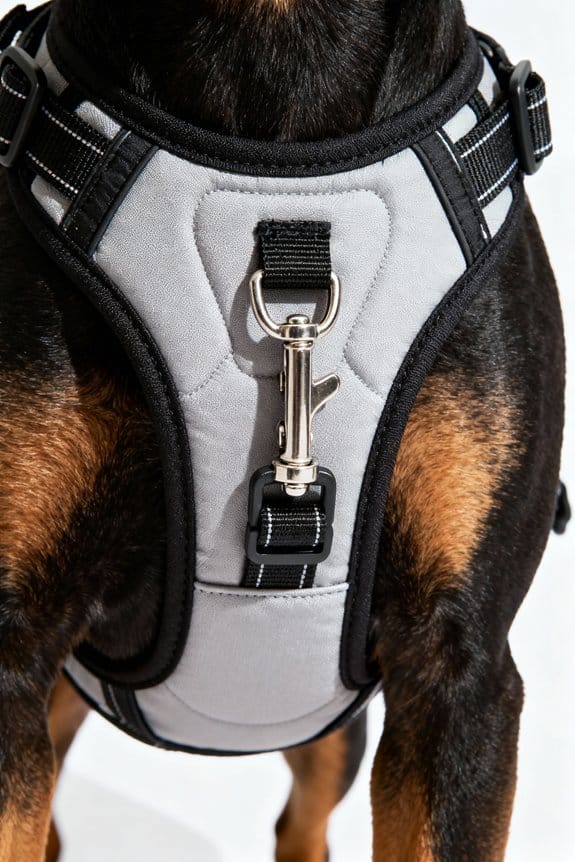
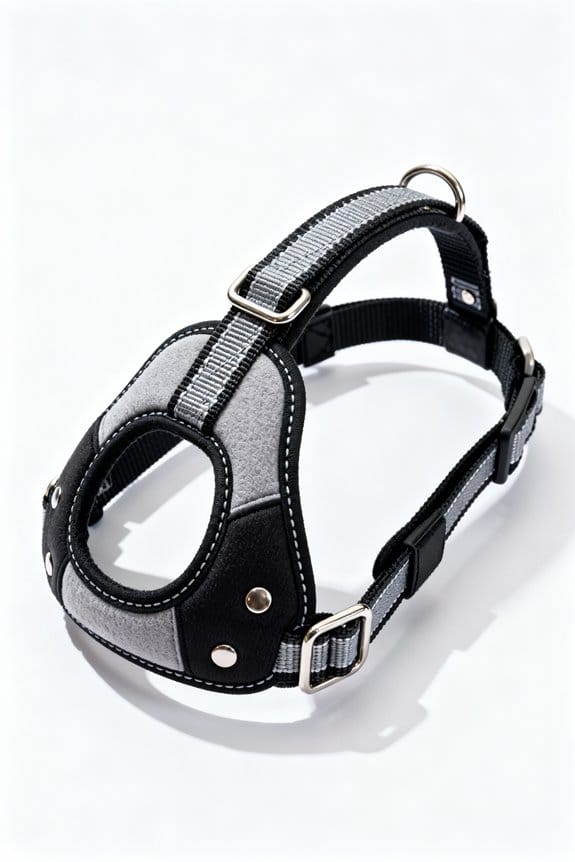
Placed on the chest and secured around the shoulders, front-clip harnesses give owners strong steering control, useful for dogs who pull or lunge during walks. As a training aid, they allow handlers to redirect attention gently, improving leash control and reducing sudden lunges in many scenarios. They suit energetic dog breeds that need better management during bursts of speed, and they serve as a practical alternative for owners teaching loose-leash walking. However, benefits and drawbacks include possible changes to gait, which can create joint issues over months if comfort and fit are neglected. Regular harness adjustments, monitoring for chafing, and professional fitting recommendations minimize risks and preserve effectiveness, so owners should reassess fit every few weeks. Seek veterinary advice for pre existing orthopedic concerns. Martingale loop designs apply gentle, gradual pressure to curb pulling behavior, enhancing the effectiveness of front-clip harnesses.
Back-Clip Harness: Benefits and Drawbacks
While front-clip designs offer steering control for pullers, back-clip harnesses place the leash on the dog’s back, simplifying use for calm pets. A back-clip dog harness offers benefits and drawbacks, promotes natural gait, and is comfortable for well-behaved dogs commonly. By positioning the leash attachment point on the back, design can reduce strain on the dog’s neck, creating a relaxed walking experience. Is this suitable for calmer dogs or smaller breeds that rarely engage in dog pulls, and consequently need minimal correction? However, the harness can encourage pulling behavior because it lacks corrective feedback, making it less effective for energetic dogs often. Owners who face pulling should consider training tools and guidance, since comfort for well-behaved dogs must be balanced against control needs often. Many harnesses are designed with reflective materials to enhance visibility and safety during nighttime walks.
Dual-Clip and Hybrid Options
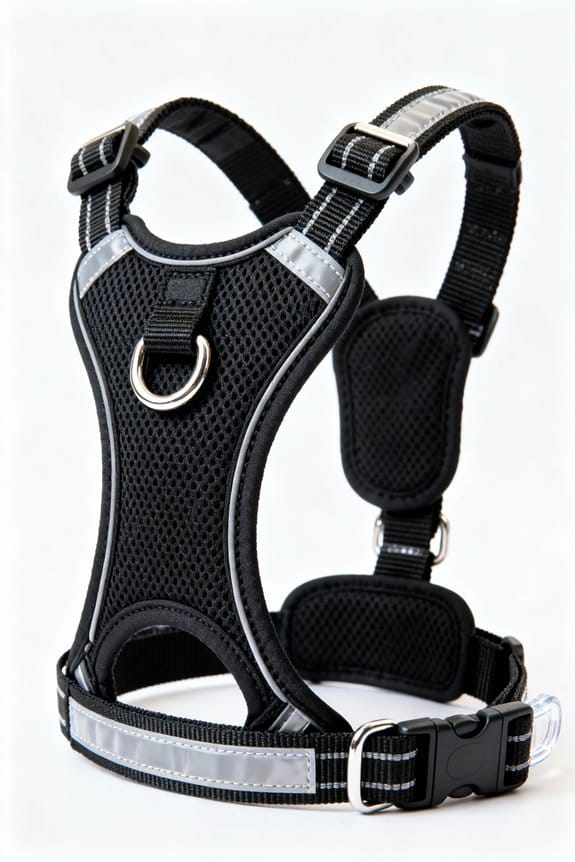
Dual-clip harnesses provide two attachment points, one at the chest and one on the back, allowing quick switch between control and comfort. These designs include a front-clip for steering and a back-clip for relaxed walking, used by trainers and owners. Why choose dual-clip harnesses over single-point models, when training needs vary and dogs that pull sometimes? Hybrid options blend front-clip control with back-clip comfort, providing versatility for heel work or casual strolls. Practical examples include switching leash attachment mid-walk, for two to three minutes of focused training sessions. Active dogs often benefit from adjusting components like straps and buckles, ensuring a secure fit and preventing escape. Assess behavior, match harness features to training needs, and prioritize safe materials, clear sizing, and dependable hardware performance. For dogs that chew, Bitter Apple No Chew Spray can be an effective deterrent to protect harnesses and leashes from damage.
Recommended Products

Constructed to Last: Made with premium attributes such as multi-point reinforced military grade nylon webbing, ultra strong and anti-rust zinc alloy dual-trigger clips, stainless steel D-rings, neoprene lining for comfort, and customizable features.
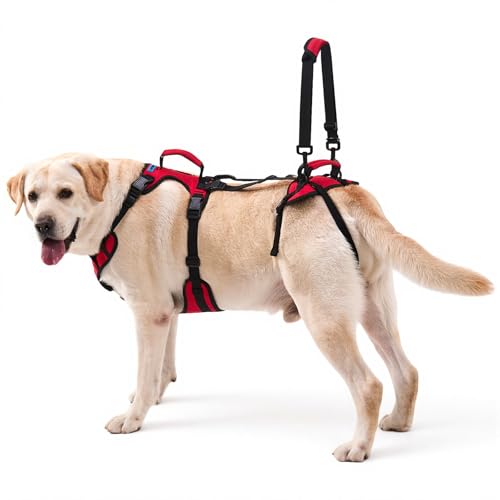
Lift & Walk with Confidence: Designed to support dogs with limited hind leg mobility, arthritis, or post-surgery recovery. Helps your dog stand, walk, and move safely with less strain.

How to Measure and Fit Your Dog
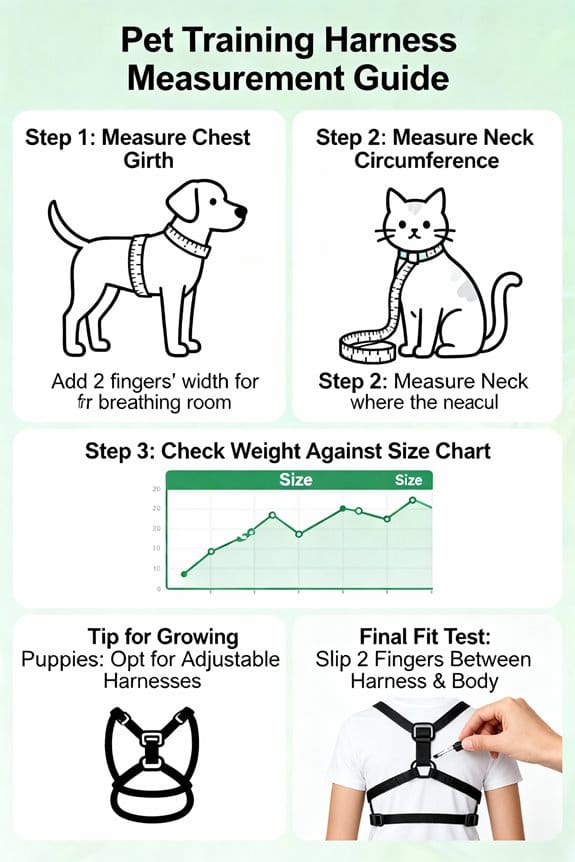
After comparing dual-clip and hybrid styles, determining the correct harness size becomes the next priority for safe, effective use. A soft measuring tape records chest circumference just behind the front legs, and neck circumference at the base where the harness will sit, both measurements guide sizing. How tight should it be, two fingers should fit under the straps, allowing a snug, comfortable fit without strain or skin blanching. Consult each manufacturer’s sizing chart after measurement, because brands vary in cut and labeling, choose the closest size. When fitting the harness, check for rubbing or chafe at shoulders, neck, and armpits, adjust straps accordingly. Reassess periodically as the dog grows or changes weight, maintain consistent comfort and security, and document measurements for future reference regularly. Additionally, consider reflective safety features for enhanced visibility during nighttime walks.
Training Tips and Transition Strategies
How should a handler switch a dog from a front-clip to a back-clip harness, guaranteeing comfort and reliable leash manners throughout the process? The handler begins by using short, structured training sessions with the front-clip harness, rewarding small successes, and gradually increasing duration to build positive experiences. They monitor comfort levels and fit, observing for resistance, chafing, or stress, and adjust or pause if issues appear. Leash walking practice starts in quiet areas, practicing controlled turns and stops to discourage pulling before introducing a back-clip harness. Change strategies include rotating harness types based on energy and goals, moving to a back-clip harness for well-trained dogs who walk calmly. Regular assessment guarantees safety, consistency, and maintained leash manners, and informs ongoing adjustments to training plans. An important consideration for successful harness transitions is the impact of weather on training, as factors like wind and humidity can affect a dog’s comfort and responsiveness during outdoor sessions.
Frequently Asked Questions
Is a Front Clip or Back Clip Harness Better?
Neither is universally better; front clip advantages aid training effectiveness, leash coordination and safety measures while back clip benefits offer ease of use, comfort levels and reduced skin irritation; harness fit and breed considerations decide.
What Is the Purpose of a Front Clip Harness?
Calmly, carefully, it guides dogs better leash manners: front clip benefits include leash control and behavior reinforcement, supporting dog training and walking techniques, improving harness comfort, safety features, harness adjustments, breed suitability and owner preferences.
Is There a Front and Back to a Dog Harness?
Yes. The owner evaluates front harness benefits and back harness advantages, considering altering harness styles, harness sizing importance, dog comfort factors, leash attachment options, harness material choices, training tool effectiveness, health considerations, and breed suitability.
Do Front Clip Harnesses Prevent Pulling?
Yes, front‑clip harnesses aid pulling prevention by improving leash control; with harness adjustments and training techniques they reshape walking behavior, preserve dog comfort, consider attachment points and breed considerations, influence exercise impact and owner experience.
Conclusion
Practitioners should match harness type to behavior, using a front-clip for correction, back-clip for walking.
Measure chest girth and neck accurately, allowing 1 to 2 inches clearance, to prevent chafing.
Which situation needs more control, a 30-pound puller, or an often calm 10-pound lap dog?
Dual-clip models provide options, allowing switch from front to back clip after several training sessions.
The right harness acts as a bridge to clearer cues, reducing leash incidents, improving safety.