As an Amazon Associate, we earn from qualifying purchases. Some links on this site are affiliate links at no extra cost to you. Our recommendations are based on thorough research and editorial judgment.

How Dog Training Whistles Work

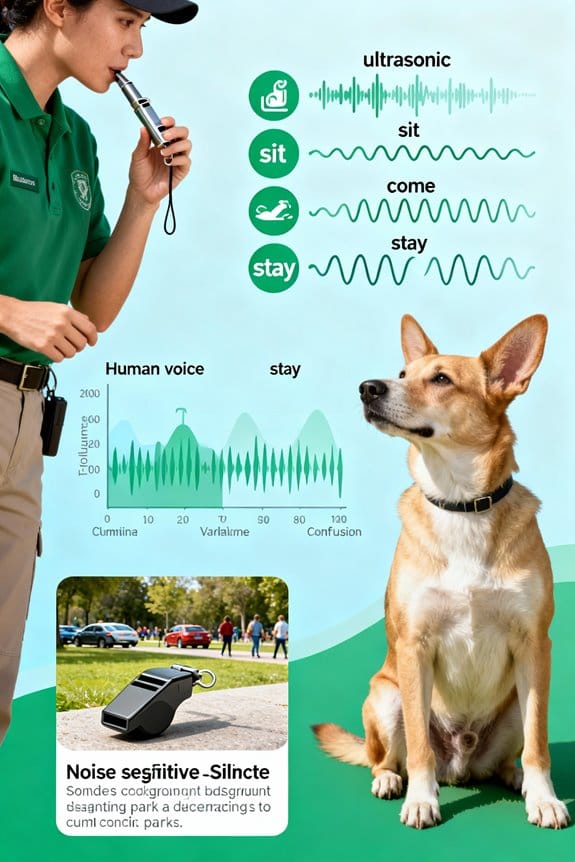
Dog training whistles produce high-frequency tones dogs hear but most humans cannot, commonly around 35,000 Hz, ranging 23 to 54 kHz. Trainers use audible or ultrasonic models depending on distance and discretion, for example Acme 210.5 for close work and 211.5 for long range. How are commands distinguished? By consistent patterns, such as one short blast for sit, three rapid toots for come, paired with rewards. Continued guidance explains conditioning steps, troubleshooting, and safety considerations.
Key Takeaways
- Dogs detect ultrasonic frequencies up to 45 kHz, so whistles emit high-pitched tones dogs hear clearly at long range.
- Audible whistles let humans hear signals; ultrasonic whistles are inaudible to people and travel farther without disturbing bystanders.
- Trainers create a consistent whistle vocabulary—distinct patterns (e.g., one toot, three toots) mapped to specific commands.
- Whistles work through conditioning: always pair whistle with voice and quick rewards within one to two seconds to build associations.
- Choose whistle type, frequency, and durable design for range; regularly reassess to prevent desensitization or hearing changes.
How Dog Whistles Affect Canine Hearing and Behavior
You may be interested
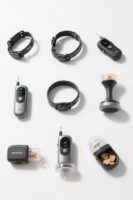
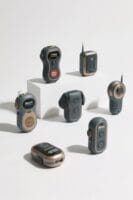
Although humans cannot perceive ultrasonic tones, the typical dog whistle emits about 35,000 Hz, well above human limits. Dogs detect frequencies up to 45,000 Hz, and their ability to hear such tones allows distant signals in field work. How does a Dog Whistle function in training and communication, and what conditions make it effective? When paired consistently with rewards or commands, the whistle becomes a conditioned cue, producing reliable responses across distances. Improper overuse, without clear context, can cause desensitization, so trainers must limit exposure, vary reinforcements to maintain sensitivity. Clicker training promotes positive reinforcement techniques that build communication between pets and owners, which aligns well with the principles of whistle training. What practical steps guarantee effectiveness, for example, short sessions, consistent signals, immediate rewards, and gradual range increases? Trainers should monitor responses, adjust intensity and timing, and record outcomes to refine protocols effectively also regularly.
Audible Versus Silent (Ultrasonic) Whistles
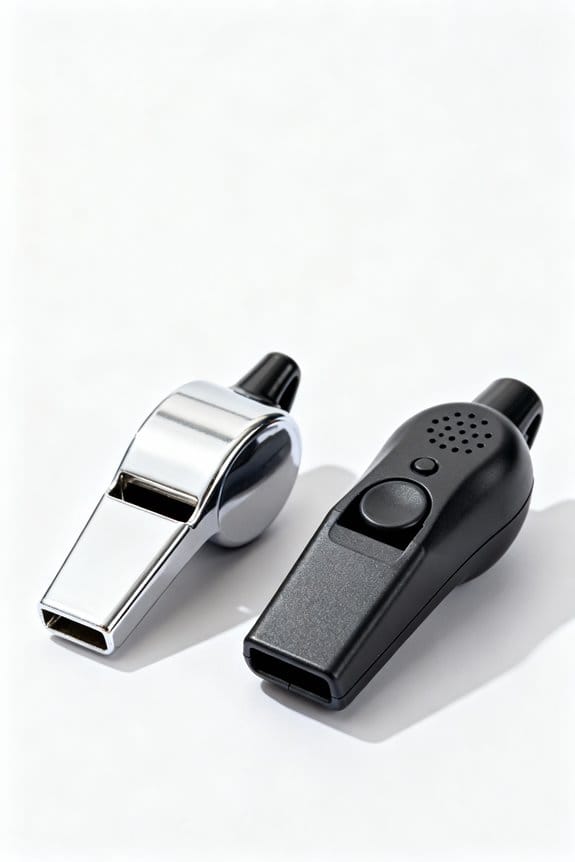
Sound technology divides dog whistles into two main types, audible models that humans can hear, and ultrasonic models only dogs perceive. Audible whistles serve trainers who need to monitor signals, providing consistent cues during close-range sessions. Silent (ultrasonic) whistles emit higher pitches, they travel farther without disturbing people in public spaces. What frequencies are used, and how are they adjusted for different dogs and environments? Typical dog whistle frequency range spans approximately 23 to 54 kHz, well above the human hearing threshold near 20 kHz. Adjustable sliders allow precise tuning, trainers can lower or raise pitch to suit sensitivity, size, or distance for each dog. Choosing between types depends on context, does the trainer need audible feedback nearby, or unobtrusive distant control effectively? ACME Alpha 210.5 is a specific model that fits smaller breeds and provides a reliable range of approximately 100 yards, making it a popular choice for close-range training.
Common Whistle Command Systems and Signals
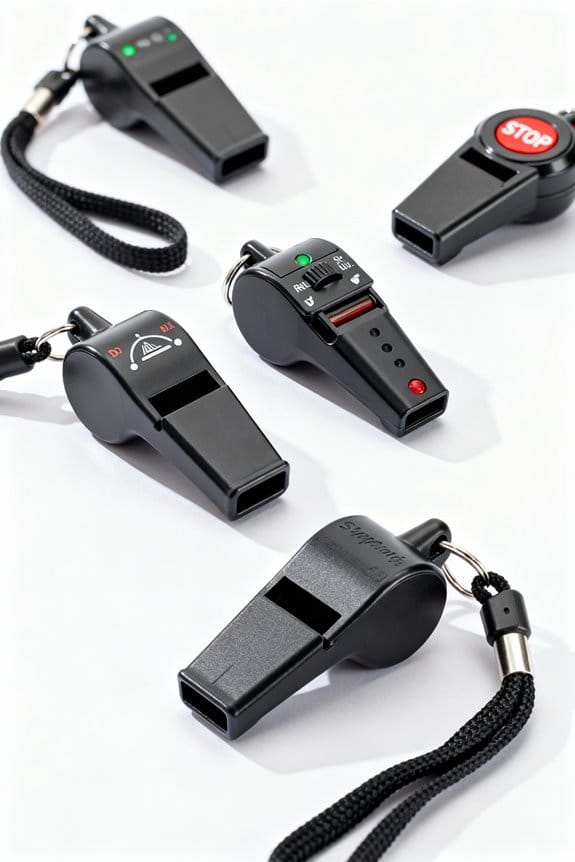
Following the choice between audible and ultrasonic whistles, trainers establish consistent whistle vocabularies, assigning clear signals for common commands used in field and home settings. One sharp toot signals sit, prompting the dog to sit, simplifying immediate obedience. Three rapid toots signal come, calling dogs back over distance, which strengthens recall during walks and hunts. Two toots indicate quartering, directing a change of direction when searching, useful for tracking or flushing game. A soft, long toot alerts the dog to return closer, increasing handler control in complex scenarios. Distinct whistle signals prevent confusion and reinforce learning, because clear cues enable faster response. Dog Training, whistle commands, positive reinforcement. Handlers select systems based on environment, dog temperament, and task, ensuring consistency, clarity, and reliable performance. Additionally, waterproof designs ensure that whistles can withstand outdoor conditions, similar to the resilience seen in training treat bags.
Conditioning the Whistle: Building Associations
Begin by teaching the desired behavior with a voice command, then overlay the whistle once the dog reliably responds three to five times. The trainer uses conditioning to make the whistle an effective training tool, pairing it consistently with commands and immediate reinforcement. How does this create an association? Repeated pairings, for example five to ten clear repetitions per session, link tone to action, and rewards given within one to two seconds reinforce learning. Provide varied contexts, such as indoors, in yard, and near distractions, so the dog generalizes the cue. Ultrasonic dog whistles emit frequencies that are inaudible to humans but can be effective for training dogs by enhancing communication between the dog owner and pet. Avoid frequent, unpaired exposure, because desensitization reduces responsiveness. Periodic maintenance sessions, two to three times weekly, preserve the association, and measurable consistency produces predictable behavioral outcomes, documented with notes and brief video reviews.
Step-By-Step Whistle Training Techniques
After establishing the whistle’s meaning through repeated pairings and maintenance sessions, trainers can proceed to structured, step-by-step teaching. First, the trainer teaches a verbal command until reliable, then overlays a single whistle used consistently with that action, creating a clear link. What signal pattern will be chosen, one sharp toot for sit, three rapid toots for come, or another sequence? Next, immediate reinforcement follows each correct whistle response, so associations strengthen and correct behavior repeats. Initial practice occurs in distraction-free areas, then gradually increases range and distractions, which tests generalization. Trainers aim to communicate with your dog through predictable patterns, timing, and rewards, they record metrics, and adjust practice variables systematically each training session. A recommended training whistle should have an adjustable pitch in the 5.4-12.8 kHz range to effectively match puppy hearing. Progress is tracked weekly, and criteria guide advancement for reliability.
Recommended Products

Precision Dog Training Whistles – 100% UK Made: Crafted in the UK from lightweight alloy by a British heritage family business. Precision machined and hand finished to produce clear, multi-tone commands – a complete whistle language for greater control than single-tone whistles.

Premium 304 Stainless Steel UK Made Construction: The Logan 304 Sheepdog Whistle is precision machined in the UK from a single piece of high-quality stainless steel and hand finished for maximum durability and performance. Built for professional use, it delivers long-lasting reliability in all training environments.

Premium Solid Brass UK Made Construction; The Logan Turbo Brass Whistle is precision crafted in the UK from solid musical instrument grade brass with no rivets or joins. Designed as a pure form for pure sound, it delivers exceptional durability and professional-level acoustic performance.
Choosing the Right Whistle for Your Dog and Purpose
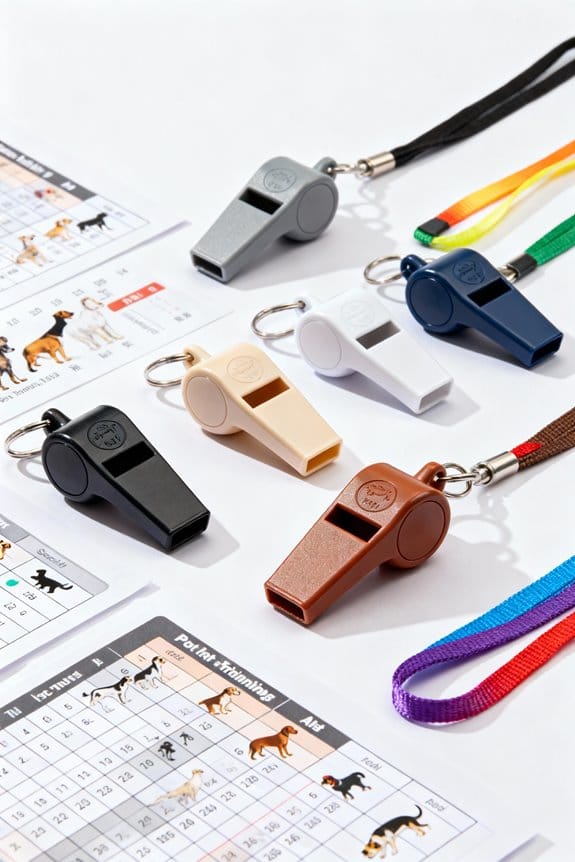
Selection of a dog whistle requires matching the tool to distance, environment, and the handler’s communication goals, with practical limits considered. Trainers may choose an Acme 210.5 for quiet, close work, or an Acme 211.5 when greater distance is required but silence remains desirable. Should a pea-less design be chosen for cold weather, it will not freeze and allows softer blowing, while pea whistles produce louder notes for long-distance commands. For work within 100 yards, quieter models suffice and reduce unintended disturbance. For hunting, louder pea whistles may be appropriate, while training often benefits from quieter, consistent signals. Consistency matters, use one whistle to avoid confusing the dog, and recognize that many pitches lie beyond the range of human hearing. Assess purpose and distance. When selecting the right whistle, it’s important to consider factors such as material durability and ergonomic design, which can impact the effectiveness and comfort during training sessions.
Safety, Comfort, and Welfare Considerations
Because dogs hear higher frequencies than humans, handlers should apply whistles deliberately, considering distance, intensity, and individual sensitivity to avoid overstimulation. When used properly, whistles convey clear cues at ranges of 10 to 200 meters, depending on terrain, wind, and pitch. Handlers should avoid short, loud blasts within one meter, because intensity can cause discomfort similar to human exposure to loud noises. Consultation with manufacturers and veterinarians establishes safe frequency ranges and volume settings tailored to an individual dog’s hearing profile and needs. Consider other pets, such as cats, who may react negatively to high-frequency sounds, causing stress or avoidance in multianimal homes. Used properly, whistles support training without harm, but regular reassessment guarantees ongoing safety as dogs age, or their sensitivity changes. Additionally, humane correction methods in anti-barking devices minimize stress during training sessions, making them a suitable option for managing barking behavior.
Troubleshooting: Common Problems and How to Fix Them
When troubleshooting whistle responses, handlers should first verify that the same whistle command has been used consistently, since variation often confuses the dog. Monitor training sessions closely, note if the dog seems desensitized or unresponsive, and reduce frequency to prevent overload. Reinforce desired behaviors immediately after the whistle, provide a treat or praise within two seconds, and strengthen the response. Does the animal refuse to obey, or is this a gap in association that needs rebuilding with verbal cues first? Reintroduce previous verbal commands for several short sessions, then overlay whistle commands gradually, using ten to twenty repetitions per session. If problems persist beyond two weeks, consult a professional trainer, because individual needs and underlying behavioral issues require expert assessment, for consistent measurable progress. For optimal results, consider using a Genuine ACME 210.5 whistle, as it is known for its high pitch and reliability across various environments.
Best Practices for Hunting, Herding, and Long-Distance Work
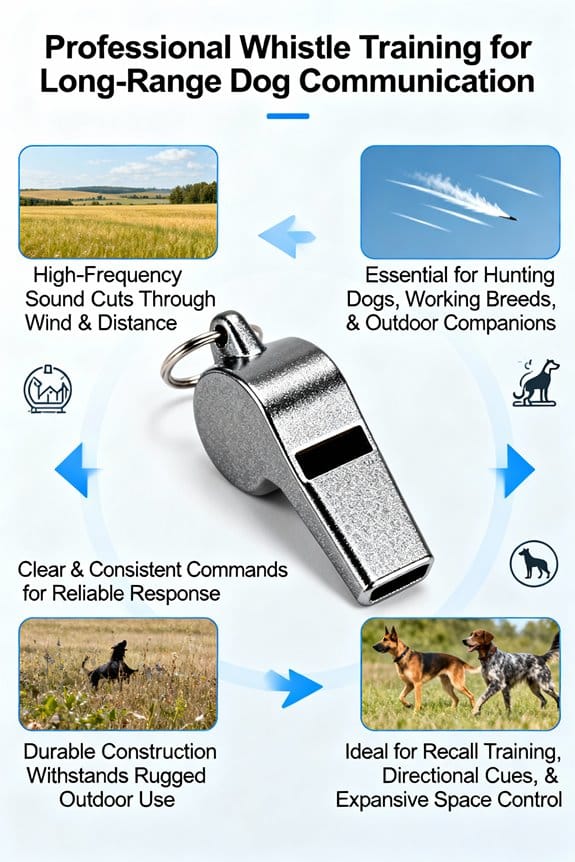
After resolving response gaps through brief verbal rebuilding and consistent repetition, handlers should plan whistle work aimed at hunting, herding, and long-distance control. Whistle selection matters, frequencies near 35,000Hz travel far, dogs hear high-frequency sounds that humans cannot, and signals penetrate dense cover better than voices. What sequences will be used, one sharp toot for sit, three rapid toots for come, or sustained pulses for directional movement? Practice should occur away from distractions, with sessions of five to ten minutes several times daily, reinforcing consistent commands and reducing reliance on shouted cues. Using a whistle might conserve handler energy on long outings, preserve stealth in hunting, and improve stock control across wide pastures, when training is deliberate, measured, and repeated until responses are reliable. To enhance safety during night-time activities, consider using an LED dog leash that offers 400-500+ feet sightline, ensuring your dog remains visible and secure.
When to Seek Professional Help or Alternative Tools
If a dog fails to respond reliably after consistent whistle training, owners should consider professional evaluation or alternative tools. This may indicate the dog needs help beyond routine reinforcement, for example persistent stubbornness or aggression that resists six to eight weeks of sessions. What steps follow when prior conditioning, such as invisible fence training, interferes, and communication becomes confusing? Professionals can assess history, design a plan, and implement specialized methods like desensitization or counterconditioning. Smart AI Bark Collars offer innovative solutions with adjustable modes and sensitivity settings to address barking issues effectively. If a dog shows anxiety or distress at the whistle, trainers might recommend clickers, verbal cues, or leash-based alternatives as viable alternative tools. Owners who lack confidence cannot achieve proper training outcomes, should seek certified trainers or behaviorists. A veterinary behaviorist can be consulted to guarantee safety and effective progress.
Frequently Asked Questions
Are Dog Whistles Effective for Training?
Yes, they can be effective for training when integrated into consistent training methods that leverage sound frequency to target dog behavior, provided reinforcement prevents desensitization and associations are clearly established for reliable recall and responses.
What Do Dogs Hear When They Hear a Dog Whistle?
They hear a high-pitched tone, ultrasonic, perceived within the dog hearing frequency and interpreted via distinct sound perception differences; trainers condition it as canine communication signals prompting learned responses, though repeated use can cause desensitization.
How Do You Use a Dog Training Whistle?
Like a lighthouse, the handler uses a whistle to reinforce learned cues: match whistle types to specific actions, overlay sounds after verbal teaching, respect training duration, and secure clear command association with immediate consistent rewards.
Are Dog Whistles Damaging to Dogs?
Generally no; properly used whistles rarely damage dogs, though excessive whistle frequency or volume can cause distress. Observers recommend moderation, monitor dog behavior, consult vets, and consider training alternatives if sensitivity or discomfort appears promptly
Conclusion
The trainer teaches reliable responses with repetitive, resonant whistles, using two-second blasts, steady intervals, and consistent gestures for clarity. Should handlers switch signals, will dogs show confusion, or will systematic, simple shifts preserve performance? Because consistent timing, clear volume, and gradual distance progression—for example moving from 5 to 50 meters over weeks—produce predictable behavior, training succeeds. Handlers, however, heed humane handling, health checks, and hard limits to uphold welfare, watchfulness, and workable, winning whistle work.