As an Amazon Associate, we earn from qualifying purchases. Some links on this site are affiliate links at no extra cost to you. Our recommendations are based on thorough research and editorial judgment.

Whistle Training for Outdoor and Distance Work

Whistle training provides reliable long‑range control, effective across 10 to 200 meters when practiced progressively. How should one start, with voice cues then short whistle signals in quiet fields, expanding distance as distractions increase? Use distinct tones for sit and recall, schedule three to five weekly sessions and vary environments to prevent desensitization. Choose pea or pea‑less whistles based on range and conditions, and practice breath control for steady tone. Continue for progress and advanced skills.
Key Takeaways
- Use distinct, consistent whistle tones for core commands to ensure clear long-distance communication and faster dog responses.
- Begin training in low-distraction areas, gradually increasing range and distractions to build reliable outdoor recall.
- Choose a whistle (pea or pea-less) based on desired range, environment, and dog sensitivity for optimal clarity.
- Train regularly (3–5 times weekly), progressively extending distance and varying locations to maintain long-term reliability.
- Prevent desensitization by using the whistle sparingly, varying session lengths, and reinforcing correct responses intermittently.
Why Use a Whistle for Outdoor and Distance Work
You may be interested
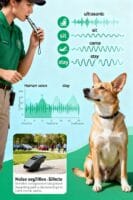
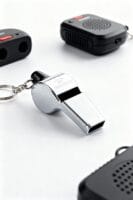
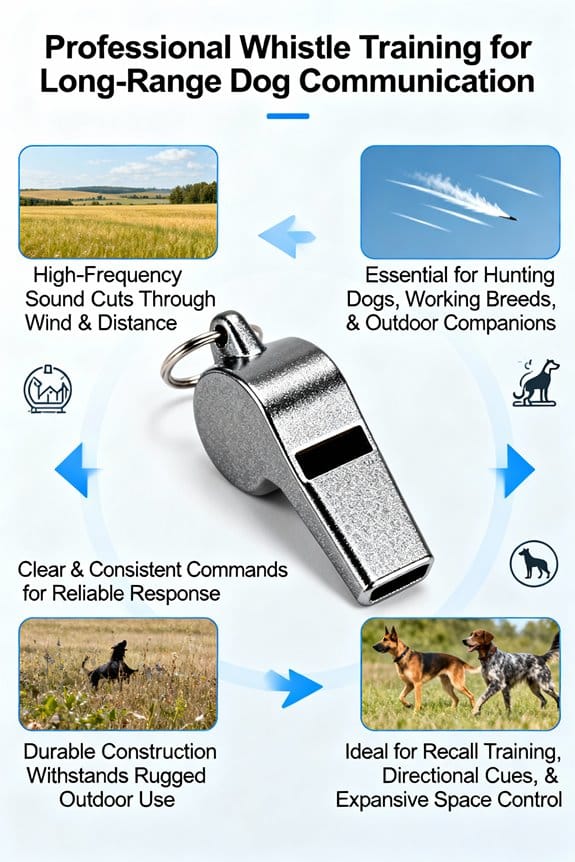
Many handlers find a whistle indispensable for outdoor work, because it carries clearly beyond fifty yards, where voices often fail. Whistles produce a consistent, high-pitched signal that penetrates thick cover, and reduces disturbance to wildlife during hunting. Using a whistle preserves vocal cords for long days, enabling handlers to issue multiple commands without fatigue. How can a single tone remain recognisable amid distractions, such as other animals, machinery, or wind? Dogs respond faster to the clear, repeatable notes, which improves recall at distances beyond fifty yards, during retrieves. Handlers can vary pitch and duration to signal different actions, one short blast for return, and three long blasts for regroup. Judicious use of whistles, paired with clear timing, extends effective control across varied terrain, conditions. Incorporating interactive play enhancements like toys with engaging squeaky features can also improve training and keep dogs engaged during outdoor work.
Whistle Command Basics and Signal Consistency
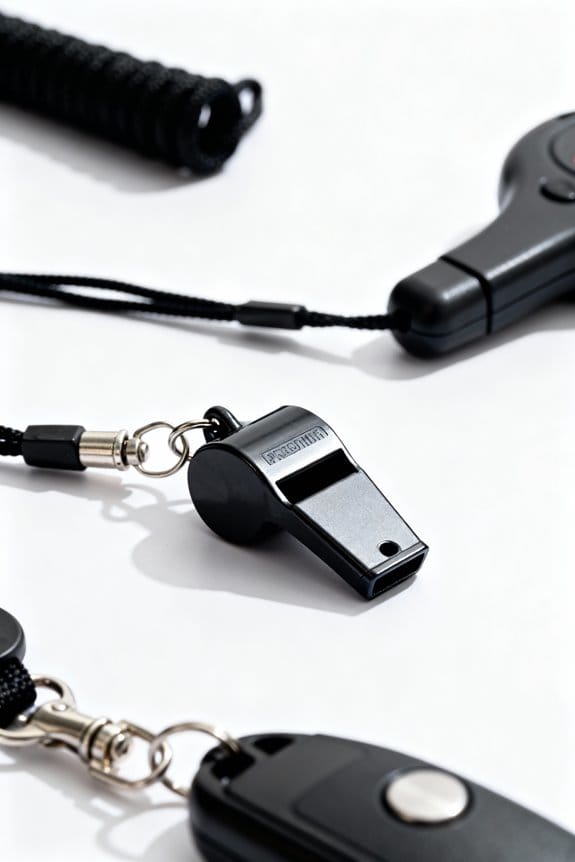
After establishing reliable voice cues at close range, handlers can begin shaping equivalent whistle signals to preserve control at distance. Handlers should keep whistle commands distinct, and consistent, so dogs learn each signal without confusion during outdoor work. Training begins in low-distraction areas, with short distances first, then increasing range as comprehension improves and handlers confirm reliable responses. Using a whistle requires the same model throughout sessions, to prevent tonal differences from disrupting learning and causing mixed associations. Reinforcement must follow correct responses immediately, which strengthens the association between sound and behavior, and accelerates retention. What happens if cues vary unpredictably, confusion increases and response rates drop? Gradual progression, clear timing, and consistent rewards produce reliable performance, and handlers should monitor reliability before adding distractions or longer distances. Consistency guarantees dependable dogs’ response across varied conditions. For effective control, using devices with long-range capabilities, like remote collars with ranges up to 4,500 ft, can enhance training outcomes during outdoor activities.
Teaching “sit” and Recall With a Whistle
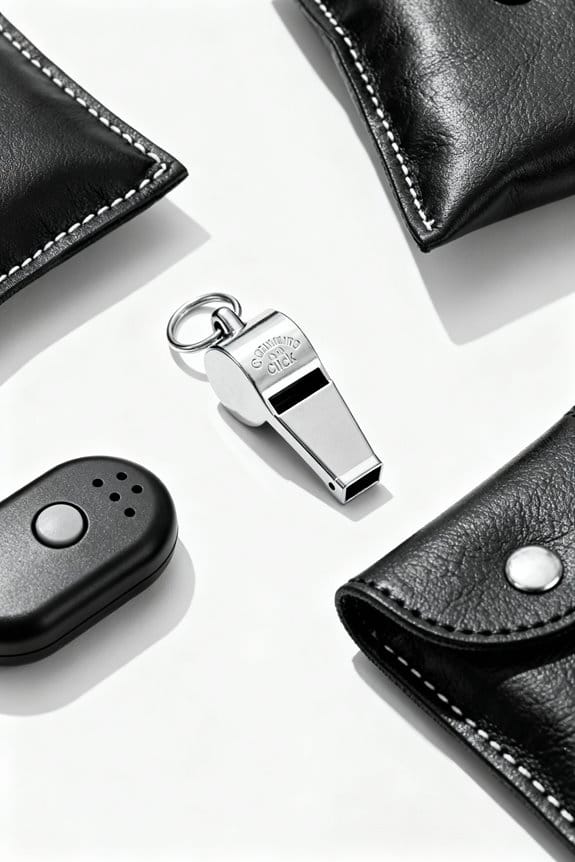
Begin whistle teaching by establishing one sharp toot for “sit” and three rapid toots for recall, using the same whistle model each session. Trainers start signal work at four to five months, practicing “sit” close, then increasing distance to twenty to fifty yards, reinforcing correct responses with rewards. Consistency is key when choosing whistle tones, similar to selecting odor control features in puppy potty pads to minimize confusion and enhance the learning process. How will a dog learn if tones vary unpredictably? Consistent, identical toots prevent confusion, and predictable cues speed learning. Use quiet fields initially, with minimal distractions, then add birds, decoys, and other hunting dogs to proof responses. A failed return indicates insufficient reinforcement or too many distractions, so reduce range and rebuild reliability. For hunting dogs, a dependable whistle recall to the handler’s feet can be lifesaving; therefore, practice often, measure progress, and adjust challenges gradually.
Selecting the Right Whistle for Your Needs
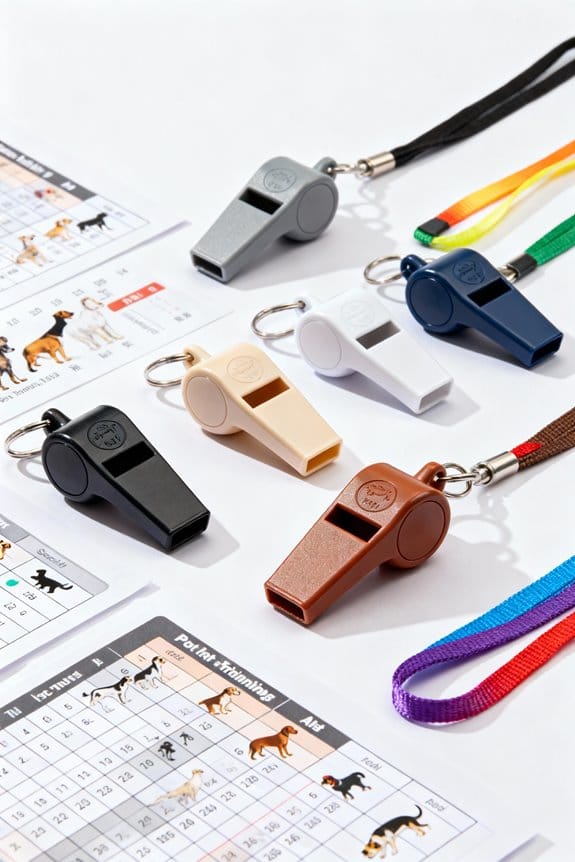
When choosing a whistle, consider the intended range, ambient conditions, and dog type, because those factors determine tone, durability, and effectiveness. Trainers should choose a pea whistle for softer, varied sounds useful in quiet training environments, and for close-range communication. Alternatively, select pea-less whistles for sharper tones and increased clarity at greater distances outdoors when signal clarity is essential in adverse conditions. Which model fits specific use cases, Acme 210.5 suits quieter sessions, especially with spaniels, while Acme 211.5 offers more distance and still remains relatively quiet. Environmental conditions matter; high-frequency sounds fade faster, and humidity or background noise reduces effective range. Beginners often prefer a plastic whistle because it is lightweight, consistent, and affordable, so one type should be chosen and used consistently.
Mastering Whistle Technique and Breath Control
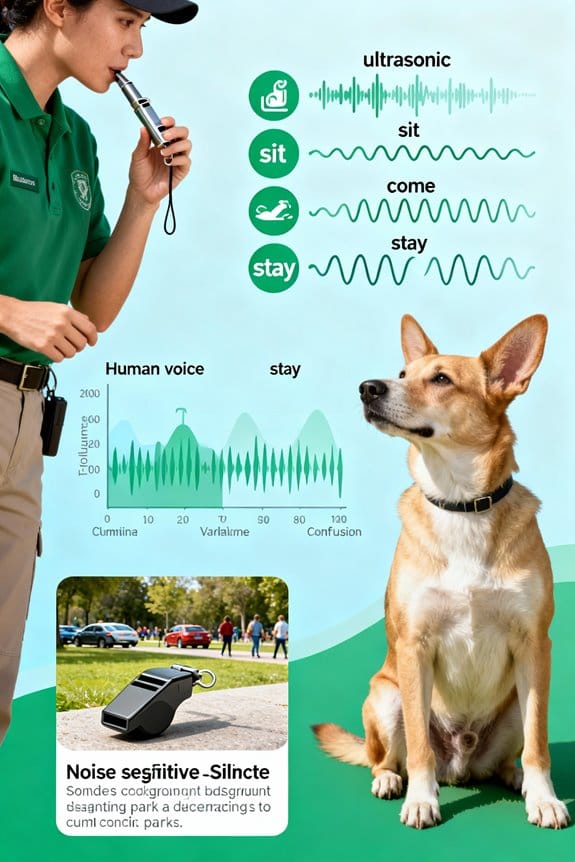
Practice steady inhalation and controlled exhalation to produce consistent whistle blasts, ensuring dogs learn reliable cues across sessions and distances. The trainer emphasizes breath control, and practices steady timing, so each blast retains uniform duration and intensity. How long should a blast last, and how often should it repeat during a session? Typical commands use one-second blasts, repeated twice for recall, and held three seconds for stop, providing clear examples. Maintaining whistle technique prevents fluctuating sound intensity, which otherwise causes confusion and inconsistent responses. Handlers should rehearse at varying ranges, monitor amplitude, and adjust force, because cause-and-effect links signal clarity to reliable dog performance, during every session. Regular, focused practice builds muscle memory for breath control, producing consistent cues that dogs can trust reliably. The use of ACME Alpha models in training ensures consistent tones and effective range, making them a preferred choice for many trainers.
Training Progressions and Distance Drills
Reliable whistle technique and steady breath control set the stage for distance work, so handlers should expand cues from near to far in measured steps. Begin by conditioning the dog to respond to dog whistles at three to five meters, rewarding immediately to reinforce recognition. Increase distance incrementally, to ten, twenty and thirty meters, and repeat cues until responses are consistent, which builds reliable distance training. Incorporate varied environmental settings, such as fields, woods, and suburban parks, so the dog learns cues amid common distractions. Practice recall drills starting in quiet areas, then add mild distractions, and finally simulate real scenarios to guarantee obedience. Regularly monitor responsiveness, adjust whistle clarity, and reward promptly, which strengthens command certainty and handler confidence over multiple training sessions. For effective puppy training outcomes, it is essential to use positive reinforcement consistently, as it enhances the learning experience and ensures reliable responses.
Recommended Products
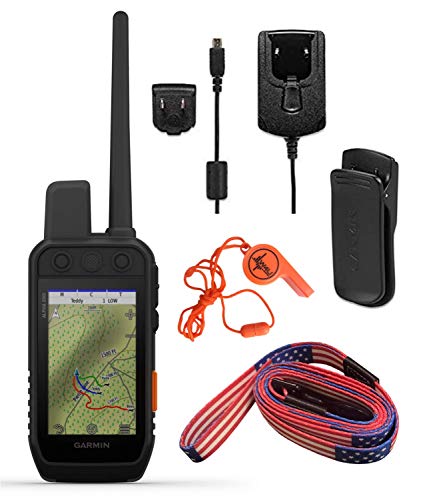
IN THE BOX: 1 x Garmin Alpha 200i handheld with rechargeable lithium-ion battery pack, 1x Belt clip, 1 x AC adapter, 1 x microUSB cable, 1 x Wearable4U Whistle and Leash

COMFORTABLE FIT FOR ALL BREEDS: Designed for dogs 25+ lbs with adjustable neck sizes from 10–26 inches, this lightweight professional remote training collar provides a secure, comfortable fit for long wear, ensuring effective and stress-free training sessions.
![Dogtra 280X E-Collar with Remote [New Edition] 10 lbs+, 1/2 Mile Range, LED Light, 100 Levels of Precise Control for Stubborn Dogs, Waterproof, Boost for Quick Recall, Vibration, Safety Lock & Tone](https://m.media-amazon.com/images/I/51iM7b8iAPL._SL500_.jpg)
EFFORTLESS CONTROL: Never miss a teaching moment by fumbling with buttons. Our front-and-center main button ensures you always hit the right moment, supported by 100 precise correction levels and a large, easy-to-read screen.
Troubleshooting Common Response Problems
Identify common breakdowns in whistle response early, noting missed recalls, inconsistent reactions, and delayed rewards during training sessions. Handlers should first use the whistle in quiet areas, practice five to ten repetitions, and reduce distractions to reinforce meaning. If signals vary in volume, dogs confuse cues, so standardize tone and length, record sessions to check consistency. When rewards are delayed beyond two seconds, motivation drops; consequently, prepare treats or praise at arm’s reach to reinforce coming back reliably. Windy or noisy conditions can mask signals, so choose sheltered locations or move closer, gradually increasing distance from 5 to 50 meters. If a dog does not respond better after adjustments, simplify the task, return to close range, and rebuild success with single-note commands using whistles. For optimal training success, consider using pealess designs that enhance moisture resistance and usability in various scenarios.
Keeping Whistle Responses Reliable Over Time
After addressing common response problems, handlers should schedule regular, focused whistle sessions three to five times weekly, reinforcing clear patterns and consistent tone. The handler increases distance gradually from ten to two hundred meters, practicing in parks, fields, and urban edges, so responses remain reliable across environments. How does intermittent reward preserve motivation? By giving treats or praise unpredictably after correct responses, trainers prevent dependence and sustain engagement. To avoid desensitization, use the whistle only for key commands, and vary session length between five and twenty minutes, changing locations and background stimuli. Clear, distinct patterns for each command reduce confusion, while periodic refresher drills maintain memory; consistent training, environmental variation, and measured rewards combine to preserve long-term reliability. Rotate handlers occasionally to test generalization. When selecting equipment for training, consider using eco-friendly pads to ensure sustainability and minimize environmental impact.
Frequently Asked Questions
How Far Away Will a Dog Whistle Work?
A dog whistle will work up to about 400 yards under ideal conditions; effective whistle range varies with dog breed differences, environmental factors and training consistency, so practical response distances are often shorter by design.
What Are the 5 D’s of Dog Training?
The 5 D’s are Duration, Distance, Distraction, Definition, and Delivery. A trainer uses positive reinforcement and training rewards for behavior shaping, emphasizing consistency importance to achieve reliable obedience across varied environments and maintain performance consistently.
What Are the 3 C’s of Dog Training?
The 3 C’s are Clarity, Consistency, and Control. The trainer employs communication signals and positive reinforcement within training techniques, applying consistency strategies and management so the dog reliably understands cues and behaves in distance settings.
What Is the Best Whistle for Recall Training?
The Acme 211.5 whistle is best for recall. A clear blast across a windswept field summons focus; trainer applies whistle types, recall techniques, training tips and adjusts sound frequency to reinforce reliable returns and consistency.
Conclusion
The handler should practice three distinct whistle signals, for example short, double, and long, at 10 meters and 100 yards. Which signal will the dog obey reliably when faced with distractions, traffic, or shifting wind conditions? Consistent timing and breath control produce predictable responses, so handlers can extend distance progressively, for instance to 200 yards. A clear whistle becomes a beacon, guiding performers across fields and reinforcing recall through repetition and measured rewards, daily safely.