As an Amazon Associate, we earn from qualifying purchases. Some links on this site are affiliate links at no extra cost to you. Our recommendations are based on thorough research and editorial judgment.

Using Whistles for Recall Training

Whistle recall uses a consistent tone to cue dogs, effective at distances of 50 to 200 meters, when paired with immediate rewards such as treats. Trainers should choose durable, single-tone whistles around 2 to 5 kHz, e.g., Acme 2.10, test clarity at 50 and 200 meters and note distance performance. Begin indoors with immediate treats, increase distance by 2 to 5 meters, add distractions gradually, avoid overuse to prevent habituation, and practice weekly for reliability, with further tips available ahead.
Key Takeaways
- Use a single, durable whistle (2–5 kHz) for consistent, attention-grabbing tone that carries beyond the human voice.
- Pair the whistle immediately with rewards (treats, play, meals) to create a positive recall association.
- Begin recall training in low-distraction areas, rewarding within one second, then increase distance by 2–5 meters gradually.
- Test whistle clarity at 50, 100, and 200 meters and choose models with good durability and waterproof ratings.
- Avoid overusing the whistle, practice short daily sessions, and maintain weekly routine sessions with varied rewards.
Why Whistles Work for Dogs
You may be interested
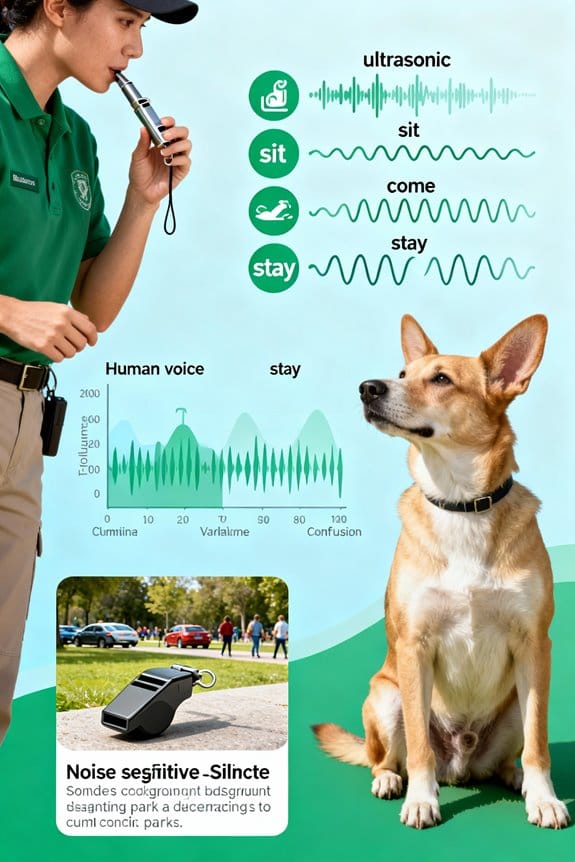
Because whistles produce a consistent, emotion-free tone, trainers and owners can deliver calm commands in stressful situations, improving focus. A whistle means a reliable signal that carries farther than a human voice, enabling recall at distances of 50 to 200 meters in noisy environments. Dogs often treat the tone like a reward cue, responding similarly to food or excitement, which increases motivation during sessions. How does this improve safety and control during outdoor activities? The specific pitch of many training whistles, typically between 2 and 5 kHz, grabs attention across varied settings, including parks and trails. Consistent use of a whistle strengthens the owner-dog bond through clear communication, producing predictable responses and faster learning. Trainers should incorporate short, frequent signals, then reward prompt returns. It is important to note that pealess, weatherproof whistles are recommended for their tone consistency and durability, ensuring effective communication across diverse environmental conditions.
Choosing the Right Whistle for Training
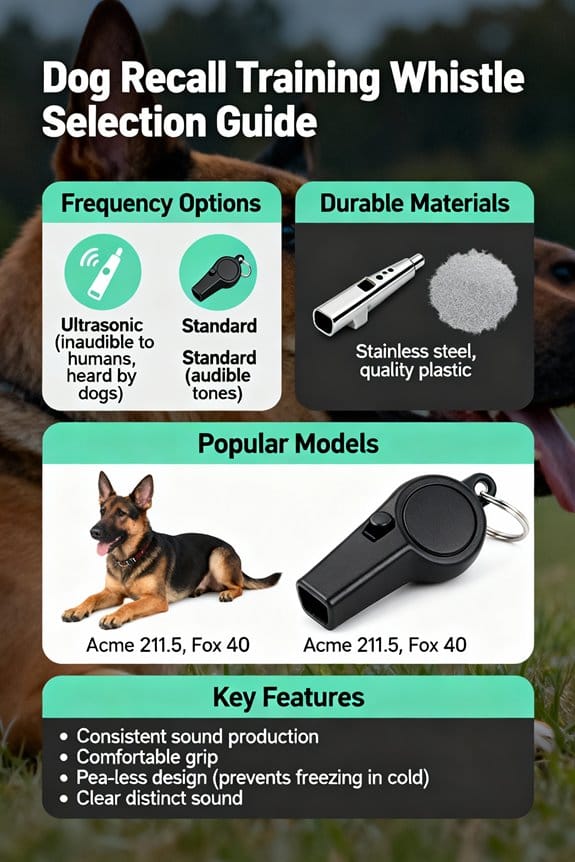
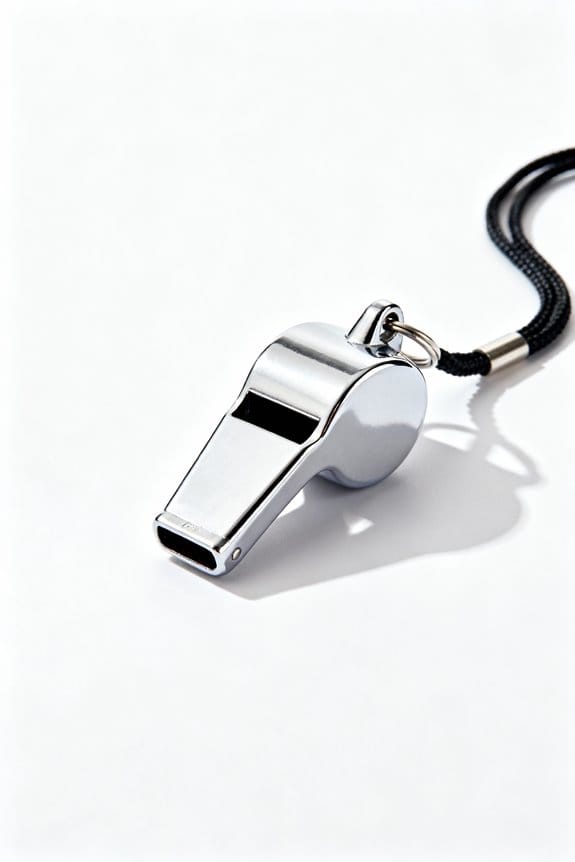
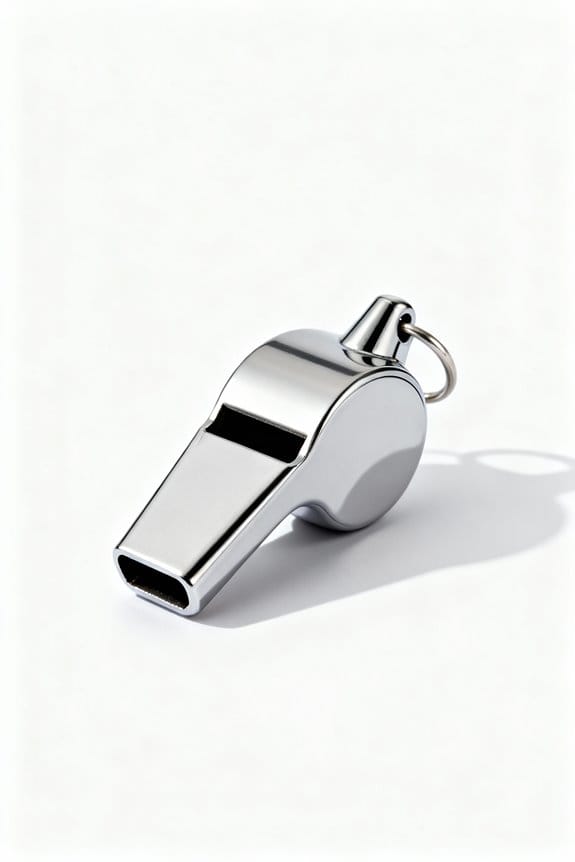
Although handlers may prefer novelty, selecting a single, durable whistle such as the Acme 2.10 & 1/2 promotes consistent signals and reliable recall. The Acme 2.10 & 1/2 is battery-free, robust, and easy to carry, making it ready for daily sessions and fieldwork. What pitch best serves training, and when should higher tones be chosen for distance or noisy environments? Higher-pitched whistle sound typically attracts canine attention more effectively, especially over traffic or wind, so favor pitches above the mid-range when distraction is probable. Use the same whistle and identical signals, to avoid confusion and speed learning, and replace only with a matched pitch if loss occurs. Test clarity at 50, 100, and 200 meters, record results, and standardize practice routines accordingly for consistency. Additionally, ultrasonic dog whistles emit frequencies that are inaudible to humans but effective for training dogs, offering a humane and versatile option for different breeds and training environments.
Building Positive Associations With the Whistle
Association-building with a whistle gives the dog a clear, positive meaning, by linking the sound to meals, play, or favorite treats. Trainers should pair the whistle consistently with enjoyable events, using meals, play sessions, or high-value treats immediately after a response. Begin training in a calm environment to reduce distractions, allowing focus on the whistle recall signal without competing stimuli. Reward immediately with praise or treats each time the dog answers, which strengthens the association, and repeat over multiple short sessions daily. Gradually increase distance and change locations, ensuring the dog still experiences success and reinforcement, so the whistle retains its positive meaning. Incorporating customizable training modes from a dog training collar can provide additional flexibility and support as you work on recall training. Avoid overusing the whistle, and pause use when the dog fails to respond, to prevent weakening the cue over time consistently.
Step-by-Step Recall Training Indoors
How should a handler begin indoor whistle recall training, and what steps guarantee reliable responses in varied home spaces? A handler begins by creating positive association with the whistle for dog training, pairing it with meals, walks, or favorite toys immediately. Training should start in a calm, distraction-free room, rewarding each correct response within one second to build clarity and motivation. Gradually increase distance by two to five meters per repetition, repeating ten successful recalls before advancing. Consistently use the same whistle sound to avoid confusion, then introduce mild distractions such as a radio at low volume or a neighbor passing by. The pitch of the whistle should be adjustable within the 5.4-12.8 kHz range to ensure effective training responses. This sequence, practiced daily in short sessions of five to ten minutes, establishes dependable indoor recall, and builds handler confidence in weeks.
Taking Recall Training Outdoors
Confidence grows when handlers move recall training outdoors, starting in quiet, familiar locations like a backyard or nearly empty park. Trainers should shift once a dog reliably responds indoors, then practice in public spaces with minimal distractions, for example a small field or early morning parking lot. Use the whistle consistently, maintain the same tone and length of blast, and call from measured distances such as ten, twenty, and thirty meters to build spatial awareness. How will handlers keep motivation high? They reward successful recalls immediately, with praise, treats, or brief play, reinforcing the association between sound and return. Practice in several outdoor locations, varying surfaces and sightlines, to strengthen responses, while monitoring handler timing and whistle consistency for dependable recall your dog always. For optimal results, consider using the ACME 211.5 whistle, which is known for its long-range effectiveness and standardized pitch suitable for larger breeds.
Recommended Products

COMFORTABLE FIT FOR ALL BREEDS: Designed for dogs 25+ lbs with adjustable neck sizes from 10–26 inches, this lightweight professional remote training collar provides a secure, comfortable fit for long wear, ensuring effective and stress-free training sessions.

Train Your Dog Easily – Make the process of training your dog essential discipline simple with the Mini Educator waterproof dog training collar kit. It will allow you to teach your dog essential skills that make it a friendly and peaceful dog.
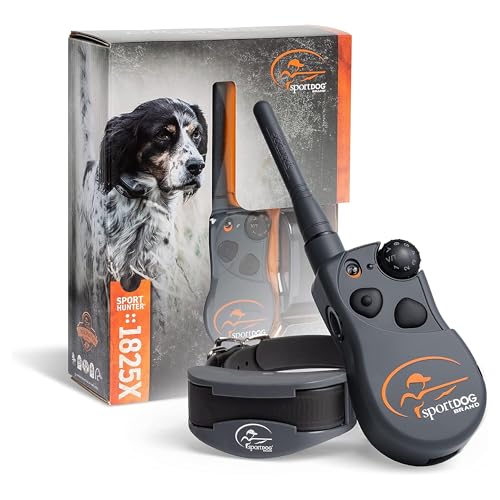
Maximize Training Reach: The SportDOG SportHunter Remote Trainer provides a long-range signal unit and adjustable training collar with a 1-mile range for total field control
Increasing Difficulty and Managing Distractions
Why increase distractions gradually, and what should trainers change first when moving recall practice from quiet yards to busier areas? Trainers should begin by altering one variable at a time, for example increase distance, then ambient noise, then number of people or dogs. How can progress be measured reliably? Use consistent whistle tone, record success rates per session, aim for 8 of 10 successful recalls before advancing. Reward the dog loves should be high value, consistent, and varied by environment to maintain motivation. If the dog ignores the whistle repeatedly, cease use briefly, reset expectations, and rebuild association in a low-distraction setting. Regular sessions in parks, near water, and at local squares will generalize recall across contexts. Progress should be gradual, documented, reviewed periodically. Including high-quality training treat bags can enhance training efficiency by providing quick-access rewards, supporting motivation and focus during practice.
Recommended Products

Healthy Bully Sticks for Dogs - Meaty dog treats with a taste and texture dogs can't resist, Thick 12 Inch

Healthy Bully Sticks for Dogs - Meaty dog treats with a taste and texture dogs can't resist, Thick 6 Inch

Healthy Dog Treat - Fully digestible lamb lung is suitable for any size dog
Common Mistakes and How to Avoid Them
After building steady success in quieter settings, trainers often make predictable mistakes when scaling recall practice to busier environments, which can stall progress. One common error is overusing the Dog Whistle too frequently, which causes habituation, and reduces responsiveness despite prior foundation work. Why neglect rewards when introducing the whistle, when positive association and treats raise recall rates by measurable amounts? Training immediately in high-distraction areas undermines gains, so begin with calm locations for several sessions, then add distractions incrementally over weeks. Inconsistent whistle tones or swapping devices confuses dogs, consequently select one model and maintain a stable signal. Finally, failing to celebrate returns with consistent, enthusiastic reinforcement lowers motivation, which directly decreases reliable off-leash recall. Consistent practice, patience, and clarity restore dependable recall. When choosing a whistle, consider compatibility with existing harnesses to ensure the tool integrates smoothly with your training setup.
Humane Alternatives to Shock and Tone Collars
Three humane alternatives to shock and tone collars include whistle training, positive reinforcement, and structured recall games for dogs. Whistle training uses consistent signals, a 2-3-second blast can carry beyond visual range, preserving the dog’s attention. Positive reinforcement rewards returns with treats, praise, or play, for example three to five small treats per recall. Structured recall games simulate distractions, vary distance from ten to fifty meters, and increase challenge in defined stages. What happens when a dog learns through trust rather than aversion, trainers avoid punishment and build clear cues? Dogs become more willing to engage, which improves recall reliability, because learning associates signals with safety and reward. Trainers should select humane methods that communicate clearly, measure progress, and adjust plans to individual responses. Additionally, IP67 and IPX7 waterproof ratings ensure collars can withstand wet conditions, making them durable and suitable for outdoor training activities.
Recommended Products
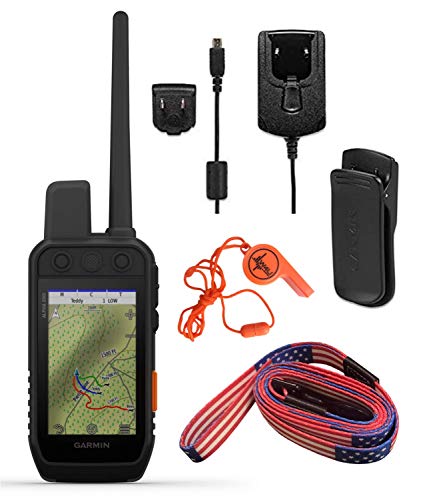
IN THE BOX: 1 x Garmin Alpha 200i handheld with rechargeable lithium-ion battery pack, 1x Belt clip, 1 x AC adapter, 1 x microUSB cable, 1 x Wearable4U Whistle and Leash

IN THE BOX: 1x T 5X dog device with rechargeable lithium-ion battery pack, 1x 1" blue collar strap, 1x 18.5" standard antenna, 1x 22.5" extended-range antenna, 1x Charging cable, 1x AC adapter, 1x Vehicle power cable, 1 x Wearable4U Whistle and Leash

Digital technology Expandable to 2 dogs with Add-On Collars (sold separately)
Maintaining Reliable Recall Long Term
Handlers should maintain reliable recall over months and years by using clear routines, scheduled practice, and measured progression. Handlers should condition your dog with weekly whistle sessions, at least once, and increase distractions gradually, from quiet yard to busy park. Why is gradual escalation important, and what frequency prevents regression? Increasing distraction solidifies response, because varied environments teach generalization, and consistency prevents confusion. Use varied rewards, alternating treats and play, to sustain motivation, and track progress with simple logs noting distance, distraction level, and success rate. Incorporating positive reinforcement techniques like clicker training can enhance recall effectiveness by providing immediate feedback and encouragement. Limit whistle use to prevent desensitization, avoid constant signaling, and reserve the sound for recall only. Review and refresh skills monthly, adjust challenges incrementally, and reinforce positive returns reliably, use metrics to guide difficulty increases, and maintain reliability.
Community Resources, Tips, and Further Reading
Maintaining long-term recall benefits from community support, so handlers should seek resources that reinforce routines and offer feedback. Experienced trainers recommend subscribing to industry outlets like K9 Magazine and following experts such as Ryan O’Meara, for technique updates and behavioral science summaries. How can owners build daily reinforcement, connect emotionally, and expand practical skills? Personalized items, including custom keychains with dog photos, can prompt conversations at events, increase networking, and strengthen commitment to practice. Owners should use community resources, such as forums and social media groups, share strategies, and request critique from peers, for iterative improvement. Access to online articles and instructional videos supplements hands-on sessions, and attending local training events provides tailored advice, measurable progress, and real-world recall testing. Compare methods, track outcomes. For improved recall training, dog owners should consider using pealess dog whistles that provide consistent high-frequency tones, making them effective in various environments.
Frequently Asked Questions
Do Dog Whistles Help With Recall?
Yes, they help; Whistle benefits include consistent, distant signals that improve recall reliability. Trainers pair sounds with rewards to create positive associations, reduce emotional cues, and strengthen owner-dog communication, increasing compliance across distracting environments outdoors.
How Do You Teach a Dog Recall With a Whistle?
They teach recall by creating Whistle Associations: pair the whistle with rewards, begin indoors, gradually add distance and distractions, use a consistent whistle model, reward enthusiastically for returns, and progressively increase difficulty while avoiding overuse.
What Is the Best Whistle for Recall Training?
The best whistle for recall training is the Acme 2.10 & 1/2, praised for durability, consistent high-pitched tone, and battery-free reliability; trainers note Whistle types consistency aids learning and pairing with reinforcement strengthens responses greatly.
How Many Whistles for Recall?
One whistle. Trainers advise maintaining a single consistent sound so dogs learn reliably; Whistle Frequency should remain uniform across contexts, paired with positive reinforcement and repetition to build a strong recall association and minimize confusion.
Conclusion
The trainer summarizes whistle recall as a reliable, scalable tool, capable of turning distracted dogs into near-instantaneous responders across yards, parks, and busy urban sidewalks. Through gradual conditioning, clear signaling, and consistent reinforcement, handlers can build recall that functions like a canine GPS, guiding dogs safely back, promptly every time. Avoid common errors, such as inconsistent cues or punishing mistakes, because predictable practice, varied distractions, and measured rewards create dependable recall in every trained dog.