As an Amazon Associate, we earn from qualifying purchases. Some links on this site are affiliate links at no extra cost to you. Our recommendations are based on thorough research and editorial judgment.

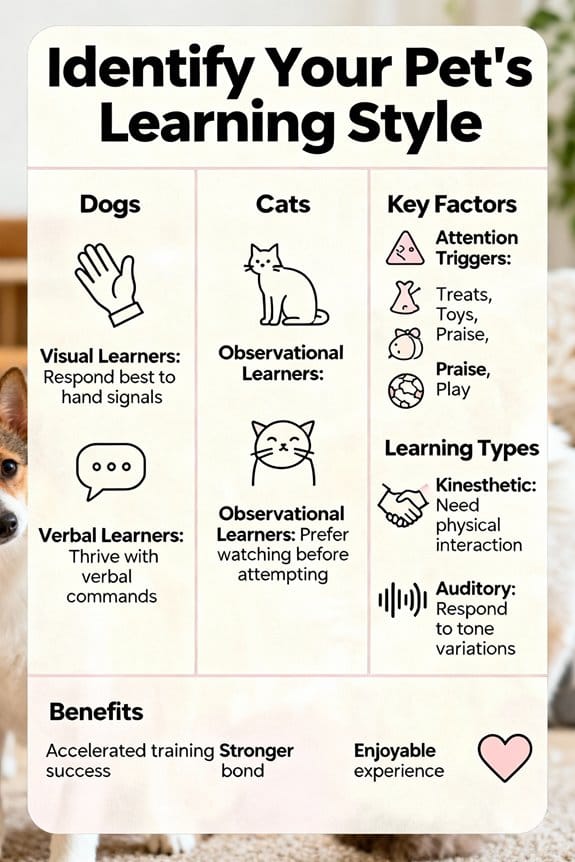
Understanding Your Pet’s Learning Style

Understanding a pet’s learning style speeds training, reduces stress, and improves retention, so owners should assess responses to sight, sound, and touch. Which cues work best, food, praise, or play? Test with short 3 to 5 minute sessions, offering high-value treats for quick wins, or toys for energetic breeds, and note body language for stress signals. Use consistent cues, immediate rewards within one second, and gradual increases in difficulty. Continue for plans and tailored techniques.
Key Takeaways
- Observe your pet’s reactions and body language during training to identify comfort, stress, and preferred learning cues.
- Test varied activities and rewards, tracking weekly responses to determine which methods boost engagement and retention.
- Prioritize positive reinforcement with high‑value treats and verbal praise to build trust and encourage desired behaviors.
- Keep training short and frequent (3–10 minute sessions) to maintain focus and prevent overwhelm.
- Provide a calm, safe environment with consistent cues and routines to reduce confusion and support steady progress.
Why Your Dog’s Learning Style Matters
You may be interested


Recognizing a dog’s learning style matters because it allows trainers to tailor training sessions, increasing engagement and reducing time to reliable behavior change. Different breeds and temperaments respond differently; for example, Labradors often value praise, while Beagles may need stronger focus strategies. Highly sensitive dogs benefit from gentle positive reinforcement techniques, which prevent fear and support steady progress. Energetic canine companions require varied, interactive tasks to maintain interest, and this reduces unwanted behavior driven by boredom. When methods match learning styles, owners see faster results, clearer communication, and a stronger bond. Furthermore, using tools like customizable training modes in dog collars can enhance these tailored experiences, offering specific feedback that aligns with a dog’s unique needs. What practical gains follow from such alignment, and how do outcomes change over months when consistency and owner satisfaction are maintained?
How to Identify Your Dog’s Preferred Way of Learning
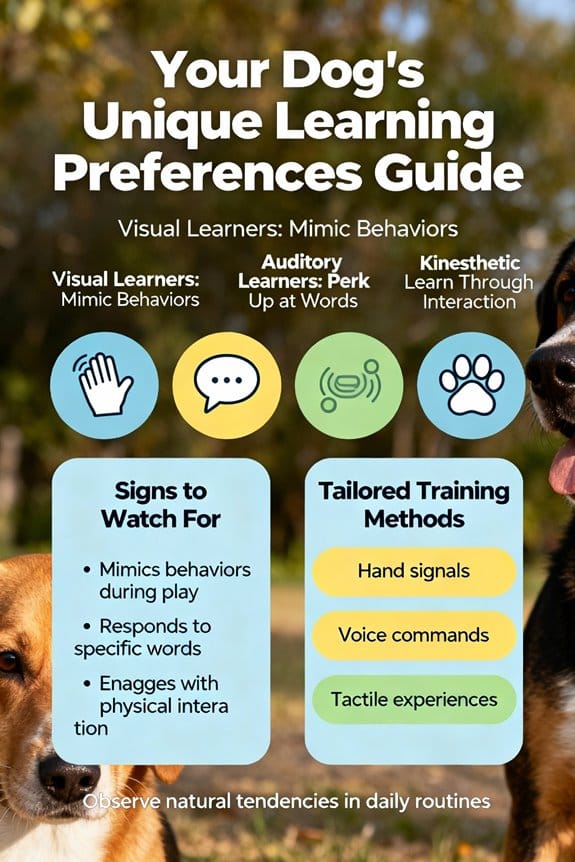
When observing training sessions, the owner should record concrete responses to different stimuli, noting repeats over at least three to five short trials. The observer compares reactions across different dog breeds, noting if sensitive Dogs recoil or if independent types ignore prompts, and then selects appropriate training techniques. Does the dog show enthusiastic focus, or does distraction win; Labradors often respond to positive reinforcement, while Beagles may need structured tasks to sustain attention. Body language reveals comfort, relaxed movements indicate engagement, rigid posture suggests stress and different learning styles. Try varied activities, puzzle toys for self-directed learners, varied drills for happy-go-lucky types to test preference. Consult breed resources for canine behavior norms, adapt methods to the individual dog. Track progress weekly, adjust as needed. Consider using ACME dog whistles for training various breeds, as their range and frequency can be tailored to suit different training scenarios and individual learning styles.
Positive Reinforcement Strategies That Work
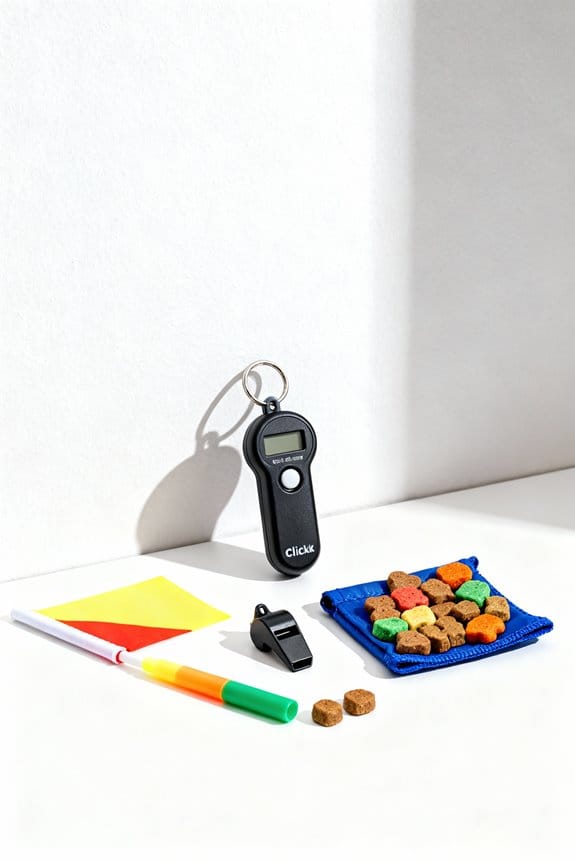
Although dogs vary in temperament and motivation, trainers should prioritize positive reinforcement, because it builds trust and encourages repetition of desired behaviors. Positive reinforcement uses praise, treats, or toys tailored to preferences, for example high-value treats that increase engagement. Short training sessions of three to five minutes, repeated several times daily, help dogs learn best, by keeping focus and preventing fatigue. Consistency matters, reward calm and correct dog behavior immediately, and use variable rewards occasionally to sustain motivation over weeks. Clicker training offers clear communication and immediate feedback, enhancing the effectiveness of positive reinforcement techniques. Avoid yelling or physical corrections, such methods create fear, reduce trust, and undermine long-term retention of skills in positive training programs. Ultimately, teaching dogs with clear markers like a clicker, paired with immediate rewards, strengthens the bond with your furry companion, and improves reliability.
When Gentle or Sensitive Approaches Are Needed
How should a trainer modify methods for a highly sensitive dog to prevent fear and encourage steady progress? A trainer chooses gentle training approaches, reduces pressure, and creates predictable routines to build trust. Sessions should be short, five to ten minutes, and frequent, two to four times daily, to sustain focus without overwhelming. Use positive reinforcement like praise and high-value treats, and avoid harsh corrections that cause defensive reactions and setbacks. Training environments must be calm and familiar, indoors or a quiet yard, so sensitive dogs can concentrate and feel secure. Assessment of individual personality informs tailored training methods, which improves the learning experience and supports long-term emotional well-being. Progress should be measured in small milestones, for example three cues learned over two weeks. A compact design option like the ETIAL Dog Treat Pouch can enhance training efficiency by allowing quick access to treats, keeping sessions smooth and uninterrupted.
Using Operant Conditioning and Associative Learning Effectively
Apply operant conditioning by rewarding voluntary actions immediately, using positive reinforcement to increase sit, stay, and recall behaviors reliably over time. Trainers should pair commands with rewards within 1 second, repeating 10–20 reps per session, so associative learning links cue and action efficiently. What signals indicate a dog prefers food versus praise, and how should reinforcement schedules change accordingly? Use continuous reinforcement for new skills, then shift to variable ratios to maintain performance, adapting to personality traits and individual learning style. Training techniques and effective training use clear markers, consistent timing, realistic goals, three daily five-minute sessions for recall practice. Operant conditioning remains central to gentle, effective methods, when applied with attention to timing, consistency, and reinforcement type. Progress should be recorded and adjusted. A structured routine helps reinforce learned behaviors over time, ensuring gradual improvements and skill retention.
Designing Safe and Supportive Training Environments
Environment design for dog training requires clear physical and emotional safeguards, including fenced play areas, safety matting, and accessible water stations. A safe, supportive training environment helps dogs focus, increases engagement, and reduces stress during sessions daily regularly. Are play areas inspected daily for hazards, are water stations refilled twice, and is supervision constant, always? For example, four-foot fencing prevents escapes, two-centimeter matting cushions falls, and shaded areas reduce overheating in summer. Routine checks identify sharp objects, toxic plants, loose parts, and standing water, all of which cause injury. Supervision enforces boundaries, ends escalating interactions quickly, provides redirection immediately, and maintains calm, consistent learning for success. Training scenarios range from single-dog ten-minute sessions to group work under thirty minutes, allowing rest between efforts daily. Reflective Features on leashes increase visibility during nighttime walks, enhancing safety and ensuring a positive training experience.
Adapting Training for Different Play and Breed Styles
Because breeds differ in instinct and energy, trainers must assess play style quickly, noting whether a dog prefers wrestling, chasing, or solo exploration. Trainers then select positive reinforcement rewards that match those play styles, for example tug for wrestlers, balls for chasers, and scent toys for explorers. How does matching rewards to play preferences change engagement, and what effect does that have on retention? When rewards align with breed styles and individual preferences, motivation increases, so repetition becomes productive and skills generalize faster. Training methods should be adjusted to dogs specific needs; terriers need structured play, herders need focused, task-driven games. Tailored training plans reduce stress for dog owners, improve compatibility during group sessions, and increase long-term obedience outcomes measurably. Additionally, using tools like adjustable head halters can provide gentle control for dogs that pull, enhancing the training experience by managing head movement effectively.
Short Sessions, Clear Boundaries, and Consistent Rewards
A brief, focused session—lasting five to ten minutes—allows a dog to concentrate, prevents boredom, and maximizes learning efficiency. Short sessions should occur daily, spaced by rest, so attention remains high and progress accumulates. Clear boundaries mean consistent cues, defined rules, and predictable responses, which reduce confusion and speed learning. Consistent rewards, such as verbal praise and high-value treats, reinforce behavior, so dogs connect action with outcome. Positive reinforcement outperforms aversive methods; it builds trust, encourages engagement, and improves retention across diverse training techniques. To enhance training effectiveness, consider using versatile tools like dog training clickers that promote positive reinforcement and improve pet-owner communication. How should handlers adapt methods to an individual dog’s learning style, by observing preferences, adjusting rewards, and varying pace per session? Short sessions, clear boundaries, consistent rewards together create predictable routines, which increase compliance, lower stress, and support effective learning long-term.
Recommended Resources and Next Steps
Handlers should consolidate short sessions, clear boundaries, and consistent rewards into a practical plan, then consult targeted resources for guidance and support. The American Kennel Club recommends using high-value treats, fifty percent more motivating in trials, to reinforce desired behaviors reliably. Dogtime provides comparative guides on dogs learning styles and training methods, helping owners pick approaches that fit temperament. New Jersey 4-H offers hands-on programs, with stepwise projects for youth, fostering responsible canine care and basic obedience skills. Advanced obedience techniques promote impulse control, precision recalls, and off-leash reliability, requiring daily commitment and focused training methods. Which resource fits a specific case, experienced trainers ask, and why choose one method over another? Positive reinforcement produces trust and retention; as a result, it should precede exploration of positive punishment and negative outcomes. For direct assistance, contact Very Important Paws, register with vaccination proof, and schedule.
Recommended Products

Healthy Bully Sticks for Dogs - Wholesome - tasty chew treats for small to medium dog breeds, Medium 12 Inch

Healthy Bully Sticks for Dogs - Meaty dog treats with a taste and texture dogs can't resist, Thick 6 Inch

Healthy Bully Sticks for Dogs - Wholesome - tasty chew treats for small to medium dog breeds, Medium 6 Inch
Frequently Asked Questions
Can Veterinary Medications or Health Conditions Affect My Dog’s Ability to Learn?
Yes. Medications impact learning, Health conditions influence behavior, Dosage effects training, Side effects distraction, Pain management importance, Anxiety medication assessments, Vet advice significance; owners observe altered focus, motivation, and must consult veterinarian for tailored adjustments.
How Does Aging or Canine Dementia Change Training Approaches?
A pocket watch marks slower daily routines: the caregiver adjusts for aging effects and cognitive decline with gentle behavior modification, training patience, scent work, engagement techniques, and alternative activities to maintain comfort and preserve skills.
How Do I Train Effectively When Multiple Dogs Learn Differently at Home?
They divide sessions briefly, blending Common Training Techniques and Individual Learning Styles, applying Positive Reinforcement Methods and Reward based Strategies, managing Dealing with Distractions, Tailoring Commands per dog and using Group Training Sessions for cohesion.
Are Smartphone Apps or Clicker Devices Scientifically Validated for Training?
Partially: Like a metronome clicking in sunlight, research supports clicker devices more robustly than many apps; app effectiveness varies with mobile interfaces, training consistency, reinforcement strategies, comparative studies and user experiences often reflect technology integration.
What Legal or Landlord Rules Affect Obedience Training and Off-Leash Practice?
Lease agreements, Local ordinances, Breed restrictions, Noise regulations, Liability clauses, Property damage, and Access limitations determine where obedience training and off‑leash practice may occur; owners must comply, secure permissions, and accept financial responsibility for damages.
Conclusion
Understanding a dog’s learning style improves training results, studies show 80% prefer positive reinforcement methods. Trainers should observe gaze, body language, and play choices, then select appropriate rewards and timing. Should short, varied five-minute sessions be used to maintain focus, reduce stress, and increase retention? When sensitivity appears, lower pressure, use higher-value treats, and progress gradually over several calm sessions. Combine operant conditioning, associative cues like clickers and markers, clear boundaries, and consistent rewards daily.