As an Amazon Associate, we earn from qualifying purchases. Some links on this site are affiliate links at no extra cost to you. Our recommendations are based on thorough research and editorial judgment.

Interactive Puzzle Toys as Training Tools

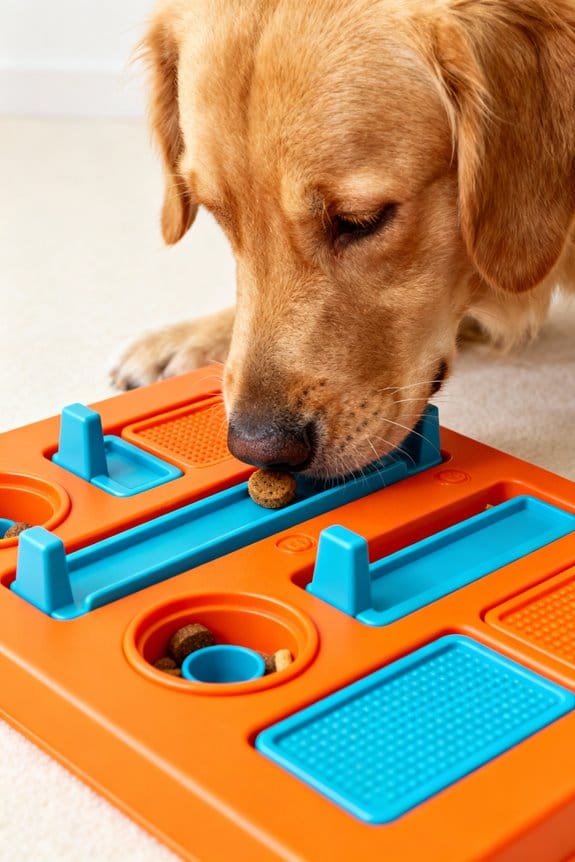
Interactive puzzle toys serve as training tools, offering treat-dispensing challenges and snuffle mats that reinforce problem-solving skills. They improve recall, impulse control, and focus when used in five to ten minute sessions, and difficulty can increase about ten to twenty percent weekly to maintain progress. For heavy chewers, durable materials are recommended, and supervision during initial use prevents ingestion risks. Do trainers see faster skill gains with puzzles? Further guidance explains selection, progression, and safety.
Key Takeaways
- Puzzle toys improve problem-solving, focus, and cue-following by rewarding dogs for cognitive effort during training.
- Adjustable difficulty levels let trainers progressively increase challenge by about 10–20% to build skills without frustration.
- Treat-dispensing and snuffle-style toys slow eating, encourage foraging instincts, and provide mental stimulation that reduces anxiety.
- Short, supervised 5–10 minute sessions integrated with clicker or cue training reinforce learning and measurable progress.
- Choose toys based on age, breed, chewing strength, and durability, and consult trainers or vets for personalized recommendations.
The Role of Puzzle Toys in Canine Training
You may be interested



A treat-dispensing puzzle, for example, gives a dog tangible incentive to solve a problem, reinforcing learning through reward-based repetition. Interactive puzzle toys serve as practical training tools, requiring concentration, cue-following, and engagement to access hidden rewards. How can adjustable difficulty levels be used to match a dog’s pace, and facilitate steady skill progression without overwhelming learner? Problem-solving skills improve as steps increase in complexity, trainers can raise challenges gradually, observing success rates and modifying tasks accordingly, and reducing undesirable behaviors. Such mental stimulation supports cognitive abilities, which strengthens neural pathways, leading to advanced learning and better responses to commands. Owners can enrich their pets’ daily routines with brief sessions, ten to twenty minutes, consistently yielding positive experiences, reducing boredom, and supporting overall dogs well-being. Puzzle toys, particularly those with adjustable difficulty, are valuable for maintaining engagement and encouraging progressive challenges to enhance cognitive skills.
Mental Stimulation and Cognitive Benefits

Building on skill progression from adjustable difficulty, interactive puzzle toys produce measurable cognitive benefits, strengthening problem-solving and memory in dogs. Regular mental stimulation through varied puzzles can reduce anxiety, improve recall, and help ward off age-related cognitive decline for both young and senior dogs. Incorporating snuffle mats for dogs as part of this mental exercise can further enhance their natural foraging instincts and provide additional stimulation. How should trainers integrate these tools into training programs to maximize mental engagement and long-term neural development, with measurable benchmarks and timelines? Start with simple challenges, increase complexity by 10 to 20 percent weekly, and observe problem-solving skills as learning curves evolve. Dogs emotional states improve when puzzles trigger endorphin release, providing an enriched experience, reducing destructive behavior during idle periods. Use rotation schedules, diverse challenge types, and measurable goals, and track progress with simple tests every four to six weeks.
Physical Fitness and Health Advantages
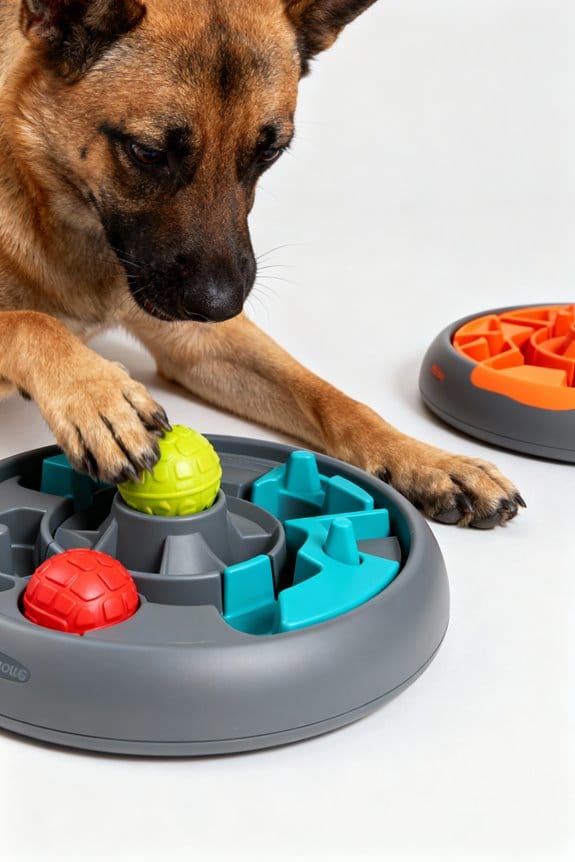
Regular use of interactive puzzle toys promotes measurable physical activity, improving joint flexibility and muscular strength through varied movements and repeated engagement. Dogs engaging ten to twenty minutes daily can raise heart rate, boosting cardiovascular health and overall physical fitness, which helps reduce obesity risks by burning calories, improving stamina and metabolic health. Treat-dispensing toys encourage slower eating, decrease bloat risk, and add movement as dogs work for rewards, increasing blood circulation. Repetitive reaching, pawing, and twisting strengthen muscles, improve joint health, and enhance flexibility, especially in senior dogs recovering injury, by increasing range of motion. Choosing the right interactive puzzle toys can also aid in mental engagement for dogs, promoting cognitive development alongside physical health benefits. Can this routine replace formal exercise, such as structured walking, running, or rehabilitation sessions, in all cases? No, but it complements walks, play sessions, and training, offering mental exercise while supporting dogs overall health through consistent, varied activity.
Selecting the Right Puzzle Toy for Your Dog
How should an owner match a puzzle toy to a dog’s needs, given age, breed, and individual temperament influence engagement and safety? Owners selecting the right puzzle toy should assess dogs’ individual needs, considering age and breed energy levels, and known behaviors like persistent chewing. For many dogs, treat-dispensing toys boost problem-solving skills and increase physical activity, as nudging and pawing reveal rewards. Choose interactive puzzle toys with adjustable difficulty levels, starting at simple settings for puppies or seniors, and progressing over weeks to maintain challenge. Prefer durable materials for enthusiastic chewers, such as thick rubber or reinforced plastic rated for heavy use. When uncertain, seek personalized recommendations from trainers or veterinarians, who can match puzzles to skill level, health status, and learning pace. Additionally, consider snuffle mats for dogs as they simulate natural foraging environments, engaging dogs both mentally and physically.
Recommended Products
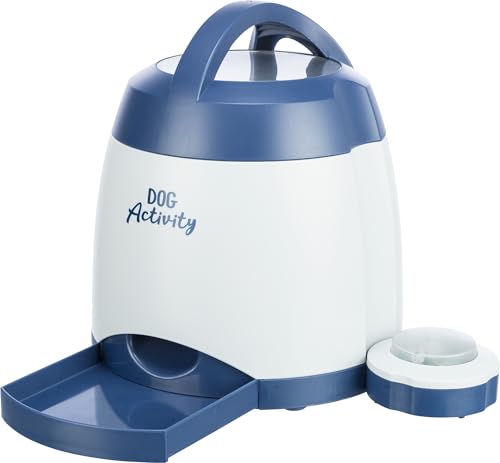
ADVANCED PLAYERS: TRIXIE'S Level 3 dog food puzzles are the ultimate game to provide mental stimulation for dogs. Our advanced interactive dog puzzle toys are ideal for those that have reached Master Status; we introduced a higher degree of complex sequential steps for them to earn their tasty reward

𝐌𝐞𝐧𝐭𝐚𝐥𝐥𝐲 𝐒𝐭𝐢𝐦𝐮𝐥𝐚𝐭𝐢𝐧𝐠 𝐃𝐨𝐠 𝐏𝐮𝐳𝐳𝐥𝐞 - The Kruuse BUSTER ActivityMat Starter Set offers interactive, treat-based activities that encourage focus, patience, and cognitive development.

PUZZLE TOYS FOR BRAIN BOOSTING PLAY: Our adaptable puzzle treat dispenser blocks feature five difficulty levels, ensuring your pup enjoys a mentally stimulating and rewarding play session every time. Stimulating dog toys like no other.
Integrating Puzzle Toys Into Training Routines and Safety Considerations
After choosing a suitable puzzle toy based on age, breed, and chewing habits, owners should integrate it into training sessions deliberately and safely. Interactive puzzle toys can be used for short, focused training routines of 5-10 minutes, to build problem-solving skills and reinforce cues like sit and wait. How should difficulty change as competence grows? Use adjustable difficulty levels, moving from simple hide-and-find to multi-step puzzles, to maintain cognitive engagement and mental stimulation. Safety considerations include supervision during initial sessions, to detect hazards, chewing issues, or stress signs, and to prevent ingestion of pieces. Trainers may provide tailored guidance, offering specific schedules, reward ratios, and modifications aligned with the dog’s behavioral needs and health. Proper use reduces anxiety, increases efficiency, and supports long-term enrichment. Incorporating clicker training techniques alongside puzzle toys can enhance the learning experience by providing immediate feedback and reinforcement, thus accelerating the dog’s understanding and response to training cues.
Recommended Products

A Long-Term Puzzle That Grows With Your Dog Most dog toys are solved, ignored, or destroyed too quickly. KADTC Pro Max is built as a long-term enrichment system, giving smart dogs a challenge they can return to again and again as their confidence, memory, and problem-solving skills improve.

Beginner-to-Expert Growth Path Designed for dogs to start simple and keep improving. Begin with easy reward paths, then raise the challenge as your dog learns, so one toy can support play from first-time discovery to advanced problem-solving.

XL SIZE 4-LEVEL DOG PUZZLE TOY - Built as an extra-large dog puzzle board, this toy gives small, medium, and large dogs more room to sniff, nudge, slide, and solve.
Frequently Asked Questions
How Do I Clean and Sanitize Puzzle Toys Safely?
One cleans puzzle toys safely: choose pet friendly products for puzzle toy materials; use cleaning agents, surface disinfection and sanitizing methods; heed dishwasher safety, guarantee air drying to prevent mold, preserve toy durability, routine maintenance.
Are There Eco-Friendly or Biodegradable Puzzle Toy Options?
Yes, consumers choose puzzle toys made from sustainable materials like natural rubber, bamboo toys or recycled plastics with non toxic finishes; eco friendly brands provide biodegradable options, green certification, smart payload design and compostable packaging.
Can Puzzle Toys Be Used During Car Travel or Crate Time?
Yes; like Odysseus’ ruse, they can serve as boredom buster during car travel or crate training, offering mental stimulation, distraction technique and travel games, ensuring dog comfort with safe materials, toy variety, and pet engagement.
What Is the Typical Lifespan of a Commercial Puzzle Toy?
Typical lifespan ranges from six months to several years, depending on commercial quality, durability factors, material types and wear resistance; considering age appropriateness, pet sizes, usage frequency, safety standards, design innovations and customer reviews insights.
Do Manufacturers Offer Warranties or Replacements for Defective Toys?
Yes—tension hangs as manufacturers typically provide warranty coverage and replacement policies, often promptly, for defective products; impartial reports cite manufacturer guarantees, return procedures, product recalls, customer service, toy durability considerations, consumer rights, and satisfaction assurance.
Conclusion
Puzzle toys improve focus and fitness, offering mental workouts of ten to fifteen minutes, like treat-dispensing balls and puzzles.
Which training method yields faster problem-solving, structured puzzle sessions of three difficulty levels, or repetitive fetch and leash drills?
When handlers vary treats—small kibble pieces, frozen peanut butter—or rotate toys weekly, engagement increases and boredom decreases measurably quickly.
If owners fear lack of interest, gradual challenges and praise rebuild confidence, producing visible pride and renewed companionship.