As an Amazon Associate, we earn from qualifying purchases. Some links on this site are affiliate links at no extra cost to you. Our recommendations are based on thorough research and editorial judgment.


How Pets Learn Through Repetition and Consistency

Pets learn through short, repeated sessions, typically five to ten minutes daily, which strengthen neural pathways, building muscle memory. Why is consistency important? Because using the same cue words, body language, and immediate rewards clarifies cause and effect, and reduces confusion across locations and handlers. Practicing commands during meals, walks, and play generalizes behavior, and increasing distractions prevents context-specific responses. For persistent problems after six weeks, seek a positive-reinforcement professional, further guidance explains advanced strategies.
Key Takeaways
- Repetition strengthens neural pathways, turning desired behaviors into automatic responses through short, frequent practice sessions.
- Consistent cues, timing, and rewards reduce confusion and speed up learning by clearly linking action to outcome.
- Immediate, predictable rewards reinforce cause-and-effect, making the correct behavior more likely to recur.
- Practicing commands across different environments prevents context-specific responses and promotes generalization.
- Predictable routines and brief daily sessions lower anxiety and maintain engagement for steady progress.
The Psychology Behind Repetition and Learning
You may be interested



Although often overlooked, repetition strengthens neural pathways in a dog’s brain, making learned behaviors more reliable with time and practice. The principle shows how repetition builds habit, and how consistency means using the same cue, timing, and reward, so dogs learn faster, and responses become automatic. What role does positive reinforcement play, and how do short training sessions support behavior modification? Daily, five- to ten-minute sessions, repeated across weeks, establish good behavior, and create emotional confidence in anxious or high-energy animals. Practicing desired behaviors in different environments prevents context-specific responses, for example inside the home, at the park, or during vet visits. Clear commands paired with immediate rewards cause cause-and-effect learning, and gradual variation guarantees durability of skills under distraction, across varied real-world conditions. Additionally, adjustable straps ensure a secure, customized fit when using harnesses, which can be beneficial during training sessions.
How Consistency Shapes Canine Behavior
After repetition builds neural pathways and habits, consistency in commands and routines shapes how those habits are expressed across settings. Consistency in vocabulary helps dogs reduce confusion, for example, when three family members use identical commands. What happens when cues differ between people, will the dog hesitate or respond inconsistently habitually? Regularly practicing commands in three or more environments, such as home, park, and car, enables dogs to generalize learned behavior. Predictability in schedule and reinforcement creates confidence, so dogs learn faster, setbacks become easier to correct with consistent training. Immediate reinforcement, for instance a treat within two seconds, strengthens the bond and links action to outcome dependably. Consistent cues, practiced across people and places, guarantee predictable responses, strengthening training outcomes and long-term bond. Heavy-duty materials used in harness construction contribute to the durability and reliability needed for consistent and effective training outcomes.
The Role of Routine in Everyday Training
When a predictable daily routine is established, dogs experience reduced anxiety, and they learn more efficiently through repeated, context-rich practice. Training sessions should happen during feeding, walks, and play, so commands generalize across contexts, and recall becomes more reliable daily. Behavioral science shows routines work; this reduces confusion, builds trust, and creates predictability, which helps reinforce desired behaviors in varied environments and situations. Owners who schedule flexible time blocks, for example, two ten-minute sessions and one fifteen-minute session, promote consistency in Dog training. Dogs thrive on routine, and enrichment like puzzle toys or scent games keeps practice engaging, maintaining focus and mental stimulation. An effective dog program builds trust, strengthens the bond with your dog, prevents common issues, and supports welfare through consistent practice. Establishing a consistent routine aids in predictable potty times and reinforces learning when and where to go, which is crucial in puppy house training.
Recommended Products

HIGH QUALITY NON-MOTOR IS SAFER: Our non-motor design allows your dog to move freely and stop at any time if he doesn't want to run. Dog treadmills are

DENTAL DISEASE AFFECTS 30% OF DOGS — START BRUSHING EARLY: Dental disease causes daily pain and discomfort, and pets are pros at hiding it. Starting a brushing habit with puppies using this training kit reduces plaque and tartar from a young age.

[360° Display & Remote Control] - The 360° rotatable display lets you effortlessly read speed and time from any angle without walking to the front. For added convenience, the included remote allows you to adjust settings from a distance. Whether working or relaxing, you can easily manage your fur baby's routine without breaking their focus.
Repetition Builds Confidence and Muscle Memory
Repeated practice strengthens neural pathways, enabling dogs to recall commands more reliably and perform behaviors with less conscious effort. Through repetition, consistent training creates muscle memory, so a dog can sit, stay, or fetch automatically after dozens to hundreds of repetitions. What happens when a high-drive or anxious dog receives structured practice, with sessions three to five times daily, regularly? It gradually reduces hesitation, builds emotional confidence, and consistently produces calmer responses during real-world outings. Trainers observe that repeating behavior across three to five environments helps dogs thrive, generalize skills despite distractions, for example home, park, car, and friend’s yard. Consistent training schedules, clear cues, and measured rewards produce predictable progress, with quantitative milestones guiding adjustments, and tracking ensuring steady improvement over time reliably. Housebreaking bells, as a non-confrontational potty training solution, can assist in creating a consistent cue for bathroom breaks, facilitating quicker recognition of potty needs and reducing stress associated with frequent barking or scratching.
Common Mistakes That Undermine Consistency
While repetition builds confidence and muscle memory, inconsistent cues and rules can erase gains, confusing a dog and slowing measurable progress. Using three different commands for a single behavior, for example, creates ambiguity, so responses drop from reliable to erratic within days. What happens when treats appear sometimes but not always, confusion slows retention and expectations become unclear over time? Mixed rules among four household members send conflicting signals, undermining behavior reinforcement and lengthening the learning process by weeks. Frequent changes in method, or switching between reward schedules, prevent solid associations; as a result, dogs cannot predict outcomes and fail to generalize cues. Professional dog training emphasizes consistency, predictable routines, and a reliable training environment, so every step supports lasting learning, across time, reliably, and predictably. Adjustable designs in training collars help accommodate a range of neck sizes, ensuring a consistent and comfortable fit that aids in maintaining effective and gentle training methods.
Tailoring Repetition for Different Personalities and Breeds
Several energetic breeds, such as Border Collies and Retrievers, respond best to brisk, frequent sessions lasting five to ten minutes each. Trainers recommend short bursts every day, as tailored repetition for high-drive dogs encourages learning and prevents boredom. How should shy or anxious dogs be handled, without overwhelming them or causing stress? Gradual exposure with repeated small successes builds confidence, for example three two-minute cue practices per day in a predictable environment. Stubborn breeds may need high-value rewards, plus consistent, short training sessions, to focus and retain commands more reliably. Age affects timing, younger dogs require more frequent practice, older dogs benefit from longer, gentler intervals. Consistency every time, across handlers and contexts, strengthens skills and can strengthen your bond, and reduces stress overall. Pealess design dog whistles, like those from ACME, ensure reliable signals without malfunction, making them a useful tool for training various dog breeds.
Recommended Products


Smart Automatic Ball Launcher for Hassle-Free Play:Keep your dog active and entertained for hours with this automatic ball launcher, which provides endless fun and exercise whether you're playing indoors or enjoying outdoor adventures together

Premium Solid Brass UK Made Construction; The Logan Turbo Brass Whistle is precision crafted in the UK from solid musical instrument grade brass with no rivets or joins. Designed as a pure form for pure sound, it delivers exceptional durability and professional-level acoustic performance.
Practical Daily Exercises and Training Structure
Because consistency anchors learning, short, structured sessions scheduled throughout the day create predictable opportunities for practice and reinforcement. Trainers recommend 5-10 minute sessions, three to five times daily, to keep focus and reinforce commands consistently. Should sessions occur before feeding, after play, or during walks, creating an established routine helps dogs anticipate expectations and respond reliably. Practice simple exercises first, then add distractions gradually, so behaviors generalize across environments and people. Use the same cue words every time, reward promptly, and fade treats to maintain reliability. Include interactive puzzles or trick training twice weekly to sustain mental engagement, while repeating core obedience work each day. What structure balances predictability with novelty, and how will that improve long-term learning? Document progress, adjust methods when necessary. Reward-based training emphasizes positive reinforcement using praise, play, or food, which is crucial for reliable obedience and reducing anxiety.
When to Seek Professional Training Support
When should an owner consult a professional trainer, and what signs reliably indicate that outside help is warranted? Owners should seek professional training support when inconsistent commands, unclear cues, or confusion produce ongoing negative behaviors, and when simple practice fails to correct them. If a dog shows persistent problem behaviors for more than six weeks despite daily repetition, a trainer can assess strong behavioral patterns and offer tailored techniques. Professionals establish clear routines, produce predictable outcomes, and teach consistent commands to households, improving training success. What if behavior in different situations varies dramatically, such as calm at home but reactive outside? In such cases, ongoing support, structured programs, and measurable progress benchmarks prevent reinforcement of unwanted actions, and sustained outcomes. Training methodologies that include advanced obedience techniques can significantly aid in rectifying complex behavioral issues by promoting impulse control and precision in commands.
Recommended Products

Includes: transmitter, 3 collars (each with adjustable strap, 2 sets contacts, rubber comfort tips, battery), 2000' of boundary wire, 50' of 16 AWG twisted wire, 50 flags, 2 splices, 10 staples

🏆 Improved: The eXtreme Dog Fence PRO GRADE KIT Easily Covers up to 10 Acres and has Updated Electronics with 3 Antennas, 12x Battery Check, Temp Check and Wire Check
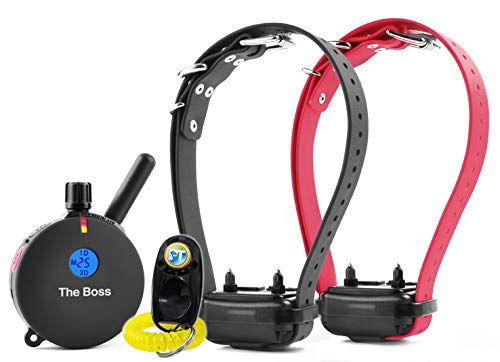
This is a bundle of 2 items: ET-802 two dog trainer and PetsTEK Dog Training Clicker. Perfect for back yards, parks, competitions, police k-9 work, any types of hunting and large field training.
Frequently Asked Questions
Do Medical Conditions Affect My Pet’s Ability to Learn Through Repetition?
Yes. Medical factors like cognitive decline, learning disabilities, anxiety disorders, sensory impairments, neurological conditions and medication effects hinder learning; aging pets and breed differences require training adaptations to accommodate altered pace, motivation, and retention capacity.
How Does Repetition Affect Shelter Animals With Trauma History?
Contrast rigid drills and gentle repetition: repetition aids traumatized shelter animals, supporting trauma recovery via positive reinforcement, identifying behavioral triggers, reducing fear response, trust building, socialization techniques, environmental stability, training patience, gradual exposure, routine establishment.
Can Interactive Toys Replace Human-Led Repetitive Training Sessions?
Partially; toys supplement but cannot replace humans entirely. Interactive training benefits, toy engagement levels, human vs machine, reinforcing behaviors, cognitive development pathways, play based learning, motivation factors, attention spans, toy variety importance, training session frequency
Are There Age-Related Limits to How Much Repetition Pets Tolerate?
Yes. Age factors and developmental phases alter tolerance levels and attention span; learning stages dictate reinforcement timing to avoid mental fatigue. Breed differences and behavior consistency create training challenges across life, requiring adjusted repetition amounts.
How Can Multilingual Households Maintain Consistent Cues Across Languages?
They recommend using consistent bilingual commands, avoiding language mixing, prioritizing cue consistency; training tips include cultural adaptations, clear reinforcement techniques to address translation challenges and communication barriers, reinforcing behavioral cues to support pet adaptability effectively.
Conclusion
A consistent training plan, practiced five to ten minutes daily, produces learning in dogs, reinforcing desired behavior. Is not repetition, like the tortoise’s steady steps, the quiet engine of skill and confidence? When cues are consistent, for example using the same word, gesture, and reward sequence, dogs generalize faster and errors decline. Owners training recall, leash manners, or crate tolerance can expect measurable progress within two to four weeks, given steady repetition and clear feedback.