As an Amazon Associate, we earn from qualifying purchases. Some links on this site are affiliate links at no extra cost to you. Our recommendations are based on thorough research and editorial judgment.

Why Every Trainer Needs a Treat Pouch

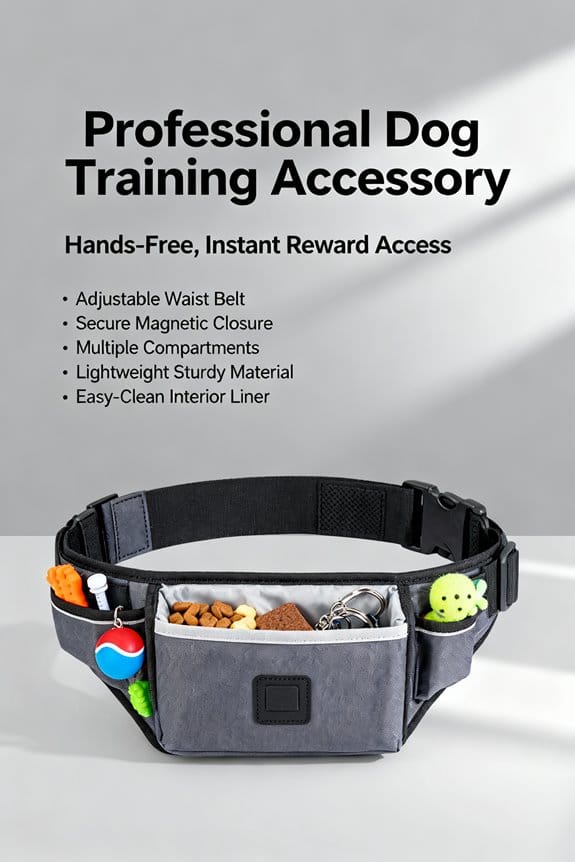
A treat pouch lets a trainer deliver one-second reinforcement reliably, holding 40 to 50 treats for rapid repetition. It frees both hands with adjustable straps, prevents fumbling, and allows clearer verbal and physical cues. What features matter most: waterproof liners, sturdy clips, dual pockets for keys and clickers, closures that seal and resist spills? Proper fit and snug attachment prevent bouncing during active sessions, preserving timing, hygiene, and comfort. Explore tips, bag and vest comparisons, sizing advice, and guidance to choose the ideal pouch.
Key Takeaways
- Enables immediate, hands-free reinforcement within one second to dramatically speed learning and improve timing.
- Keeps treats secure, odor-controlled, and waterproof, preserving freshness and hygiene during sessions.
- Two-pocket designs organize treats and accessories (clicker, keys, bags) for efficient, distraction-free training.
- Adjustable straps and sturdy clips provide stability and comfort for active, off-leash work.
- Large, easy-access interior holds ~40–50 small treats, supporting many repetitions without constant refilling.
What Is a Treat Pouch and How It Works
You may be interested
A treat pouch is a small, lightweight bag designed to hold dog treats during training, keeping rewards accessible and secure. A dog treat pouch functions as a practical container, with secure closures like magnets or zippers that prevent spilling. Trainers use it during training dogs, placing dozens of small treats inside, and some models include two pockets. These pockets hold keys and waste bags, aiding organization for five-minute drills or thirty-minute classes. How does immediate reward delivery affect learning, and what outcomes follow when timing is consistent and prompt? The pouch enables prompt reinforcement, so desired behaviors increase in frequency, which accelerates skill acquisition. Adjustable straps permit waist wear or attachment to bags, offering placement options for varied scenarios and handlers. Choose materials wisely. For optimal performance, choose waterproof materials like 600D Oxford or heavy-duty nylon, which protect treats and withstand wear during outdoor training sessions.
Benefits of Hands-Free Treat Access
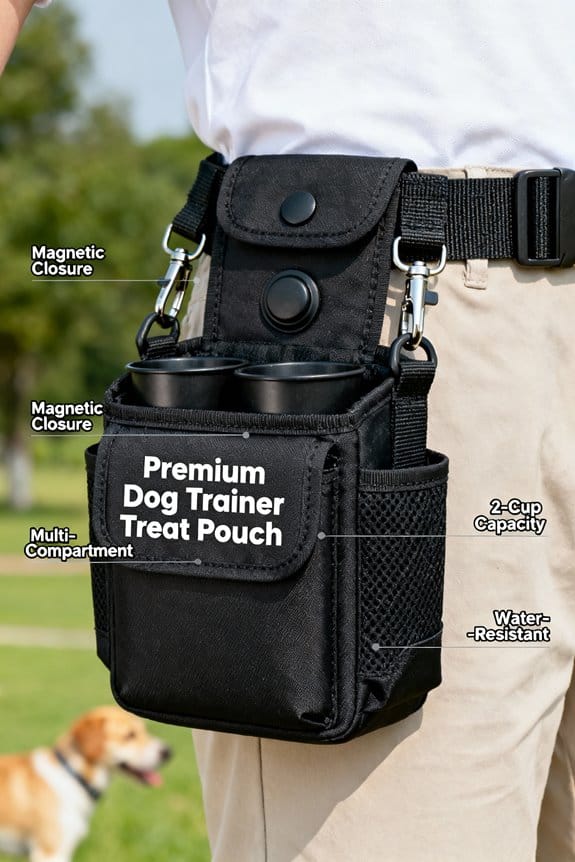
When trainers need split-second reinforcement, hands-free treat pouches let them deliver rewards within one second, preserving the learning connection. A trainer can wear adjustable straps around the waist, keeping snacks accessible during 10-minute sessions, and avoiding fumbling through pockets or bags. How does this improve dog training outcomes? Immediate rewards strengthen behavior, so timing within one second increases retention and reduces confusion. Keeping both hands free allows clear visual cues and leash control, which aids heel work, recall drills, and agility practice. Secure closures and waterproof liners protect treats from moisture and spills, maintaining hygiene and motivation on long walks. Preventing lost treats guarantees consistent reinforcement, which supports faster learning across varied environments and distractions. It also reduces trainer stress, improving session consistency overall. Many pet treat pouches are designed with features such as magnetic closures, adjustable straps, and multiple compartments which enhance the training experience by ensuring easy access to treats and tools.
Key Features to Look For in a Treat Pouch
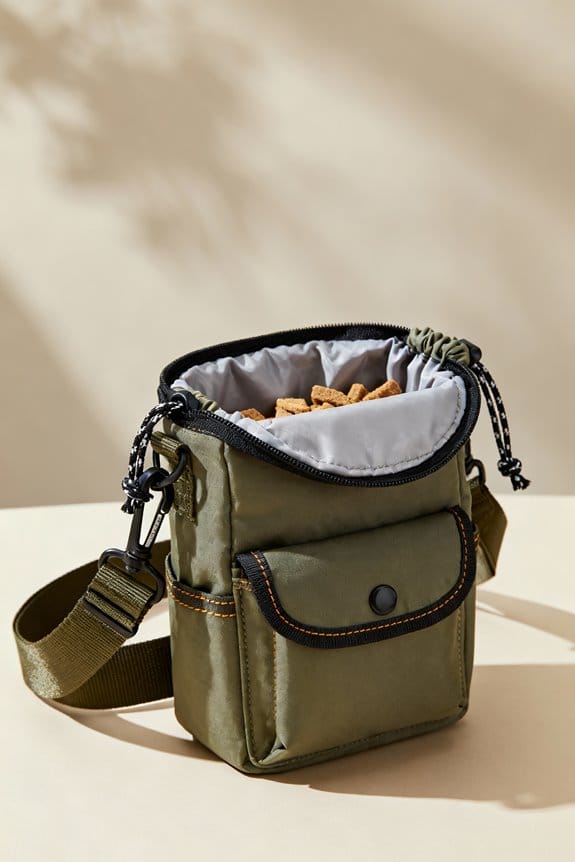
Good treat pouches combine fast access with practical features, helping trainers maintain one-second reinforcement windows during short, focused sessions. Trainers should seek secure closures, magnetic or zippered options prevent spills when dogs tug or trainer moves quickly. Materials must be easy-to-wash, durable fabrics, machine-safe liners reduce odor build-up after daily outdoor sessions. Evaluate interior space carefully, a pouch holding fifty small treats balances capacity and easy access. Sturdy clips or belts secure attachment to clothing or bags, they maintain stability during jogging, hiking, or busy urban walks. For dog treat pouches, additional pockets for clickers, waste bags, or keys improve convenience, carrying essentials without extra bags. Waterproof fabrics resist dirt and are easy to wipe down, ensuring long-term usability and hygiene. Decide by testing models in person, compare closures, materials, and attachment options before purchasing an overall preferred pouch.
Recommended Products
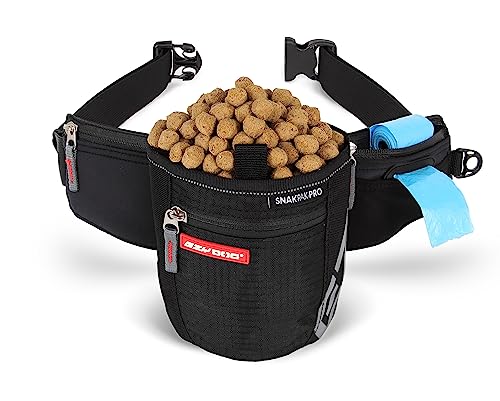
WEARABLE DOG TREAT BAG TRAINING POUCH WITH PICK-UP BAG DISPENSER AND BELT: Our wearable dog treat bag features a pick-up bag dispenser and additional pockets for storage as well a convenient magnetic closure, comfortable adjustable belt, and secure front zip closure for storing your keys or money.

OPRAH'S FAVORITE THINGS 2024: Discover hands-free convenience & effortless organization to help you keep your pup calm and focused while using your dog treat pouch. Integrated easy-clean treat pocket for easy rewards & training sessions with treat pouches for pet training. Discrete yet easy-to-access poop bag dispenser in the dog walking bag, with a roll of matching bags in a dedicated inner poop bag pocket. No more treats spilling from your dog walking fanny pack!

Sufficient Quantity: the package includes 12 pieces of dog treat pouches for training in 6 different colors, coming in yellow, red, army green, black, orange and blue, 2 pieces of each color, enough to meet your daily storage needs
How Treat Pouches Improve Training Timing
One essential training aid is the treat pouch, enabling delivery within the one-second reinforcement window, and preserving clear cause-and-effect learning. Trainers using a pouch deliver rewards within one second, improving recall by reinforcing correct behavior immediately, which accelerates learning. How does immediate access change dog treat training outcomes during short, focused five-minute drills versus longer twenty-minute sessions? Hands-free designs keep both hands available for cues, reducing fumbling, and maintaining attention on timing. Secure closures prevent spills, ensuring consistent access to ten to twenty small treats per session, which sustains momentum. Reduced lag time prevents confusion about which action earned reinforcement, so behavior strengthens more rapidly. Routine use of a pouch creates predictable timing patterns, reinforcing desirable responses across varied environments. Improvement appears within weeks. Additionally, durable materials like 600D Nylon ensure the pouch is waterproof and easy to clean, enhancing its longevity and usability during training sessions.
Recommended Products
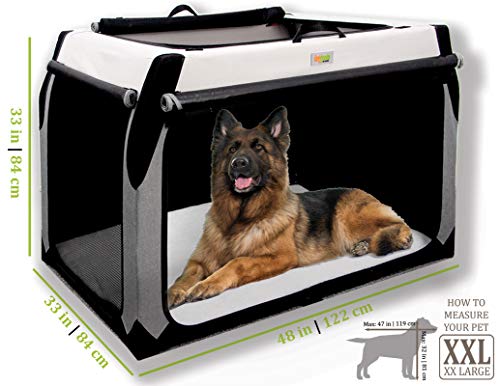
SOFT DOG CRATES FOR EXTRA LARGE DOGS 48 INCH: SIMPLY THE MOST BEAUTIFUL and HIGHEST QUALITY Travel Dog Crate And Soft Sided Dog Crate In The Market. Our Portable Dog Crate Is Made of Durable Canvas Fabric And Patented Folding Steel Frame. LOOK CLOSER! This Is NOT Like Most Other Flimsy Portable Dog Kennel listed out there. The photos speak for itself - no creases on the fabric, solid iron frame and locking mechanism and beautiful color and fabric. CUTE PUPPY NOT INCLUDED with this XL dog crate.

The ECO version refresh of our popular dog training vest features a softer shell fabric for more comfort and roomier, quick-access pockets that make rewarding your dog even easier

IS THIS THE RIGHT SIZE? — Check the sizing guide before ordering—choose Small or Medium for the best fit for your dog. The Small (16"L x 8"W x 11"H) is designed strictly for dogs under 8 lbs. Dogs over 8 lbs will not fit comfortably. If your dog is 8 lbs or more — or has a longer body — choose the Medium. When in doubt, size up.
Comparing Treat Bags, Pockets, and Vests
Although treat bags, pockets, and training vests serve the same basic purpose, trainers should weigh access speed, capacity, and stability for different drills and environments. A treat bag offers immediate access, secure closures, adjustable straps, and fresh-keeping features, so a trainer can reward within one second. Pockets may require digging, cause delays of two to four seconds, and scatter items, so they suit casual walks but hinder precise timing. Vests distribute weight evenly, increase stability during agility or scent work, and can hold 1–3 liters of gear, but they take longer to don. Which option improves consistency for dog trainers, and which fits a specific drill? Consider access speed, spill prevention, organization, and body fit, then match the tool to the training goal precisely. Adding a silicone treat pouch with food-grade, BPA-free materials ensures safety and convenience in training, as it offers one-handed access and is easy to clean.
Recommended Products

ULTIMATE DOG GEAR TOTE – Designed for daily outings and park adventures, this stylish tote for pet owners keeps treats, toys, and essentials neatly organized with 8 smartly designed pockets.
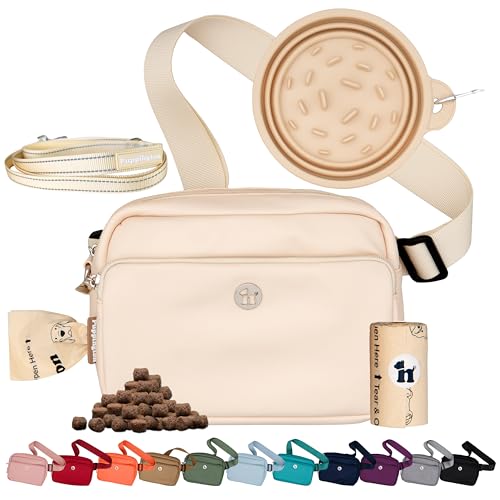
OPRAH'S FAVORITE THINGS 2024: Discover hands-free convenience & effortless organization to help you keep your pup calm and focused while using your dog treat pouch. Integrated easy-clean treat pocket for easy rewards & training sessions with treat pouches for pet training. Discrete yet easy-to-access poop bag dispenser in the dog walking bag, with a roll of matching bags in a dedicated inner poop bag pocket. No more treats spilling from your dog walking fanny pack!

OPRAH'S FAVORITE THINGS 2024: Discover hands-free convenience & effortless organization to help you keep your pup calm and focused while using your dog treat pouch. Integrated easy-clean treat pocket for easy rewards & training sessions with treat pouches for pet training. Discrete yet easy-to-access poop bag dispenser in the dog walking bag, with a roll of matching bags in a dedicated inner poop bag pocket. No more treats spilling from your dog walking fanny pack!
Using a Treat Pouch for Off-Leash Reliability
Use a streamlined treat pouch during off-leash sessions, because immediate access to rewards accelerates learning and clarifies contingencies. Trainers rely on a treat pouch as a core training tool, allowing rewards within one second, which strengthens recall during distractions like squirrels or other dogs. How often should treats be offered, five to ten times in early sessions, or progressively less as reliability increases? The hands-free design permits simultaneous signaling and leash handling when needed, which maintains control and clear cues. Consistent use across parks, sidewalks, and busy trails builds transferable behavior, creating positive associations in at least three distinct environments. Ready treats enable quick reinforcement of sits, comes, and stays, and they help regain attention during unexpected disruptions, and improve long-term response rates overall. Many treat pouches feature food-grade silicone, ensuring the safety of treats and ease of cleaning, which is essential for maintaining hygiene during training sessions.
Treat Budgeting and Choosing High-Value Rewards
Because consistent reinforcement requires frequent, tempting rewards, owners should allocate a clear portion of their monthly budget to training treats, often exceeding personal snack spending. Trainers recommend dedicating five to twenty dollars weekly, or roughly twenty to eighty dollars monthly, depending on dog size, to guarantee supply. Which treats work best, and why choose them over cheaper options? High-value rewards like freeze-dried liver, chicken, or fish provide strong motivation, long shelf life, and minimal mess during sessions. Proper treat budgeting prevents lapses in reinforcement, so progress remains steady and behaviors consolidate. Investing in quality treats increases responsiveness, reduces training time, and protects clothing from greasy snacks. Owners should compare costs per treat, consider bulk purchases, and prioritize consistency over occasional extravagance for long-term results. Using puppy training bells can also enhance training by providing a clear mode of communication between dogs and owners, reinforcing desired behaviors while reducing negative actions like unnecessary barking.
Practical Tips for Treat Delivery and Fading
After budgeting for quality treats, trainers must plan how those rewards are presented during training, since delivery affects learning speed. Treats should be given immediately, within one second of the correct behavior, to reinforce association, and trainers should aim for sessions of five to ten repetitions per cue. How can fading be handled without losing response strength? Gradual reduction of visible rewards works: show the pouch for several trials, then move treats to a pocket for two to four sessions, then to a closed bag for three to five sessions. Mix reward types, offering high-value bites on 20-30% of successes, and praise or short play for others, so the dog stays motivated. Quick access via a pouch maintains timing, and varied locations build adaptability. Consider using a properly sized crate when training puppies, as it provides comfort and control, essential for effective learning sessions.
Troubleshooting Common Treat Pouch Issues
How should trainers address common pouch problems to keep sessions smooth, efficient, and hygienic? Inspect closures before purchasing, test zippers and magnetic snaps for reliability, otherwise spills will interrupt practice and waste treats. Choose washable materials like nylon or silicone liners, they simplify cleaning, prevent residue buildup, and maintain hygiene. Verify clip and belt sturdiness, test attachments with five to ten pounds of downward force, stability matters during active sessions. Assess interior capacity, aim for pockets that hold at least forty small treats, accessibility should remain easy under pressure. Avoid excessive extra pockets, evaluate usefulness with a practice routine, multiple compartments can slow retrieval and distract the trainee. Consistent, efficient training follows when trainers perform these checks, reducing spills and preserving hygienic treat handling. Additionally, trainers should consider non-toxic labels when selecting treat pouches, as these ensure the safety and well-being of both the trainer and the puppy.
Accessory Storage: Beyond Just Treats
Accessory pockets on a quality treat pouch extend functionality, holding clickers, poop bags, a phone, and even keys during active sessions. Trainers benefit from accessory storage that organizes gear, for example a zip pocket for keys, and an exterior pocket for a spare clicker. How many treats and tools should fit one pouch, three to five treat types and a roll of bags, or more? A waterproof liner preserves dog treats, and it also protects other items from grease or juice, reducing cleanup time. Adjustable straps permit wearing styles, clipped or waist-worn, which maintain mobility while increasing carrying capacity. Interior space often measures 6 to 8 inches deep, accommodating larger training rewards or multiple small treats, enabling quick reward swaps in diverse contexts, daily. Magnetic closures are designed to allow quick, one-handed access to treats while preventing spills, making them ideal for efficient training sessions.
Choosing the Right Size and Fit for Comfort
Every trainer should prioritize a treat pouch that fits snugly at the waist, preventing bounce and frequent readjustment during active sessions. A snug fit, achieved with adjustable straps spanning 28 to 48 inches, keeps the pouch stable, reducing distractions and improving focus. How much space is enough for a typical thirty-minute session, ten to twenty small treats, and a clicker? Choose a pouch with a roomy interior around 0.5 to 1 liter capacity, yet light enough to avoid sagging and impede movement. Consider weight distribution, placing heavier items close to the body to prevent strain during long sessions. Trainers should test fit with usual clothing, standing and moving, to verify comfort and access. A well-sized pouch guarantees one-handed retrieval, smoother training, and sustained comfort.
Recommended Products

CAPACITY-Extendable 80L+ storage capacity can carry the items needed for day trips and long-distance sports to a greater extent.
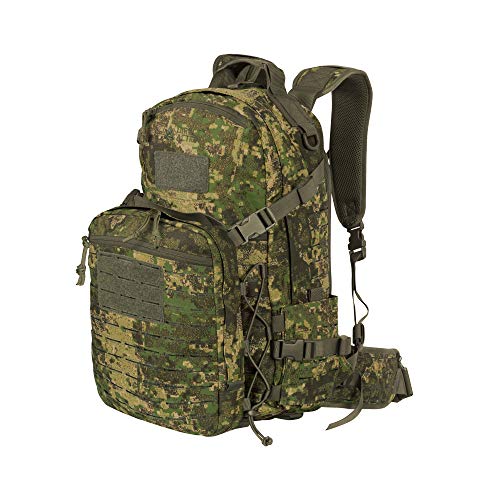
NEW DESIGN: Dust Mk II have redesigned side pockets that are equipped with elastic for expansion. They also have the new Direct Action logo

CAPACITY & SIZE - 25 Liter, (WxHxD) Main compartment 7x10.6x19 inches. Weight: 3.49lb (1.6kg) ACCESSORIES IN PICTURES ARE NOT INCLUDED
Top Recommended Treat Pouches and Alternatives
After confirming fit and capacity, trainers should compare specific models that balance stability, storage, and accessibility during active sessions. The Incog Pocket Treat Pouch minimizes distractions, keeping focus on the dog, which improves communication during repetitions. The Doggone Good Rapid Rewards Pouch offers an extra spacious interior and multiple pockets, accommodating larger treats, clickers, and spare ribbons. Ruffwear’s Treat Trader provides a magnetic closure, waterproof liner, and heavy-duty clip, ideal for outdoor work in wet or rough terrain. Detachable belts add versatility, permitting waist or shoulder carry, and enabling quick position changes during exercises. Alternatives include simple zip pouches or collapsible bowls, suitable for short sessions or budget-conscious dog owners. J&J Dog Supplies stocks these options, supporting varied training needs and reinforcement strategies effectively.
Recommended Products

The ECO version refresh of our popular dog training vest features a softer shell fabric for more comfort and roomier, quick-access pockets that make rewarding your dog even easier

Exceptional comfort: Made with a lightweight and comfortable design, our dog training windbreaker ensures you stay cozy during training sessions.

2 WAYS TO WEAR: The adjustable carrying strap can be fashioned into a fanny pack or a cross body bag giving you options while providing easy access to treats during puppy training
Frequently Asked Questions
Do I Need a Dog Treat Pouch?
Yes, they often benefit: treat pouch importance lies in hands-free access, secure storage and timely reinforcement; convenience factors include portability, adjustable straps and reduced clothing damage, improving training consistency and efficiency for most owners outdoors.
Why Do Dog Show Trainers Put Treats in Their Mouths?
Though hygiene worries exist, they put treats in their mouths to deliver immediate reinforcement, using mouth rewards as efficient handler techniques to keep hands free, increase novelty, enable rapid timing, and boost canine focus attention.
What Is the 10 10 10 Rule for Puppy Training?
The 10 10 10 rule requires giving ten puppy rewards over ten repetitions across ten short sessions, reinforcing behavior through immediate reinforcement. It emphasizes training consistency, measurable progress, and timely treats to strengthen desired responses effectively.
Why Do Dogs Do the Mlems?
Unbelievably, dogs lick their lips (mlems) to clean, signal calm, show anticipation for food, or indicate stress; observers interpret this dog behavior during training rewards and sessions to gauge comfort, arousal, and engagement levels, too.
Conclusion
A treat pouch streamlines training sessions, providing immediate rewards, secure storage, and hands-free access that improve timing and reinforce desired behaviors reliably in all environments. What features matter most, waterproof lining, quick access openings, or adjustable fit, when trainers require fast reinforcement during distractions, for example in parks, competitions, classrooms? Because rapid rewards increase learning speed by up to 300 percent in short trials, reliable pouches reduce missed opportunities and strengthen consistent, repeatable responses effectively.