As an Amazon Associate, we earn from qualifying purchases. Some links on this site are affiliate links at no extra cost to you. Our recommendations are based on thorough research and editorial judgment.

Combining Whistle Training With Clicker Training

Combining a three-note whistle for 10–50 meter recall with a clicker creates layered communication cues. The clicker marks exact behaviors at close range, shaping sits, downs, and precise returns reliably. Train by pairing each whistle with treats on a 10m lead, extend to 30–50 meters. If responses weaken, reinforce with high-value rewards, repeat close drills, and guarantee consistent cue timing. The system suits fields, woods, parks, progressive practice secures durable recall; further guidance follows soon.
Key Takeaways
- Use a whistle for long-range recall and a clicker to mark immediate arrival or correct behaviors at close range.
- Pair initial whistle cues with rewards and clicker marks to build strong distance-to-action associations.
- Start recalls on a long lead, increase distance gradually, and reward every successful return to solidify the cue.
- Keep whistle tones distinct and click timing consistent to avoid confusion when switching between signals.
- Run short, frequent sessions with progressive distractions and reinforce recall twice weekly for long-term reliability.
Benefits of Combining Whistle and Clicker Training
You may be interested

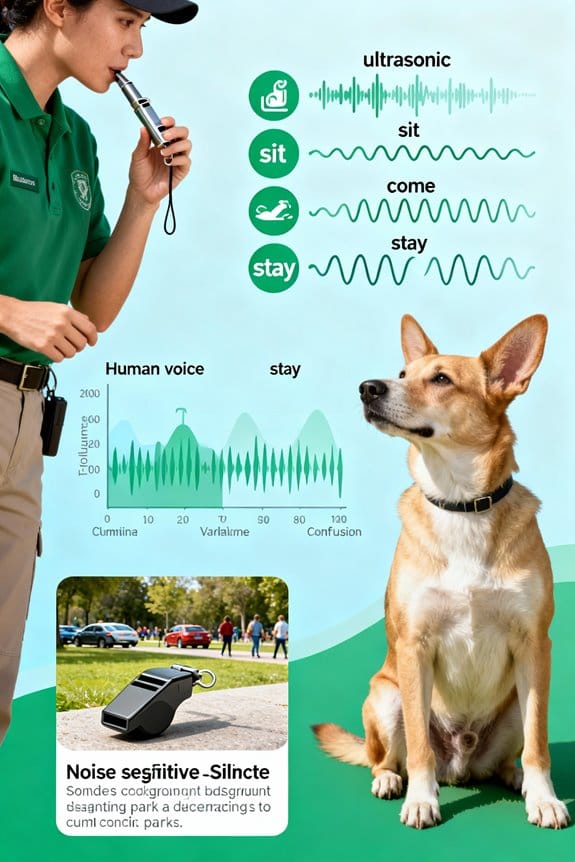
When combined thoughtfully, whistle and clicker training create clear layers of communication that suit both short-range and long-range instruction. Trainers can issue a 3-note whistle training call from 50 meters to signal recall, while a clicker marks sit. Clicker training reinforces the exact moment a behavior occurs, for example marking sits, downs, or targeted paw offers immediately. This pairing supports structured recall protocols, for example three distinct whistles, followed by a click to confirm successful return to handler. Outdoor distractions like squirrels or traffic are countered by piercing whistle tones that regain attention, then clicker training consolidates the reward. Across yards and fieldwork scenarios, handlers adapt cues for close-range and long-range control, improving measurable dog training outcomes with success rates rising 20 percent annually. The use of adjustable ultrasonic frequency in dog whistles allows customization for different breeds, enhancing the overall effectiveness of combined whistle and clicker training techniques.
Recommended Products
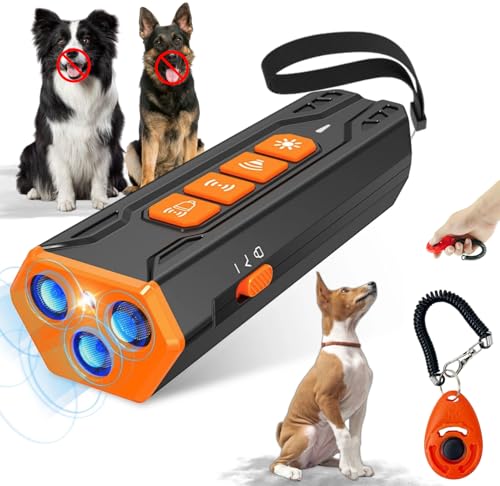
✅ 𝐄𝐅𝐅𝐄𝐂𝐓𝐈𝐕𝐄 𝐍𝐎 𝐁𝐀𝐑𝐊𝐈𝐍𝐆 𝐃𝐄𝐕𝐈𝐂𝐄 𝐅𝐎𝐑 𝐃𝐎𝐆𝐒 – This humane anti barking device uses advanced ultrasonic sound to gently stop barking and correct behaviors like digging or jumping. Ideal for dog bark control both indoors and outdoors, creating a calm environment for you and your pet.

Clicker with whistle, safe and effective to train your pet. Easy to carry and an excellent resource to make it behave anywhere.

3-in-1 Dog Training & Bark Control Device This ultrasonic dog deterrent device combines ultrasonic trainer, sound emitter, and LED light in one compact tool. Effectively stops barking, digging, chewing, and jumping without the need for shock collars or whistles. Ideal for both your dog and neighbor dogs.
How Clicker Training Communicates With Your Dog
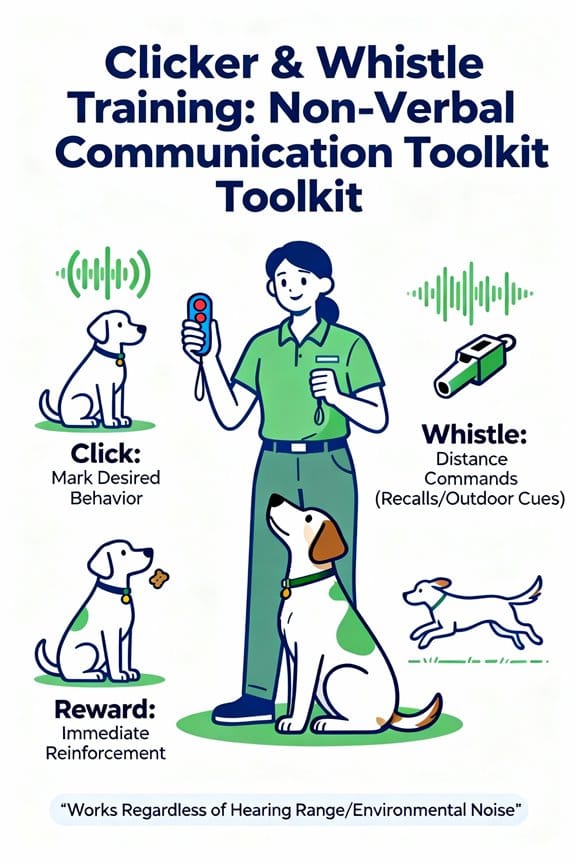
Use a handheld clicker to deliver an immediate, consistent sound that marks the exact moment a desired behavior occurs, enabling precise communication. Clicker training gives clear, distinct feedback, so dogs learn which action earned reinforcement, and they form reliable associations. How fast should the click follow the behavior; immediate marking matters, because delay weakens the connection and slows progress? Trainers shape complex behaviors with successive approximations, clicking small improvements repeatedly, then reinforcing full responses with treats or praise. When teaching your dog combined cues, the clicker marks the action, while a hand signal pairs visually, creating dual-mode communication. Consistency in sound, timing, and context matters, because stable cues allow transfer to other signals, and improve reliability across environments. Investing in quality training pads promotes a cleaner and happier home environment for pets and owners, as they combine factors like size, absorbency, convenience, and eco-friendliness. Practice daily, track progress, adjust criteria.
The Role of Whistle Signals in Distance Training
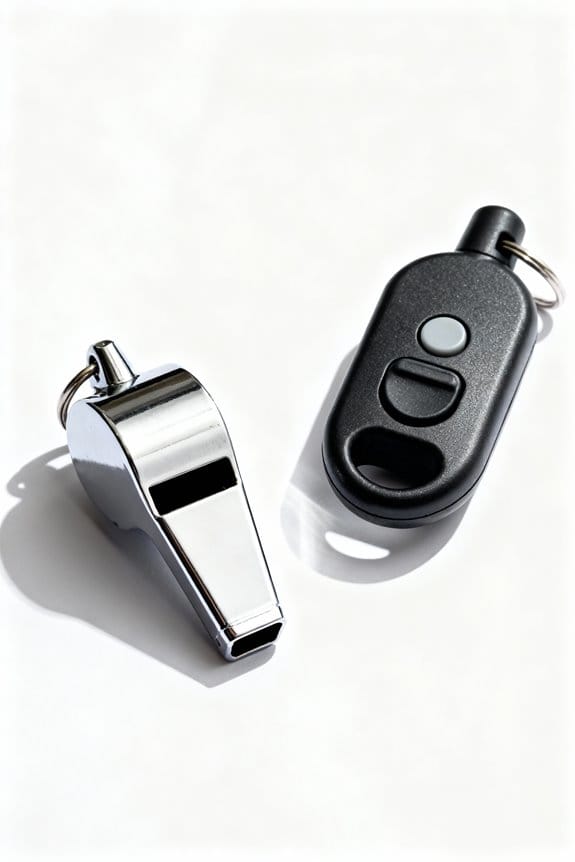
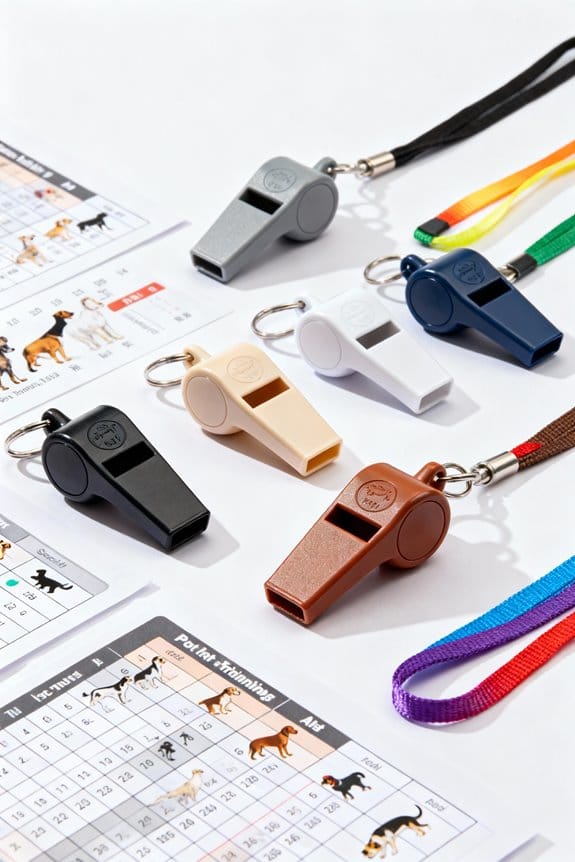
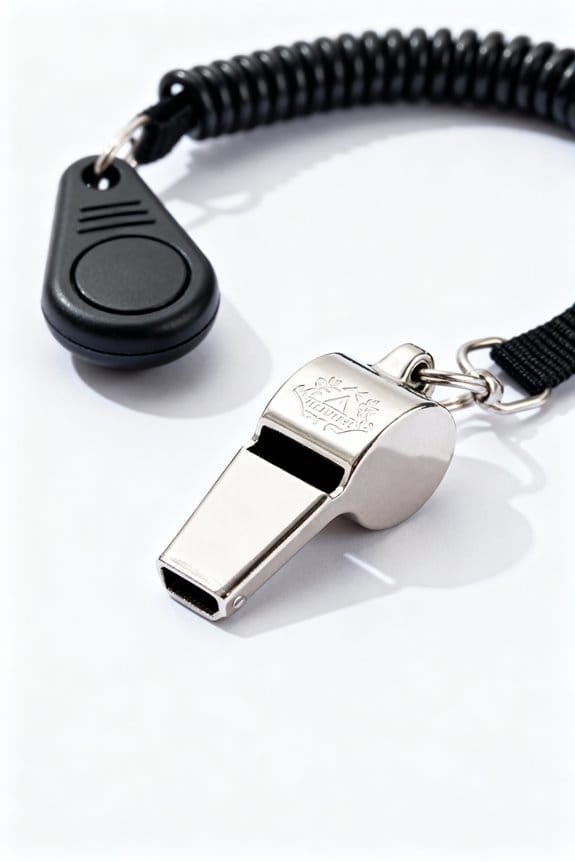
One effective tool for distance control is a calibrated whistle, able to carry clear tones across 10 to 50 meters, depending on wind and terrain. Training uses distinct whistle tones for recall, directional cues, and stop signals, which improves communication when voice would be lost. How does a whistle outperform verbal calls in open fields or wooded areas? The whistle’s pitch cuts through ambient noise, creating a reliable marker the dog can hear from farther away. Consistency matters, so each tone must map to one command, and reinforcement should follow every time the dog responds. Using a whistle allows hands-free control, simplifying simultaneous tasks like leash management or tracking. For long-distance fieldwork, ACME 211.5 is recommended due to its range of approximately 450-500 yards. When combined with clicker routines, distance cues become precise, measurable, and repeatable across varied scenarios.
Preparing Your Dog and Environment for Dual-Marker Training
Although initial sessions should occur indoors or in a fenced yard, they must simulate real cues and remain low-distraction, allowing clear associations. The environmental setup should include familiar surfaces, predictable sightlines, and a defined reward station, to reduce uncertainty. A training timeline might start with five to ten minute sessions, two to three times daily, progressing after consistent responses. Introduce the whistle in the controlled area, pair it immediately with treats or play, then add the clicker to mark correct behaviors. Handlers should assess the dog’s individual temperament to tailor the training pace and techniques effectively. If the dog shows reliable reactions for three consecutive days, increase challenge gradually, always reinforcing with praise and treats as positive reinforcement.
Conditioning the Whistle as a Reliable Recall Cue
A simple acoustic signal, the whistle can become an unambiguous recall cue when paired consistently with immediate rewards, a clicker, and controlled practice. The trainer begins by pairing the whistle sound association with treats or praise, rewarding every successful return for 10–15 repetitions, and marking responses with the clicker to link signals. How should distance be increased? Step back 1–2 meters, then 5–10 meters, practicing three to five repeats at each range, reinforcing each return with reward. Introduce distractions progressively, for example two people talking, a toy at 5 meters, or a short walk, so the dog learns to prioritize the cue. Consistent timing, clear rewards, and systematic variation in context, strengthen recall training techniques and positive reinforcement methods reliably across varied situations effectively. It is essential to choose reliable clickers that offer consistent sound to ensure effective communication with your pet.
Establishing the Clicker as a Precise Behavior Marker
Precision training begins with the clicker, a sharp sound that marks the exact moment a desired behavior occurs, eliminating timing ambiguity. Trainers use consistent clicker sound association to link the sound to rewards, repeating it hundreds of times daily. How precise can marking be, when a click pinpoints the instant a specific movement meets the criterion? Behavior reinforcement timing improves, because the click is immediate and consistent, which speeds learning and reduces error. Specific examples clarify, mark a sit within 0.2 seconds to reinforce posture, or click mid-stride to refine recall. Teaching precision cues follows, trainers shape micro-behaviors with successive approximations, rewarding closer variations until cues are reliable. Engaging the dog using clicks before distant whistle creates a structured sequence, which complements long-range signaling. The effectiveness of clicker training relies heavily on the clarity of the click sound, ensuring that the reinforcement is unmistakable and consistent for the dog.
Pairing the Whistle and Clicker: Timing and Sequence
Having established the clicker as an exact moment marker, trainers can now pair it with a whistle to shape long-range responses. Trainers should assign one whistle command consistently, then use whistle timing techniques that place the click within 0.5 seconds of a correct response, reinforcing the action precisely. Use clicker sequence strategies such as clicking every response for 10–15 repetitions at 5–10 meters, then reducing clicks to 50% for the next 20 trials, and to occasional maintenance clicks thereafter. Practice across three environments, starting quiet then adding moderate and high distraction, to generalize behavior. What happens if timing slips? Delayed clicks weaken association, so follow reinforcement best practices, mark immediately, reward promptly, and fade the clicker as reliability increases. Record progress numerically, weekly. To ensure successful training, consider positive reinforcement techniques as they create a stress-free learning environment and enhance the effectiveness of training sessions.
Structured Recall Drills Using Whistle and Clicker
Begin recall drills in a controlled area, employing a long lead and a single whistle cue to establish clear expectations. The trainer first pairs the whistle with returning behavior, uses the clicker to mark the precise moment of arrival, and rewards with food or play immediately. By using extended recall distances in measured steps, for example ten, twenty, then fifty meters, while maintaining structured behavior reinforcement and clear timing. Association learning techniques require consistency, short sessions of five to ten minutes, and multiple daily repetitions, which build dependable responses. The drill progresses to variable intervals and slight distractions, yet the handler keeps the same cue sequence, so cause-and-effect remains evident. Performance is recorded, adjusted, and reinforced until recalls are reliable, consistently across varied locations. Waterproof technology in training collars, such as those found in SportDOG models, ensures that outdoor recall sessions can proceed smoothly in wet conditions, enhancing training versatility.
Reducing Distractions and Building Focus Outdoors
A clear, staged approach reduces outdoor distractions, beginning with the dog’s name to gain attention, then delivering a single whistle cue for recall. Practitioners should use distraction management by training in three progressively harder locations, for example a quiet yard, a suburban park, then a busy trail, increasing duration from two to ten minutes. How will the dog respond to noise or movement, and what reinforcement follows when it returns promptly? The whistle signals immediate attention, while the clicker marks precise behaviors after arrival, creating clear communication and consistent expectations. Trainers repeat trials, vary distances between 5 and 30 meters, and add one new distraction at a time, to strengthen focus techniques. Consistency in timing and rewards guarantees reliable outdoor training outcomes over weeks. It’s important to consider adjustable sensitivity settings in training equipment to ensure it matches the individual temperament of each dog, enhancing the effectiveness of training techniques.
Essential Equipment, Safety, and Leash Strategies
When training moves outdoors, the handler should assemble a reliable whistle, a clicker, and a long lead, preparing for distance work. The handler selects durable gear, noting equipment considerations such as a 10m biothane leash for controlled freedom and easy cleaning. A lockable fitting on the leash prevents accidental detachments, ensuring safety during training sessions. How will the handler guarantee safety, through pre-session site scans for hazards, loose dogs, and tempting distractions? Secure attachments prevent accidental release, and regular gear inspections reduce failure risks that compromise safety measures. The whistle serves as a clear long-distance recall, and the clicker provides precise reinforcement when the dog returns promptly. Leash management includes practicing loose-lead returns, gradual increases in freedom, and immediate reattachment when focus declines. Consistent protocols create predictable outcomes, so handlers build trust and reliable responses over repeated sessions.
Recommended Products

Orange 3/8" x 32.5' Biothane Long Line. New Solid Brass Safety Snap to help keep your dog safer and more secure on leash or off. The perfect Lead for training, tracking, walking, hiking, working off leash and for search rescue operations. We have different widths and lengths for all dogs. Our leashes are Dog Trainer and Dog Professional approved. Heavy Duty. Comfortable. Waterproof. Weatherproof. Easy to Clean. Feel confident working with your dog knowing you are the Leader.

Lead with Purpose with the Viper Biothane Dog Leash. This robust webbed dog lead is specially coated to emerge from even the swampiest environments, dry and smell-free, without loss of flexibility. Please note! This is *not* a chew proof material, not to be used for tie out!

Outstanding Quality - Made from durable Biothane, the Randstark leash is built to last; Featuring a Herm Sprenger stainless steel snap hook, this heavy-duty leash ensures a secure attachment to your dog's collar
Common Problems and Troubleshooting Techniques
Several handlers encounter predictable problems moving from clicker to whistle, such as confusion, distraction, or response decay, and consistent signals prevent these issues. Trainers should guarantee the whistle tone is distinct and repeated, using the clicker immediately after a correct response to reinforce the new cue. Practice in a controlled room for 5–10 minutes, then add low-level distraction, such as a toy at 5 meters, before advancing. What if the dog becomes anxious or unfocused, is anxiety management required? Revert to clicker and high-value treats for several sessions, then reintroduce the whistle gradually. If responses decay, evaluate timing and reward schedules, increase reinforcement frequency to 60–80 percent initially, and reduce after reliability. Address common distractions by removing stimuli, adjusting distance, and maintaining reinforcement strategies.
Progression, Generalization, and Long-Term Maintenance
While progressing from clicker-led sessions to whistle-based cues, trainers should follow a stepwise plan, reinforcing recall at increasing ranges. First, establish whistle recall at distance, then add click plus treat for close responses to build clarity. How will generalization be achieved across parks, yards, and trails, while distractions increase gradually over weeks? Trainers should use recall reinforcement sessions twice weekly, varying distances from five to fifty meters, and changing locations. Because behavior specificity improves when cues are consistent, use whistle for long range and clicker for proximity, to reduce confusion. Introduce distraction exposure systematically, starting with one low-level distraction, then adding multiple, higher-level distractions over time. Maintain responsiveness by periodically testing recall under real conditions, rewarding success intermittently, and reducing rewards as reliability increases.
Frequently Asked Questions
How to Use Dog Clicker and Whistle?
Use a whistle to signal recall and a clicker to mark correct behavior. The trainer pairs whistle benefits with clicker timing, practices combining techniques progressively in low‑distraction settings, and rewards variedly to strengthen responses reliably
What Are the Negatives of Clicker Training?
Satirically, the clicker becomes a tiny canine dictator; observers note limitations of clicker training: dependency, timing errors, and obscured signals. Common mistakes include inconsistent timing; consider alternative training methods for flexibility and real-world reliability today.
Is a Whistle or Clicker Training?
Both are effective: whistle techniques excel at long distance recall, clicker benefits include precise behavioral marking, and training effectiveness depends on consistency, timing, context, and individual dog preferences to determine ideal methods and results reliability.
What Are the 3 C’s of Dog Training?
The 3 C’s are Clarity, Consistency, and Compassion; 75% of owners report faster learning with clear cues. Clarity guides commands consistency, reward timing reinforces consistency and Compassion shapes humane training methods. They boost engagement, trust
Conclusion
The trainer blends immediate clicker feedback with distant whistle signals, creating precision at close range and reach at distance. Which cue should lead during a retrieve or recall, the click for prompt marking or the whistle for range? When the whistle is conditioned reliably, it extends control beyond ten meters, causing safer off-leash work and clearer expectations. Practical drills alternate proximity and distance, contrasting immediate reward with delayed recall, ensuring consistency, gradual increases, measurable progress.