As an Amazon Associate, we earn from qualifying purchases. Some links on this site are affiliate links at no extra cost to you. Our recommendations are based on thorough research and editorial judgment.


How Agility Equipment Enhances Training Skills

Agility equipment creates predictable challenges that accelerate skill building, for example adjustable hurdles improve jump timing and muscle strength. Weave poles refine foot placement and lateral coordination, tunnels build confidence and faster responses to handler cues. Short, focused drills with non‑slip surfaces and adjustable heights reduce injury risk, lowering reaction times by about 0.2–0.5 seconds per obstacle. Coaches use timing gates, video analysis, and HR monitors to quantify progress and tailor drills, more specifics follow
Key Takeaways
- Provides structured, predictable obstacles that teach handlers clear cues and dogs consistent responses for reliable course performance.
- Builds speed, balance, and direction changes through ladders, hurdles, cones, and weave poles, improving footwork and reaction time.
- Enables progressive skill development by adjusting jump heights, tunnel visibility, and course complexity to match the dog’s ability.
- Supplies objective feedback—timing gates, video, and wearables—to quantify improvements and guide targeted technique adjustments.
- Reinforces focus and obedience with pause tables and short drills, fostering confidence and safe decision-making under pressure.
Why Agility Equipment Matters
You may be interested
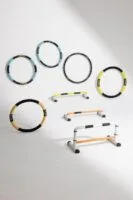
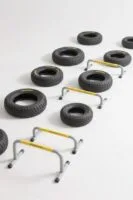
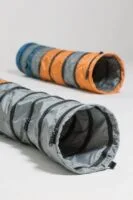
Because well-designed equipment creates predictable challenges, handlers can teach specific movements and timings with measurable progression for each dog. Agility equipment supports agility training by offering basic obstacles such as two adjustable hurdles, a six-pole weave set, and a short tunnel, allowing staged practice and clear objectives. How does a handler plan training sessions to build skill without overloading the dog? Use short, focused drills of three to five repetitions, increasing difficulty every two to three sessions, and monitor fatigue and performance. High-quality tools improve safety and effectiveness, reducing injury risk compared to improvised items, and they permit progressive skill acquisition across novice, intermediate, and advanced drills. Measurements guide goal-setting, timelines, and incremental rewards consistently. Additionally, selecting the right agility tunnels for dogs ensures durability and suitability for different training environments.
How Equipment Improves Movement and Coordination
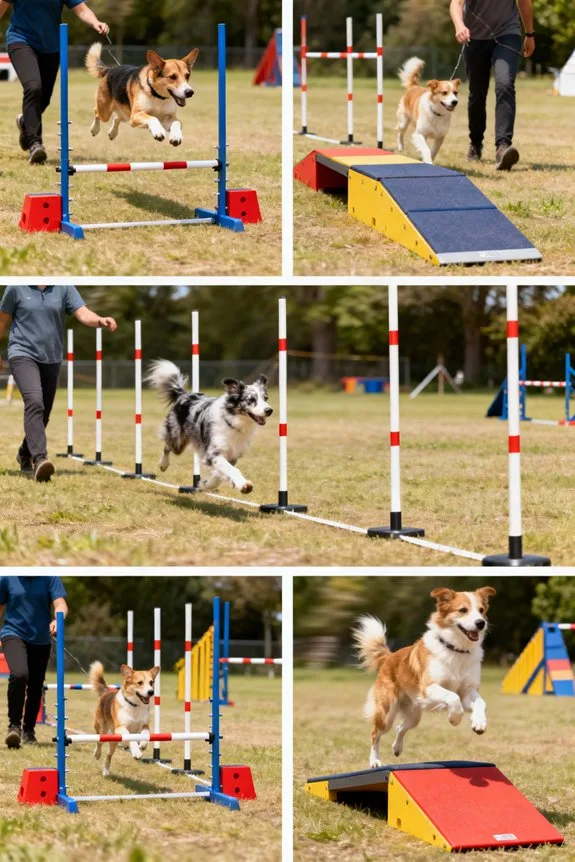
Introduce speed ladders, cones, and low hurdles to prompt quick footwork, directional changes, and basic plyometric responses in short, focused drills. Trainers note that using three to six ladder rungs, five cones set at three meter intervals, and low hurdles builds movement skill and balance, while improving physical agility for athletes and dogs. Equipment such as weave poles, tunnels, and jumps requires precise body control, which enhances coordination and spatial awareness over time. How does practice with obstacle courses affect reaction time? Consistent repetition reduces delay by measurable fractions, for example 0.2–0.5 seconds in timed trials, thereby improving decision speed. Dog agility equipment similarly promotes focus under pressure, translating to cleaner, faster runs and more efficient movement execution. Sessions vary from five to twenty. Using non-slip, textured surfaces on agility equipment can enhance grip and traction, ensuring safer and more effective training sessions.
Core Tools for Foundational Agility Training
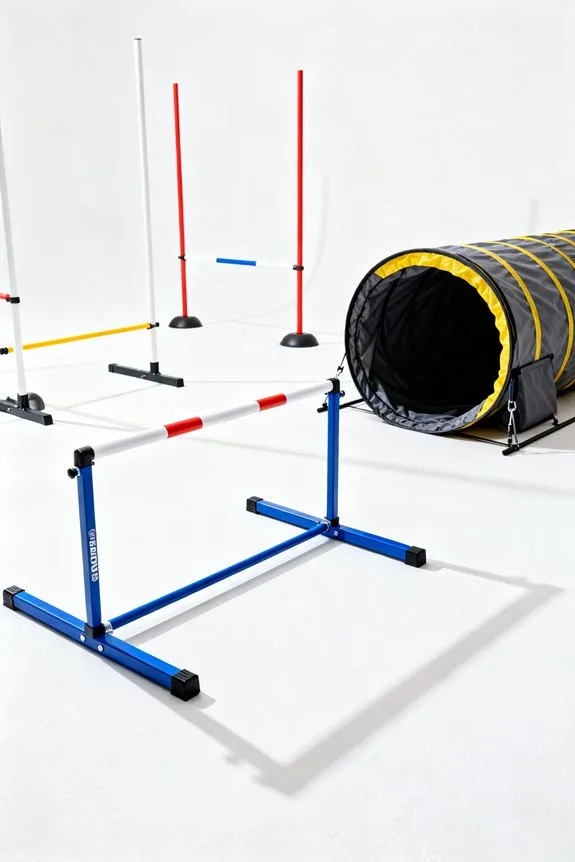
Foundational tools such as hurdles, weave poles, tunnels, pause tables, and cones form the backbone of effective agility training programs for dogs. Hurdles and jumps, including bar and tire variations, build coordinating and muscle strength through repeated, approaches and varied heights. Weave poles, set about 24 inches apart, sharpen focus and teach navigation, improving agility skills and foot placement. Tunnels, available in different equipment styles, open or collapsible, promote building confidence and faster responses to handler cues during course practice. Pause tables reinforce obedience by requiring controlled stops, which increases control and sequencing ability between obstacles. Agility cones create mini-courses, allowing directional changes and drills that teach obstacle order recognition. Trainers pair these training tools with positive reinforcement techniques to accelerate learning and retention. Additionally, weatherproof features ensure that training can continue outdoors regardless of conditions, thus enhancing the dog’s adaptability and performance consistency.
Recommended Products

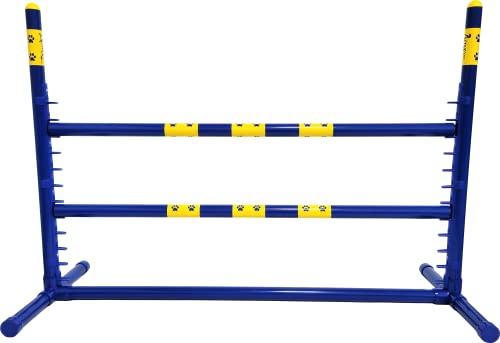
Hurdle jump for the dog training and all other animals jump training. Obstacle's 1 meter high, 1 meter wide

STURDY & DURABLE: Strong all-aluminum frame will stand the test of time and is appropriate for all breeds

STURDY & DURABLE: We use a thick all aluminum frame so this jump will not blow over with the elements
Advanced Equipment for Performance Gains
When integrated into a structured program, advanced tools like electronic timing gates and force plates provide precise, objective metrics down to milliseconds and Newtons. Coaches use advanced equipment for performance training, comparing 0.1 second splits, movement patterns, and quantifying force during acceleration and cuts. Video analysis provides frame-by-frame breakdowns, slow-motion review, and coaching cues, enabling technique refinement for specific agility tasks and efficiency gains. Technology integration includes wearable devices that monitor heart rate, acceleration, and load, allowing individualized training programs to optimize work-rest ratios. Resistance systems, such as bungee setups, add progressive overload, increasing concentric power, which translates to faster sprints and higher jumps. Agility obstacles can be scaled for complexity, combined with timing gates and video feeds, producing measurable drills tied to goals. In addition to agility equipment, adjustable head halters can be employed in training programs for dogs, providing gentle control and enhancing the safety and effectiveness of training sessions through better head and body coordination.
Recommended Products
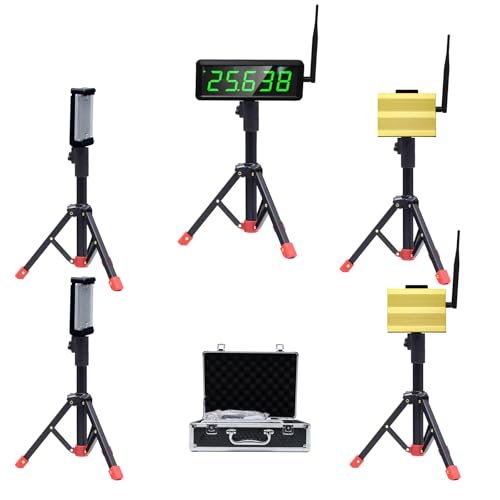
Suitable for motorcycle timing, kart lap timingstacking timing, balance car, skating, pet training.track and field training competitions,Supports the purchase of high brackets separately, suitable for various competitions such as 100-meter sprint

Precise timing of a single person moving from the starting point to the end point

【Easy to Use】Wireless laser timer, no need to connect power bank, turn on the power switch and it’s ready to work.
Selecting the Right Agility Gear
After leveraging technology such as timing gates and force plates to quantify performance, equipment selection becomes the next practical consideration for training. Agility training requires a range of adjustable jumps, speed ladders, weave poles, and tunnels, to match progressive skill levels and varied speeds. In dog agility training, basic tools like non-slip mats and impact-resistant frames provide stable surfaces, reducing slips on contact during competition simulations. Using a variety of tools supports different training goals; for example, 4-6 tunnel drills improve focus and coordination steadily, regularly. High-quality gear, tested for durability and surface traction, helps create a safe and effective training environment for users. Adjustable heights enhance ongoing training as dogs develop their skills and can help tailor training sessions to the specific needs of each dog. Proper selection, combined with electronic timers for measurement, allows progress tracking that can prevent injuries and build confidence over weeks.
Recommended Products

【FULL-SIZED BACKYARD ADVENTURE PARK】 Transform your yard into the ultimate party destination with this giant 25FT inflatable obstacle course! Featuring dual lane racing tracks for head-to-head competition, 2 exciting tunnels to crawl through, and a rugged climbing wall, this huge bounce house delivers endless active fun for kids and their friends. Perfect for birthdays, tailgates, and summer celebrations.
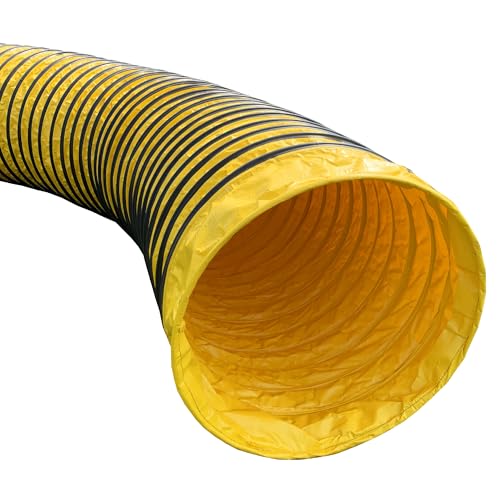
Competition Ready Tunnel for Dogs - Featuring a 24" opening, 20' length, and 4" pitch that meets AKC guidelines, ensuring your dog gets the professional dog training tools and experience it needs

Light up A Larger Area: The 90° beam angle concentrates light where you need it.From 40ft high, your entire parking lot is evenly lit. Perfect for sports, security, and large areas where shadows hide trouble
Safety and Injury Prevention Strategies
Several precautions considerably reduce injury risk during agility training, including high-quality equipment, regular inspections, and gradual obstacle progression. Choosing certified agility equipment matters, it withstands movements, provides stability, and supports safety. How can handlers prevent accidents, by inspecting equipment for wear and tear, replacing frayed straps quickly? Supplementary measures include non-slip surfaces on contact zones, paw pad protection, and leg wraps, which regularly reduce slipping and joint stress. Training provides progressive exposure, handlers should gradually increase obstacle complexity and repetitions, allowing dogs to build strength and confidence actively. Could monitoring time and error rates reveal subtle early signs of fatigue or technique breakdown? When routine checks uncover damage, removing equipment immediately, documenting faults, and scheduling repairs prevents escalation, supporting injury prevention, ensuring dogs safety. Incorporating positive reinforcement techniques during agility training not only enhances learning but also strengthens the bond between pet and handler, promoting a safe and enjoyable training environment.
Designing Effective Home Agility Courses
How can a handler design a home agility course that is safe, effective, and scalable for dogs at various skill levels? For an agility course at home, begin with a basic layout using low jumps, a short tunnel, and marked weave poles. Allocate sufficient space for running and turning, remove hazards like cords or sharp edges, and maintain soft footing to reduce injury. Use household items such as cones and hurdles, which adds variety, provides effective, versatile training options that remain cost-effective. Scale complexity gradually by increasing jump height by two to four inches, lengthening sequences, or adding directional changes to challenge coordination. Regularly altering course designs helps build dogs’ confidence, maintains motivation, and reinforces physically fit movement patterns through consistent, varied daily practice. Consider using durable ABS materials for your agility equipment to ensure longevity and stability during training sessions.
Recommended Products

UNLEASH YOUR DOG'S POTENTIAL: Transform your backyard into a canine adventure wonderland with our Better Sporting Dogs Practice A-Frame. We've redefined backyard agility with a 42" long and 25" wide. When placed at a 45 degree angle, the height is 29 inches high

PRODUCT SPECIFICATIONS: recommended for kids 1 to 4 years, adult supervision required; assembled climber measures 60" L x 54" W x 18" H, 18 lbs; light assembly required
OUTDOOR: Outdoor Furniture Grade PVC that will not yellow or deteriorate with age!
Training Techniques to Maximize Equipment Use
Building on a home course layout, handlers should focus on techniques that maximize equipment utility, safety, and progressive skill gains. Use a variety of agility tools, such as hurdles, tunnels, and weave poles, to develop diverse movement patterns and maintain engagement. How can incremental challenges build confidence; increase jump heights by two inches, shorten tunnel visibility, or add a cone weaving sequence? Implement positive reinforcement consistently, with clickers or treats, to reward correct responses and accelerate learning. Design obstacle courses that mimic competition, combining five to eight elements to train speed, coordination, and problem-solving. Regularly reassess setups, modify drills weekly, and introduce novel tasks to stimulate physical and mental engagement. Track observable skills, adjust difficulty accordingly, and prioritize safety to sustain long-term progress daily. When choosing equipment, consider the importance of height adjustability to ensure precise jump settings and accommodate varying skill levels.
Recommended Products

ADJUSTABLE ANGLES – The removable bullseye target features a 5-point adjustment system, allowing you to set angles from 90° vertical to 180° flat. This versatility makes it ideal for practicing a wide range of passing techniques and drills.

ADJUSTABLE AGILITY HURDLES FOR SPEED TRAINING: Height adjusts from 12” to 40” in 4-inch increments, ideal for speed training, agility drills, plyometric workouts, and athletic performance development.
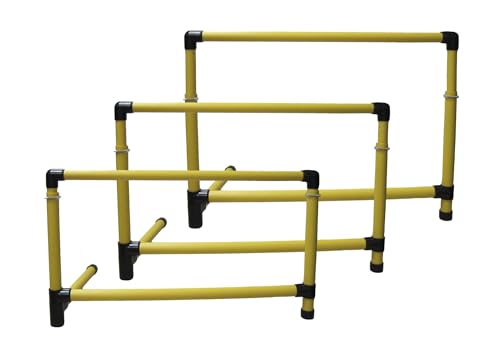
Sportime Adjust-A-Hurdles are an affordable training tool; ideal for students from elementary school to high school. Hurdles feature a swivel base support that allows for easy storage in tight spaces and improves safety by keeping the hurdle support out of the way of your athlete's feet. Light-weight hurdles made of durable, high-impact PVC material. Adjust in 3 inch increments from 21 to 36 inches.
Integrating Technology and Measuring Progress
Precision in measurement transforms agility training, as electronic timing systems record splits to the millisecond, informing acceleration and deceleration analysis. Coaches use video analysis and force plates to quantify movement mechanics, they review slow-motion clips to identify inefficiencies and prescribe drills. GPS and heart rate monitors track distance, time, intensity, and recovery, so coaches adjust sessions to manage load and prevent overtraining. For handlers, consistent data improves a dogs consistency, it helps maintain control during complex sequences and teaches when to cue so dogs follow commands reliably. Measuring progress becomes objective, athletes see gains, and training can be beneficial when plans reference clear metrics. Overall, integrating technology enhances training experience, provides actionable feedback, and helps enhance performance while reducing injury risk over typical methods. A crucial element in training is ensuring gradual acclimation to new equipment, which parallels the approach used in introducing dog muzzles for comfort and safety.
Frequently Asked Questions
What Are the Benefits of Agility Training?
Agility training improves speed enhancement, coordination development, and balance improvement, sharpens reaction time, supports injury prevention, elevates athletic performance, and provides a competitive edge, enabling athletes to move efficiently, respond faster, and sustain peak performance.
How Can Agility Be Improved Through Training?
An athlete improves agility through agility drills, reaction times enhancement, coordination exercises, patterned footwork patterns, targeted speed training, consistent balance practices, proprioceptive awareness development and sustained mental focus to integrate skills and refine movement efficiency.
How Is Agility an Important Part of Skill-Related Fitness?
Like a nimble fox, agility is central to skill-related fitness: agility definition emphasizes rapid, controlled movement; skill significance lies in movement efficiency, balance improvement, quick decision making, sport relevance among fitness components, enhancing overall performance.
What Does Agility Enhance?
Agility enhances speed development, coordination improvement, balance enhancement, reaction time, flexibility increase, precision mastery, strength training, and footwork techniques, collectively fostering efficient movement, injury resilience, adaptable performance and functional mobility across sport and daily activities.
Conclusion
Ladders, cones, hurdles, and plyo boxes build foot speed, coordination, and power, with research indicating up to 20 percent faster change-of-direction outcomes in competitive settings. When athletes perform ten-minute ladder and shuttle sessions five days weekly, balance improves, reaction time shortens, and practical speed translates to game situations under pressure. Coaches decide gear by goals, choosing cones for agility patterns, hurdles for plyometrics, and partner drills for decision-making, ensuring safe progression and measurable testing protocols.